
 Chapter 1
Tenerife and Embarcation
April 19, 20, 21
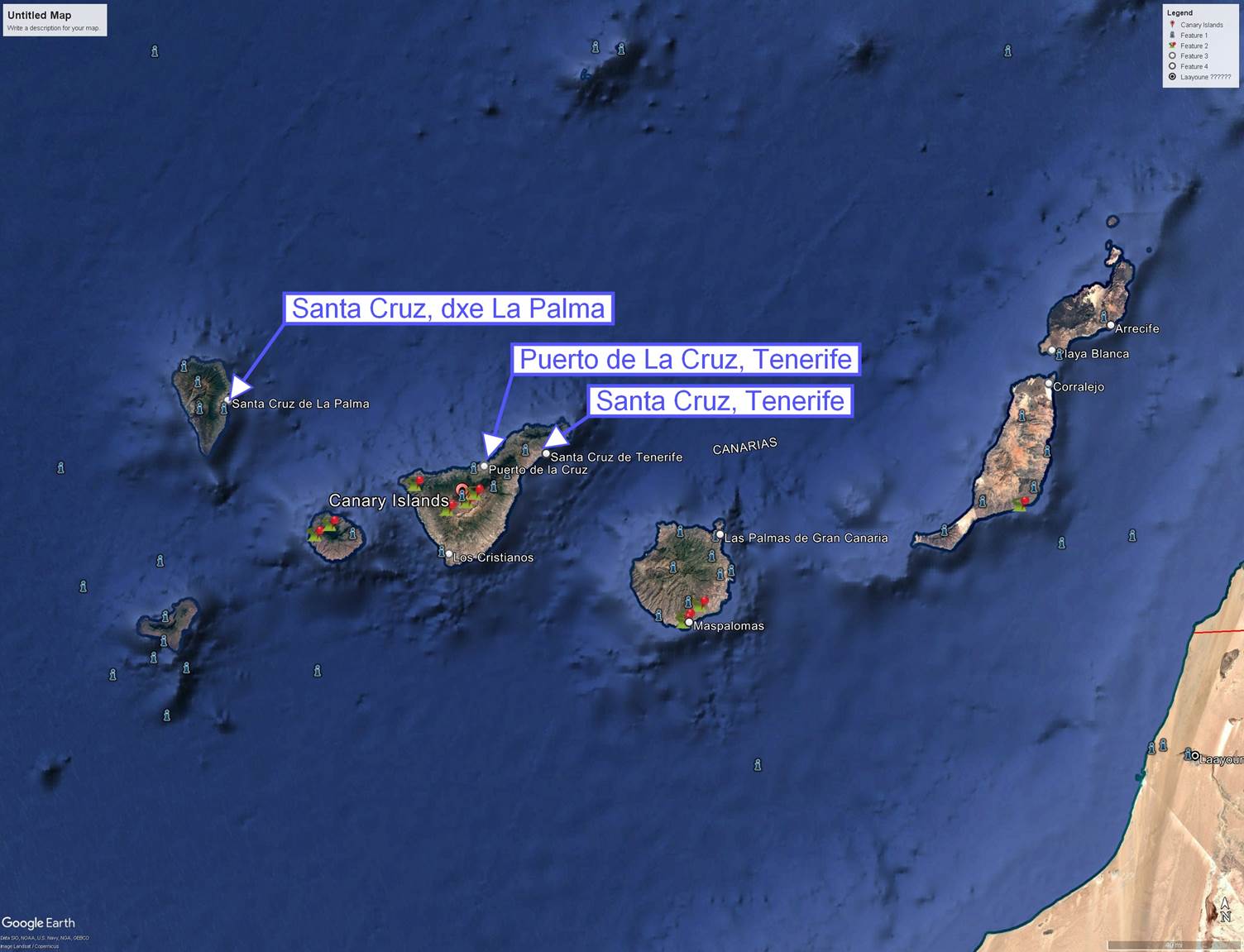
Detailed map of the Canary Islands
Saturday, April 19: Tenerife, Canary Islands
Arrival
As mentioned, we arrived on Saturday afternoon about 1:45PM and quickly found our transfer car to take us to the hotel. It was about a 30 minute ride and we got our first look at the island of Tenerife. The driver was very friendly and informative and we talked about some of the agricultural products of Tenerife and the Canary Islands in general. They grow many tropical fruits and probably their biggest export is bananas. This was evident as we rode around on all our island travels: every little piece of spare available land, even in the main part of the cities, was covered with banana plants. (Bananas are “plants”, not “trees”.) We saw occasional grape vineyards and other fruit (mangos, guava, lemons, etc.) but bananas appeared to be king.
We arrived at the Hotel Botanico and checked in. This is the hotel that Oceania uses for guests using their pre/post-cruise options so I assumed that it would be suitable for our stay on Tenerife.
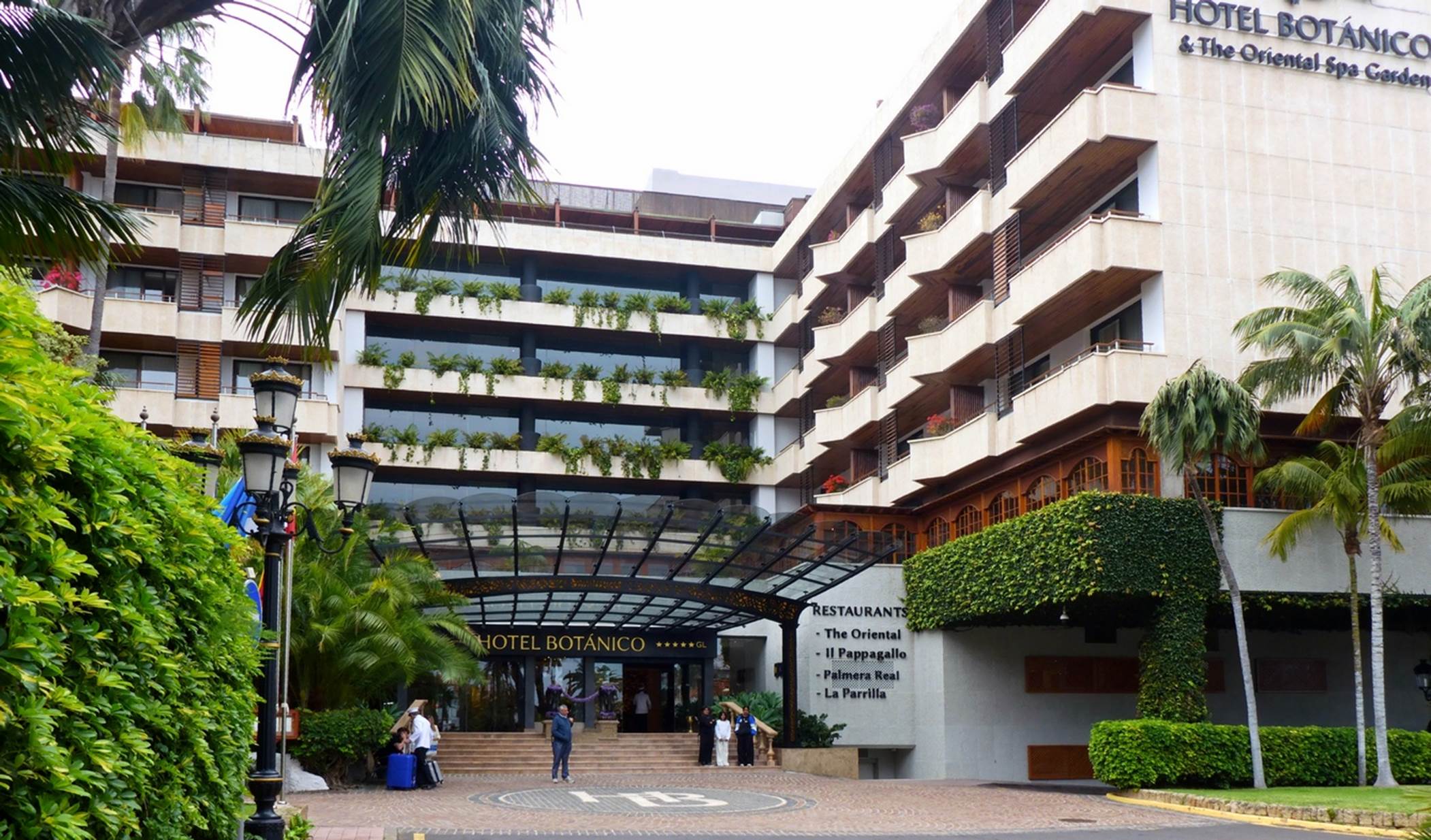
The Hotel Botanico and The Oriental Spa Garden
The hotel was very nice and we had a large, comfortable room with a good view off the relatively large balcony. While checking in, we had also inquired about possible tours for the next day so that we could take a better look at the island. We did find one that offered a short tour of the town (Puerto de La Cruz) and then a visit to the very large volcano in the center of the island, so we signed up for that one.
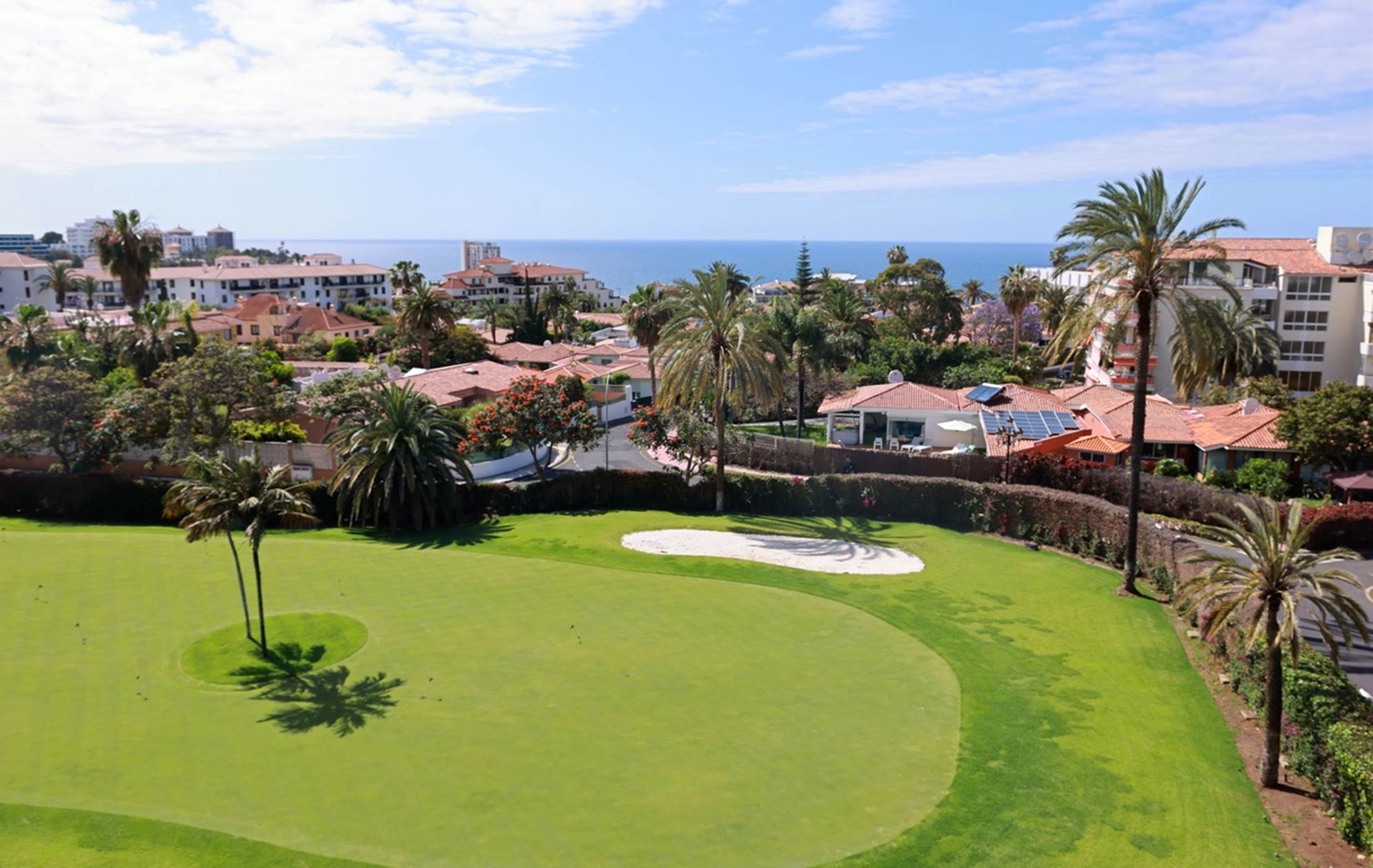
The view out our balcony: the hotel putting green and ocean in distance
We unpacked a little and rested for a while, trying to overcome the lack of sleep during the flight and the Jet Lag effects. About 5:00PM we decided to head out for a walk in the local area and to scout for a potential dinner restaurant. The hotel was just a short block from a busy street with lots of restaurants and tourist type shops. We were going to just survey the restaurants and then come back later, but then we passed one featuring Paella. Paella on a Spanish island would have to be good, so we decided to just stop then and ordered a salad, mixed (seafood and meat) paella, and a bottle of local wine: it was all very good! The salad was unusual and had the usual lettuce but then smoked salmon, chunks of mango, baked goat cheese, a vinagerette dressing, and was both different and delicious. The Paella had lots of seafood with pork and chicken and was one of the best paellas we have had at a restaurant. It was missing any chorizo, but, other than that omission, it was excellent. The wine, a locally produced red, was surprisingly good and went well with the paella. A very successful dinner!

I should have taken a photo before digging into the paella.
A little more walking to work off the paella and then an early bedtime ended a successful day.
Sunday, April 20: Tenerife
We had to get up a bit early to be ready for our tour and I think we were the first customers in the hotel’s restaurant that morning. Part of the reason for the relatively quiet start to the day was that this was Easter Sunday. The food was all good and very fresh and the restaurant featured a large (40 foot diameter, at least 2 stories high) aviary with many different birds. At the appointed 8:15, a bus arrived for the tour and we got started with a short tour of part of the city downtown or oldtown area. There were several old churches and, of course, a well maintianed plaza in the center of the town.
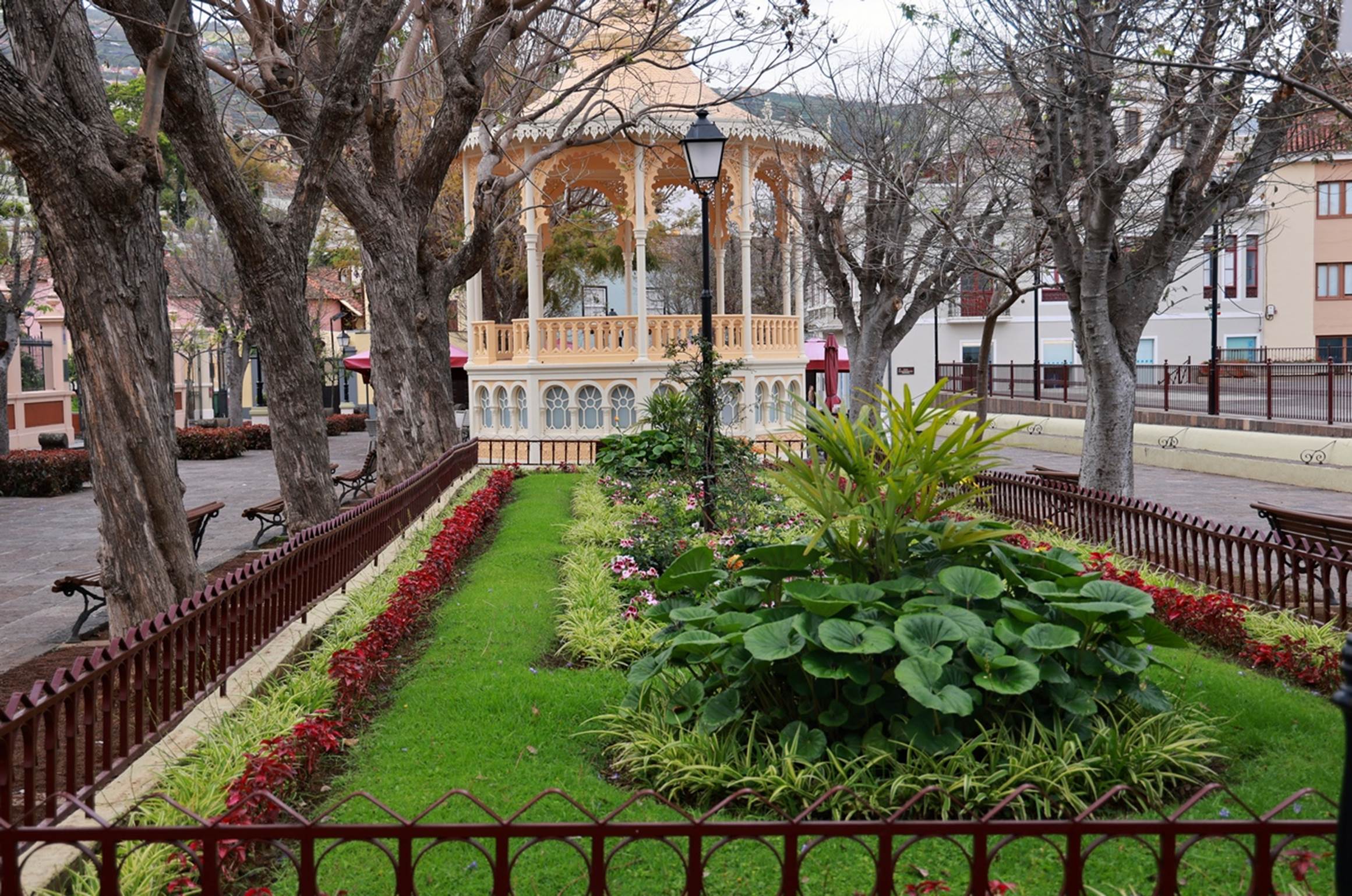
This plaza seemed to be the center of the town.
In this section of the town, there were numerous old buildings, mostly what had once been large homes of the wealthy residents which had largely been converted to small hotels and BnBs. Most of these building had various forms of balconies and our guide asked if we noticed anything strange about these balconies. When no one offered a guess, she asked if we noticed that there had been no people on any of the many balconies we had seen. Apparently, the balconies were placed on the homes to point out the wealth of the owners: the more and fancier the balconies, the more important the owner.
Another thing about the balconies: throughout the city many of the balconies, like the ones in the photo below, were decorated with large red flags. I suspected the reason and our guide confirmed that the red flags were in celebration of Easter, which was this day, and represented the blood of Christ.
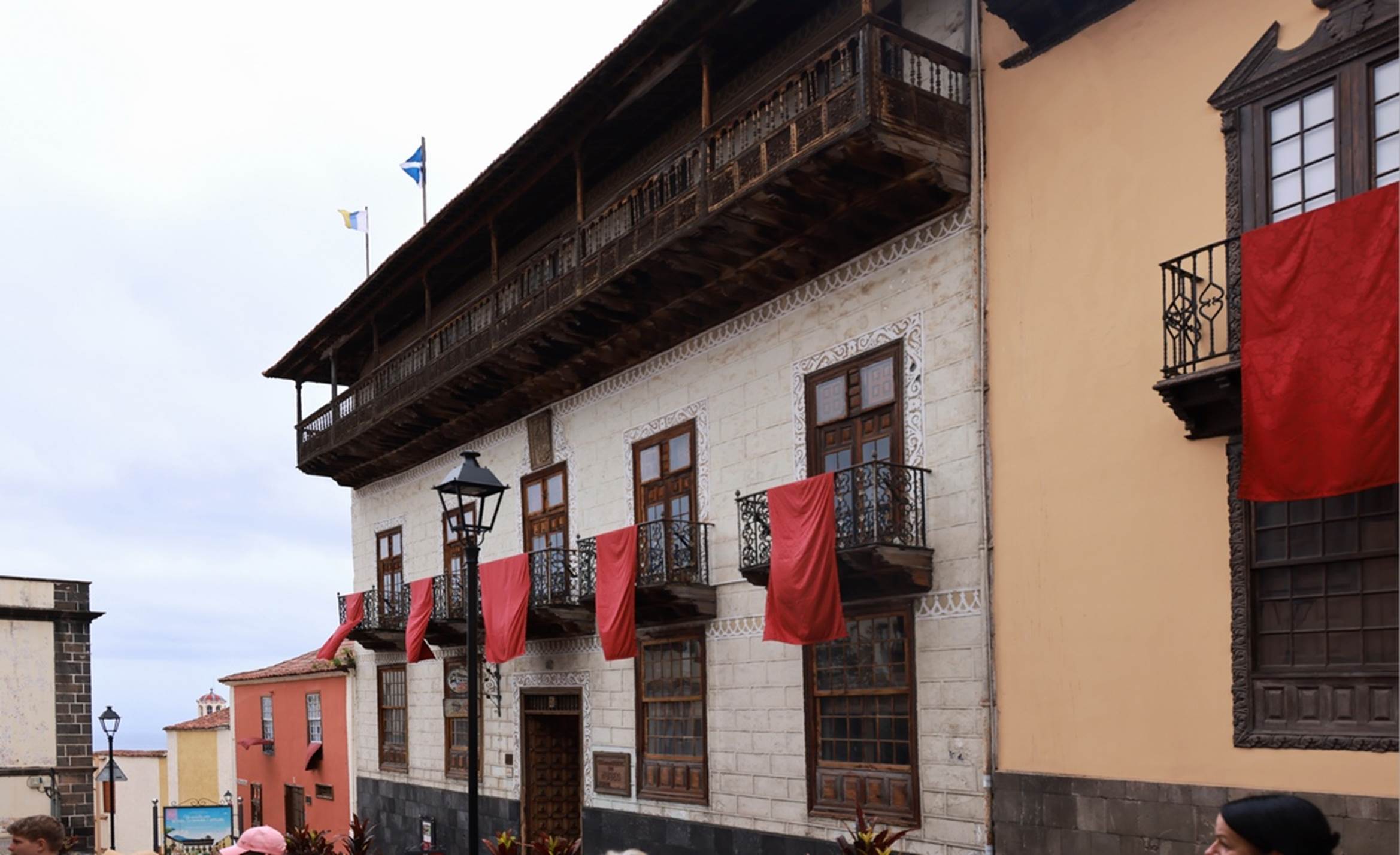
Many red flags were flying from the numerous balconies.
We walked around some of the older parts of the town, including several large gardens. Tenerife enjoys a tropical climate and the residents apparently take advantage of the weather to enjoy lots of colorful and somewhat unusual plants and trees. We will see even more of this the next day.
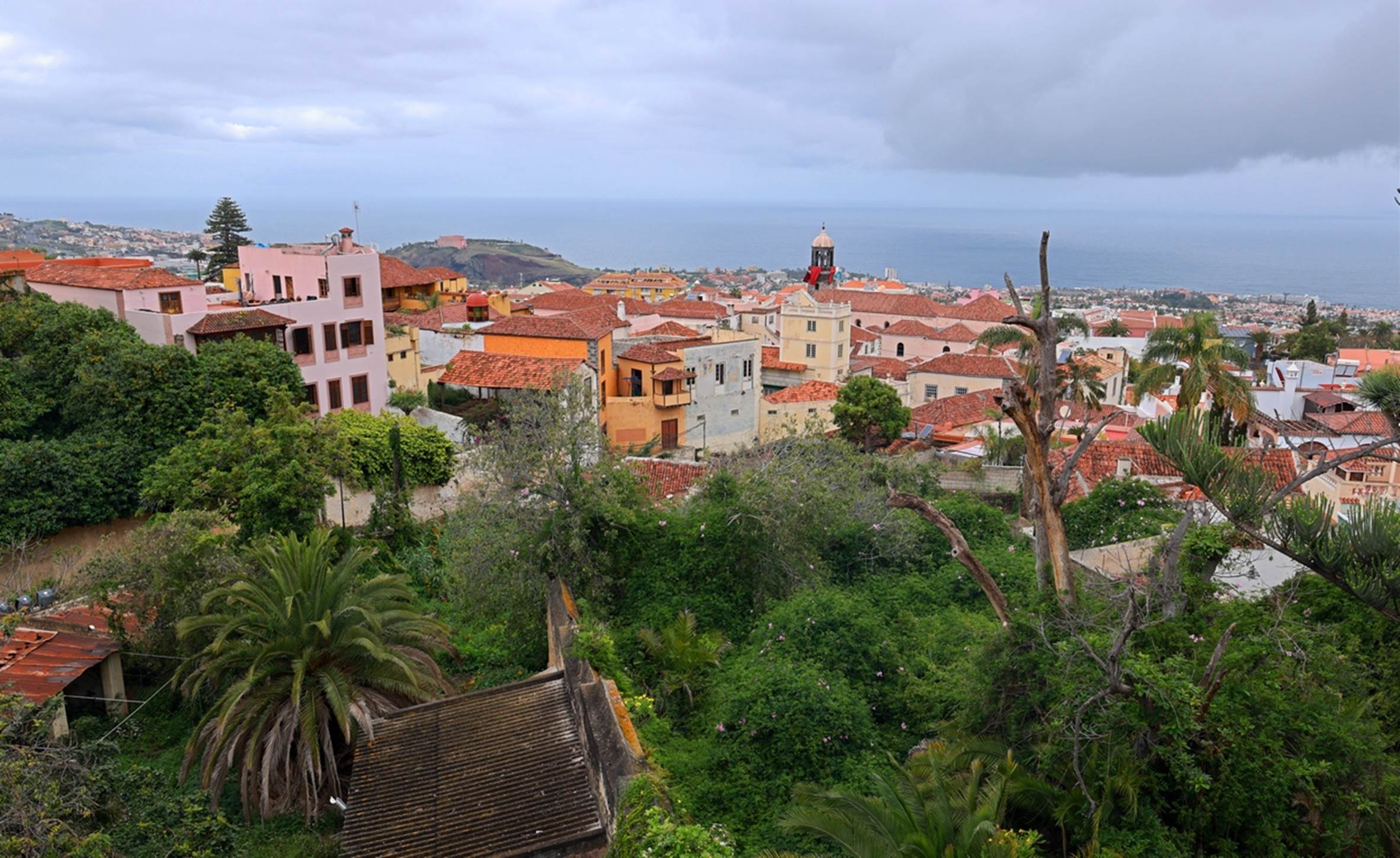
Looking over part of the town toward the ocean
After looking around the city for about an hour, we met up with our bus again, loaded up and headed toward the volcano. Before we leave the city, however, I want you to take note of the clouds in the photo just above. Clouds like this are apparently a common feature of the Tenerife weather.
The straight-line distance from Puerto de La Cruze to the national park encompassing Mount Teide is probably only about 10 miles, but the roads have to climb much of the mountain in a very circuitous manner and I would guess we had to cover about 30 miles of very twisting roads that took about an hour. During that time we drove up into the clouds, then out the top of the clouds and into bright sunshine.
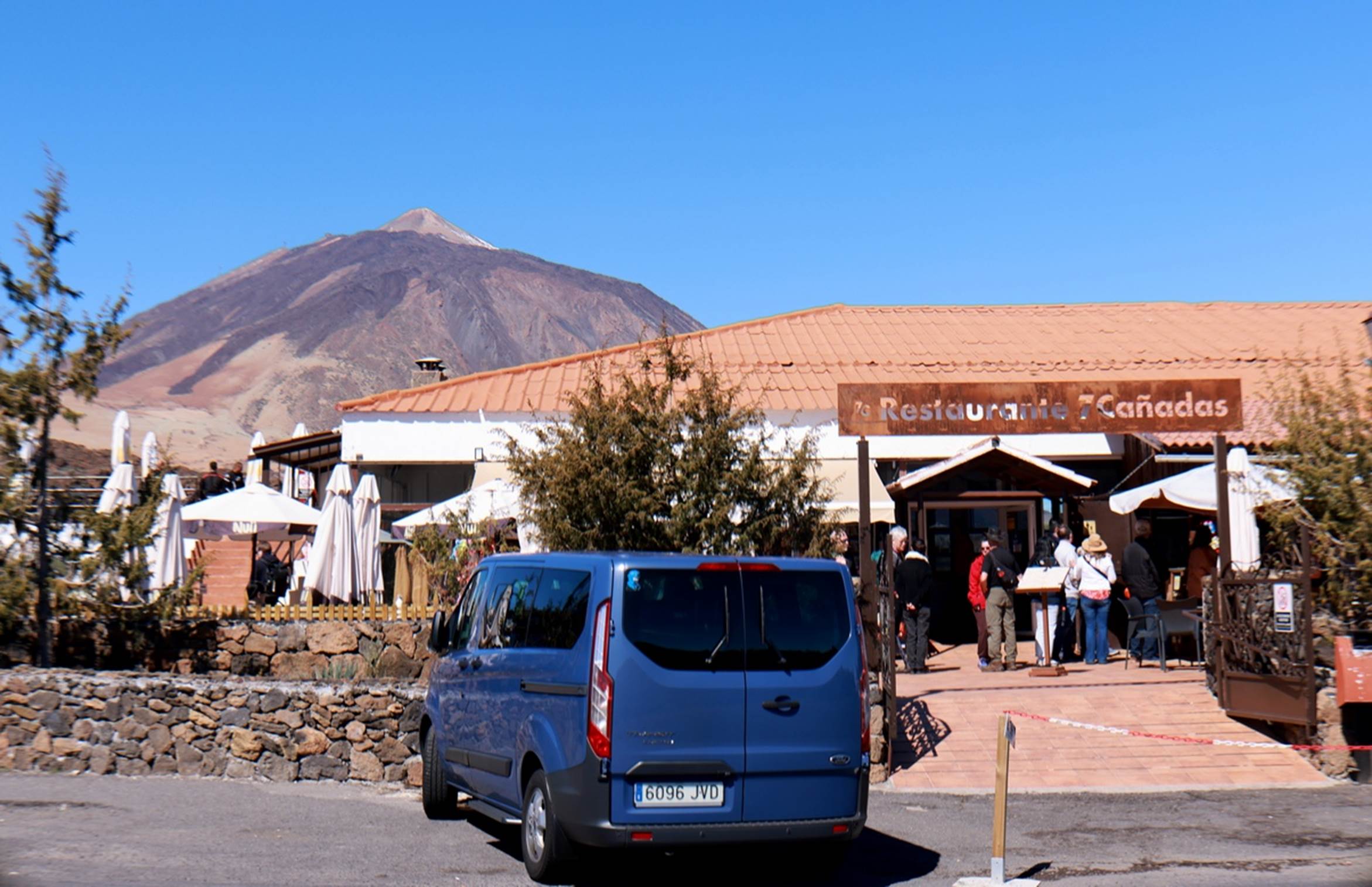
Bright sunshine greeted us at the restaurant rest stop.
Just inside the park boundries, we stopped for a rest break, to get some coffee, and to allow photos of the very visible Mount Teide. This is where I suffered a bit of a disaster! As I was taking some photos of the mountain/volcano, I noticed there was some problem with the auto-focus function of my camera and started checking the various settings and adjustments to identify the problem. Then, while standing on a concrete patio, the lens came completely out of the camera, falling on to the patio floor. OUCH! Apparently, the lens-release button had been pushed/activated, allowing the lens to come loose in the mount, causing the auto-focus to fail, and finally allowing the lens to come completely off the camera and fall. I picked up the lens and did not see any major problem, so I put it back on the camera and it seemed to function properly. Well, for perhaps 3 or 4 photos, then the shutter failed to operate at all, and when I moved the camera, I could hear a piece (probably a lens element) moving around in the lens.
The good camera and lens had to be retired for the rest of the trip and, as I write this, I am awaiting it’s return from the repair shop. For the rest of the day I used the camera on my smart-phone and, then for the rest of the trip, I used my small waterproof camera that is normally reserved for wet adventures or special assignments, such as taking time-lapse videos.

Mount Teide: the highest point in Spain and the last photo taken by my good camera.
Yes, the comment above is correct: Mount Teide is the highest point in Spain, with a peak height of 3714 m (12,188 ft.) This is also something like the third highest point in all of Europe. At the restaurant, we were at about 7,500 ft., well above the top of the cloud layer that we had driven through and we were looking about another 4,600 feet to the top of the volcano.
A photo taken with the lens element out of position… not good!
We piled back into the bus and drove a couple of miles (and a few hundred feet up) to the base of a cable car line that could take people all the way to the top of the volcano for an even better look around. It turned out that, if you wanted to do the cable car ride, you had to have made reservations and purchased tickets at least three days previously. No on-site tickets were available for the 4,000 ft., 8 minute (each way), ride when we visited. There were 4 or 5 people in our group who had gotten tickets days ago, so we dropped them off at the cable car station and we continued on around the mountain to other sights.
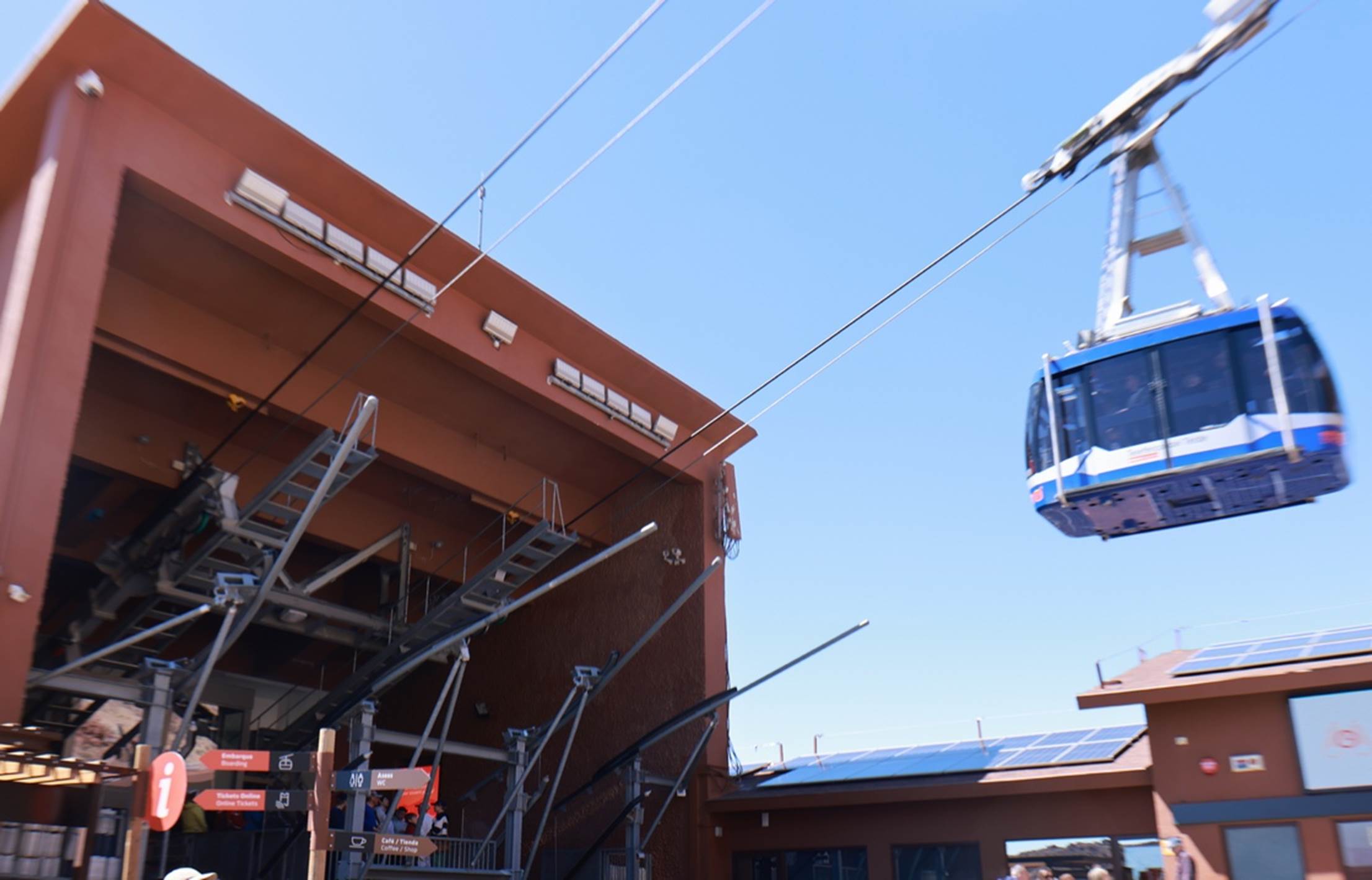
A car coming into the cable car station
The cable car station was very busy, with cars parked in the small parking lot and alongside the access road for at least a half mile. On the “back side” of the mountain (away from the cable car station) there were several rock formations and places to hike and view the mountain.
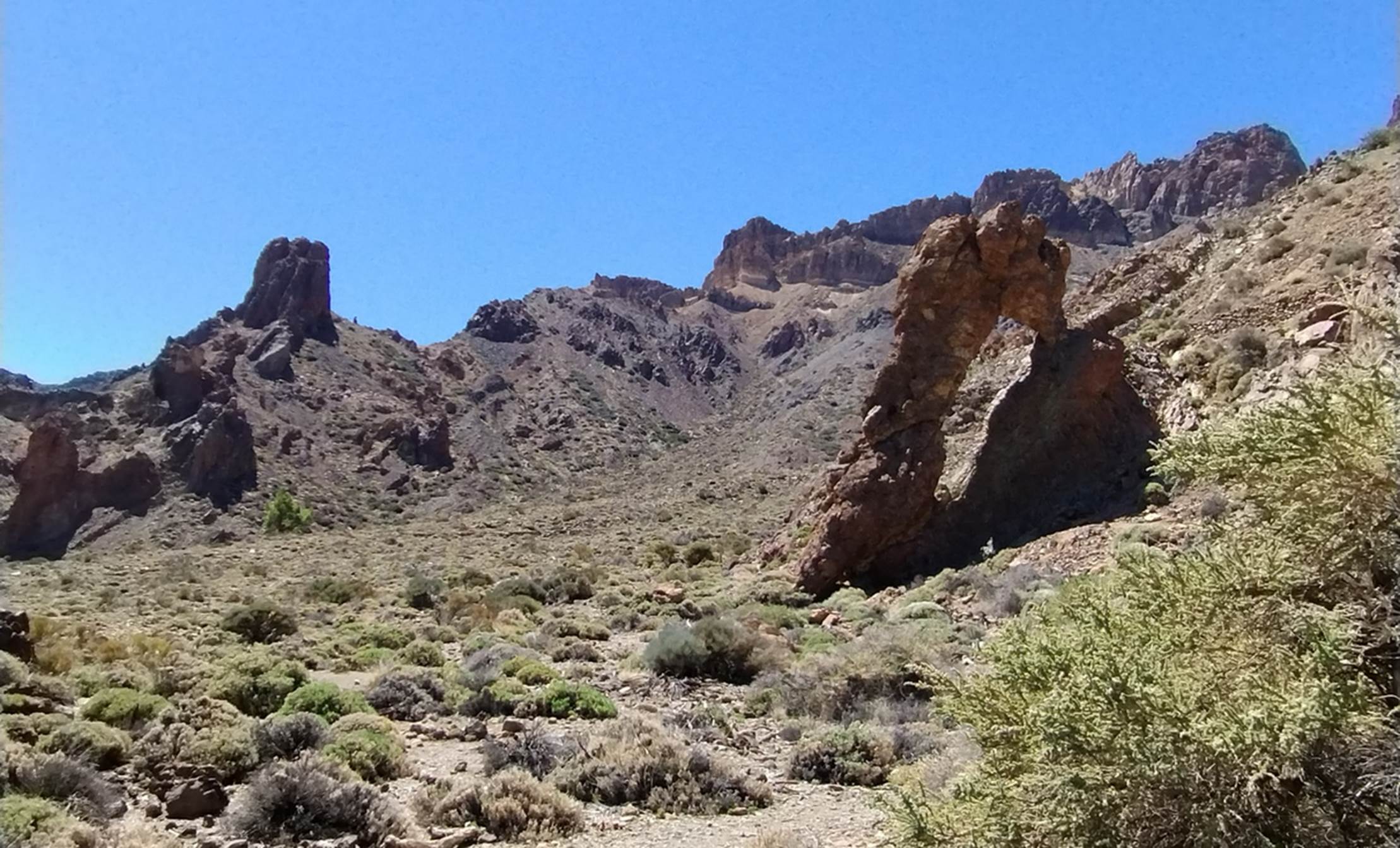
In the US Arches National Park, this would have been labeled an Arch,
There were definitely some strange formations as well as some very arid, desert-like flat areas around the mountain. The formations were all the result of the various eruptions, lava flows, and thousands of years of erosion. At one parking area there were some very large formations, along with a good, although distant, view of the volcano’s peak. To appreciate the size of these rocks, look at the photo below and notice the relative size of the people on the walkway on the left edge of the photo.
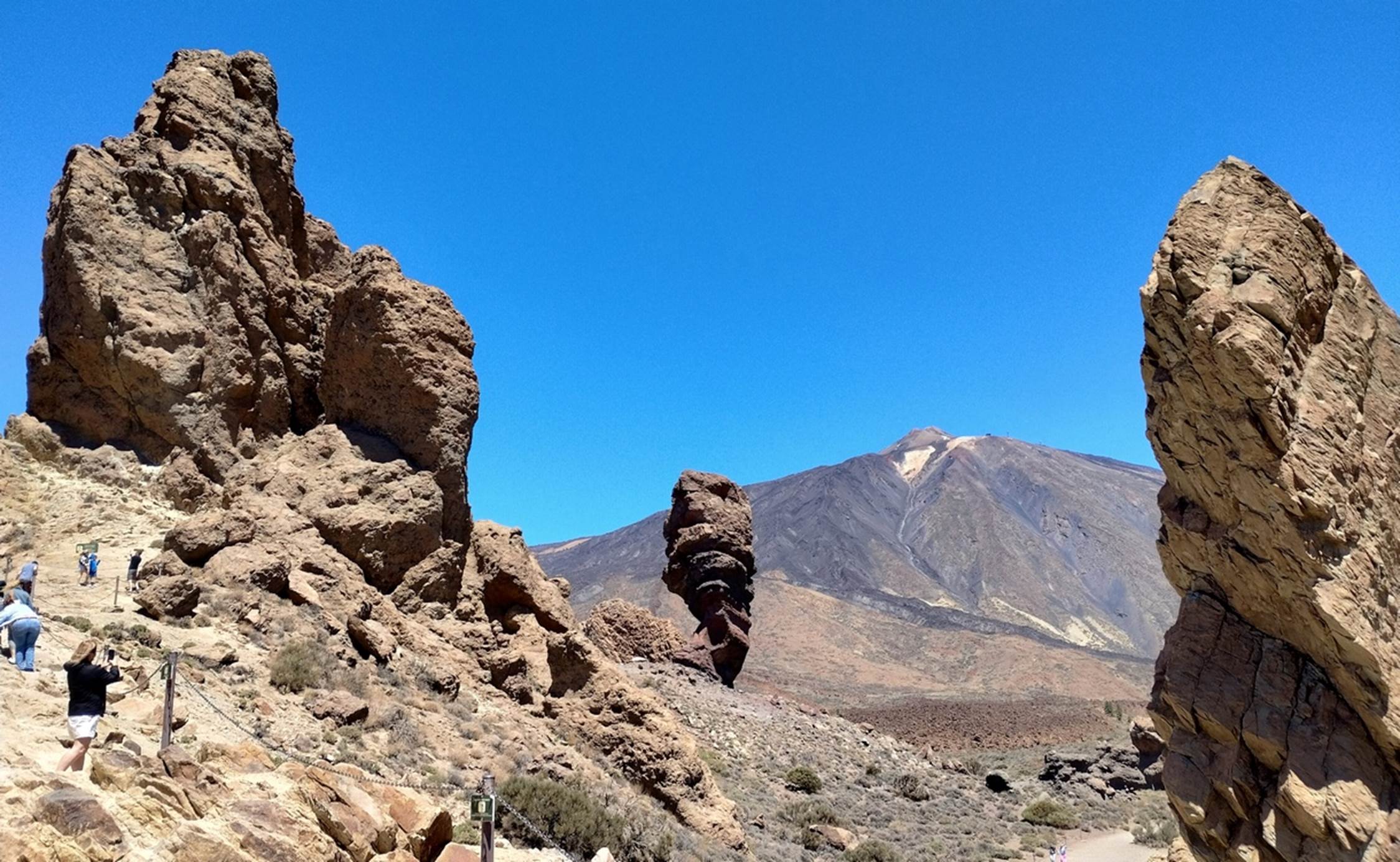
Some very large rocks, with Mount Teide in the distance
After studying the various rock formations and the desert conditions for a while, we headed back to the cable car station and picked up the people who had gotten the advance tickets. On the way out of the park we stopped at the same restaurant for a slightly late (1:30) lunch. Susan and I just got Cokes and simple sandwiches but I was surprised at the very reasonable prices, considering that we were essentially a captive audience with no other choice for lunch.
As we started back down on the bus, we could look in the distance and see the clouds below us.
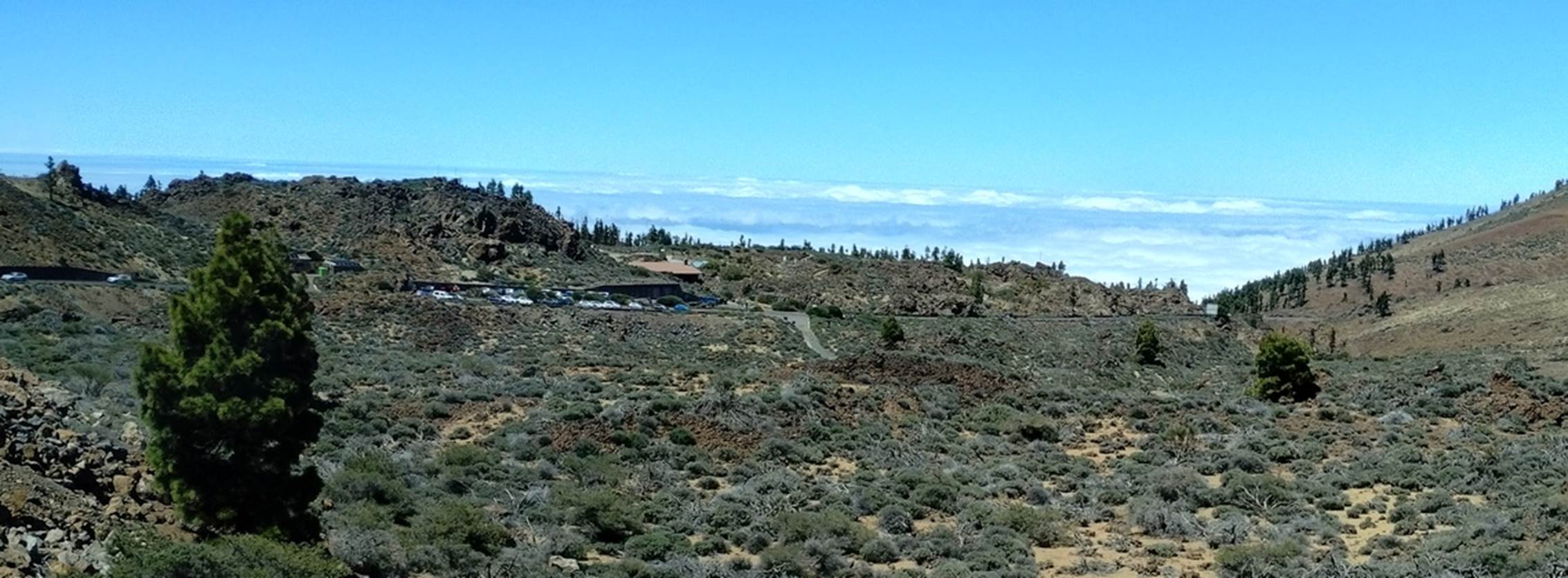
Those clouds in the distance are below us.
Once we got down a thousand feet or so, we were back into a temperate zone where some trees could grow and I got a video of the clouds just below us as we rode through the trees. The bus delivered us back to our hotel about 5:00 so we rested up a little while then again walked over to the road with lots of restaurants. We ended up doing a very Spanish thing for dinner…. we went to an Italian restaurant and had pizza! We wandered around a little after dinner and called it another early evening.
Monday, April 21: Tenerife and Embarcation
We would be boarding our ship today, but we were not supposed to check-in until around 1:00, so we had some time to kill. One reason I had chosen the Hotel Botanico (and the reason for its name) is the large Botanical Garden just a block from the hotel. I had thought it would make a good way to spend some time while we were on Tenerife, and today would be a good opportunity to visit it. The garden was initially called the “Jardin de Aclimatacion de La Orotava”, but is now generally just called the Puerto de La Cruz Botanical Garden. It was established in 1788 by order of King Carlos III with the idea of being a place to acclimatize plants from the new world prior to introducing them to gardens in Spain. A short walk and a three Euro entry fee got us into the garden. Being a tropical climate, there were quite a few plants and trees that we were familiar with from our time in Florida, but there were also some rather strange ones.
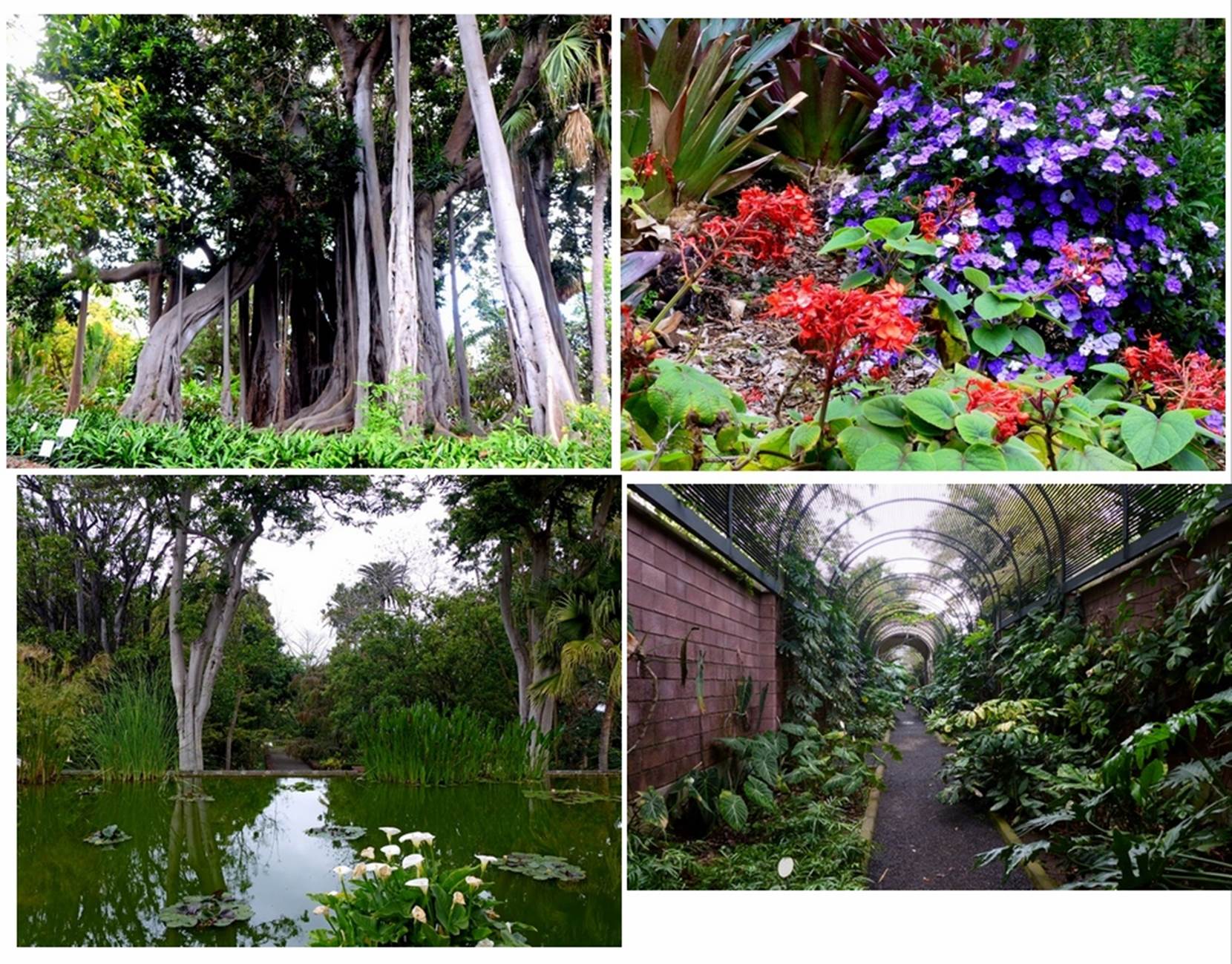
Some of the views in the garden
We spent about 90 minutes poking around in the garden then headed back to the hotel to finish packing our bags and check out to await our scheduled taxi taking us to the port at Santa Cruz, on the other side of the island. The taxi showed up a few minutes before 12:00 so we verified the planned destination (cruise ship dock at Santa Cruz), loaded our luggage, and climbed into the taxi. It was about a 40 minute ride to the port and the standard taxi actually cost less than some of the other transfer options: the driver got a good tip. Just before arriving at the port, we passed a rather unique looking building. Well, perhaps not so “unique” since everyone I talked to said the building reminded them of the Sydney Opera House. The interesting thing is that this building is the Santa Cruz Performance Auditorium and is frequently referred to as the Opera House since operas are presented there. If you check the photo below, you can see the auditorium to the left side of the photo.
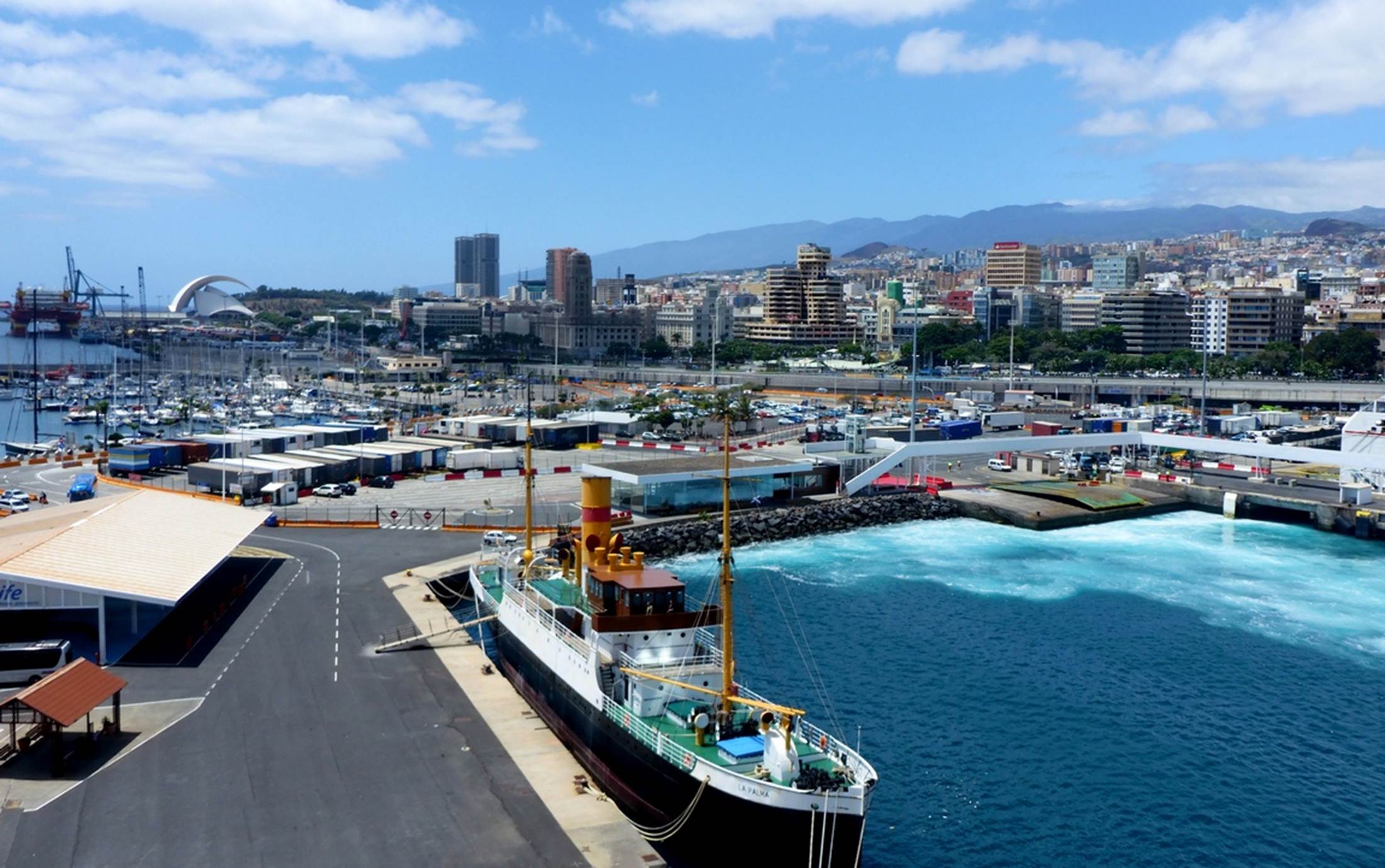
From the deck of our ship: an old refurbished freighter and the “Opera House”
We went through the check-in process and, since our cabin would not be ready for another 30 minutes, headed to the Terrace Café for lunch. Although we expected our friends would already be on board, we did not find them until we had finished lunch and discovered them enjoying a glass (or two) of champagne on the exterior deck.

Susan and our friends: Murray, Jyoti, Joe, and Emily
Emily and Murray had arrived on Tenerife the day before we did while Jyoti and Joe arrived the same day we did, but they were coming from London so had arrived at the southern Tenerife airport and they had all stayed at a hotel at the south end of the island. After visiting for a while, our cabin was ready for us, so we headed that way to start unpacking and moving in. We relaxed a little, then took a tour of the ship to get our bearings and take some photos. By the time we got back to our cabin, the luggage was there so we unpacked and organized everything for the cruise.
Unfortunately, about the time we boarded the ship, I started noticing a sore throat and the start of a runny nose. Through the afternoon both symptoms got worse and by the time we had gotten cleaned up and ready for dinner (about 6:00), my throat was definitely not happy. Thinking I would get something to calm my throat, we headed to the Horizon Lounge. We took a table in the middle of the lounge, among probably 6 or 7 other occupied tables. We sat there for 20 minutes with servers circulating around the room, but never coming to check on us. We got up and left: as we left the room, there were 3 servers standing by the bar and I briefly explained what had just happened, turned, and left. We went to Martinis bar where I ordered a bourbon with a splash of water and, oh boy, did that first swallow burn on the way down, but after that, my throat felt much better the rest of the night. We met our friends for an 8:00 reservation in the Toscana specialty restaurant where we enjoyed a very nice meal. After dinner, another stop in Martinis bar for some cognac… purely medicinal purposes for my throat. Despite the throat, I finally got a decent nights sleep: perhaps the cognac?
This is the end of Chapter 1. To continue, you can either click your browser’s “Back Button” and return to the main document, or click on the “Chapter 2” link below.