Chapter 4

 Malaga, Cadiz, and Lisbon
April 28, 29, 30, & May 1
Time for a quick map-check….. We just left Almeria and are headed for Malaga, Cadiz, and finally Lisbon.

Monday, April 28: Malaga, Spain
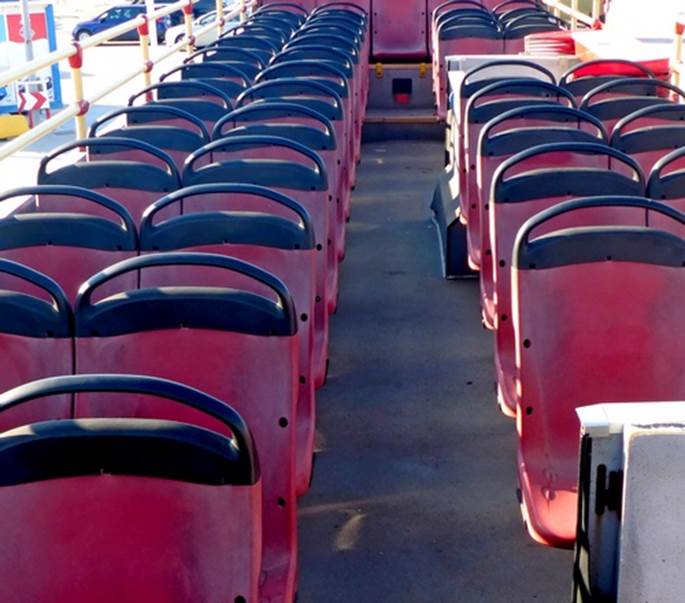
We had visited and toured Malaga a couple of years ago during our land tour of Spain. In that trip, we had a good tour of Malaga, as well as visiting Grenada, the Alhambra, and the town of Ronda. The normal excursions offered by the ship and other providers all seemed to cover the same places as we had been, so we decided to do something different: something we had seen many times, but had never done ourselves, the “Hop-on, Hop-off tour bus”. We had no idea how “different” this tour would turn out to be. We enjoyed a leisurely breakfast and got out to the “bus stop” on the dock well before the scheduled time. When the bus did arrive, it was empty and we were the first ones on, so we got the prime seats at the front of the upper level.

A Malaga Hop-on, Hop-off Bus
See those people on the upper level in the right front seats? That is where we were. We had a good view from the upper level as we drove through the streets of Malaga.
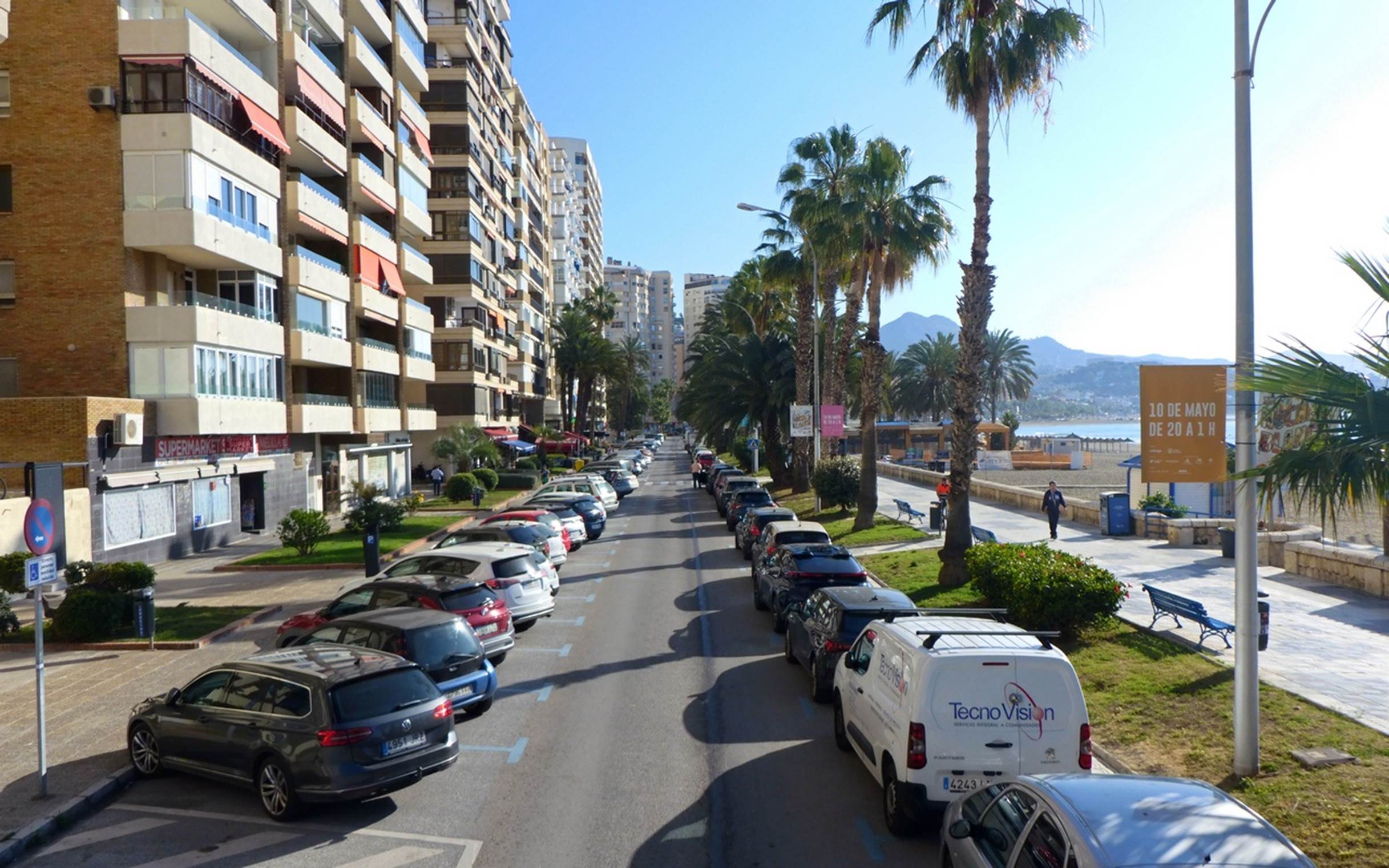
We had a good view from the upper level.
The bus did a more-or-less circular route through the city that took about 90 minutes, and there were multiple busses, so if you hopped off one bus, you could hop on the next one in 20 – 30 minutes. My plan was to stay on the bus for the first time around, then on the second loop, get off occasionally to sightsee and take photos. It almost worked.
About half way through the route, we stopped briefly at what appeared to be a popular plaza with a pedestrian mall with the Cathedral of Malaga at the other end. There were quite a few people, but it was not really busy or noisy.
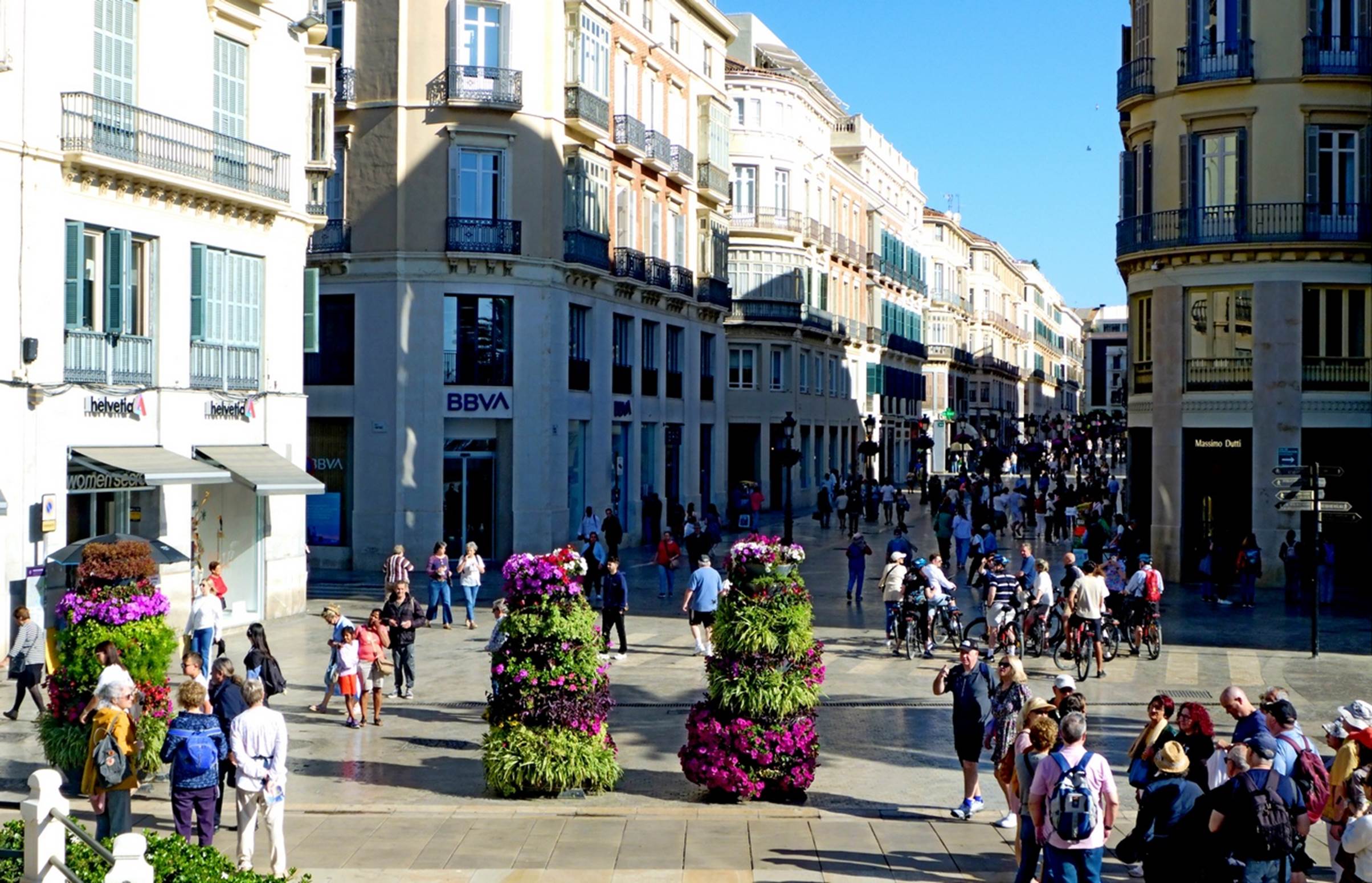
A popular but quiet plaza
We stayed on the bus past the train station and several other major sites, trying to get a better feel for just where the interesting places were. As we approached the port area, we knew where we were in relation to the ship, so we decided to hop off and just walk the rest of the way to stretch our legs a bit. There was a nice park along much of the waterfront that was pleasant to walk through.
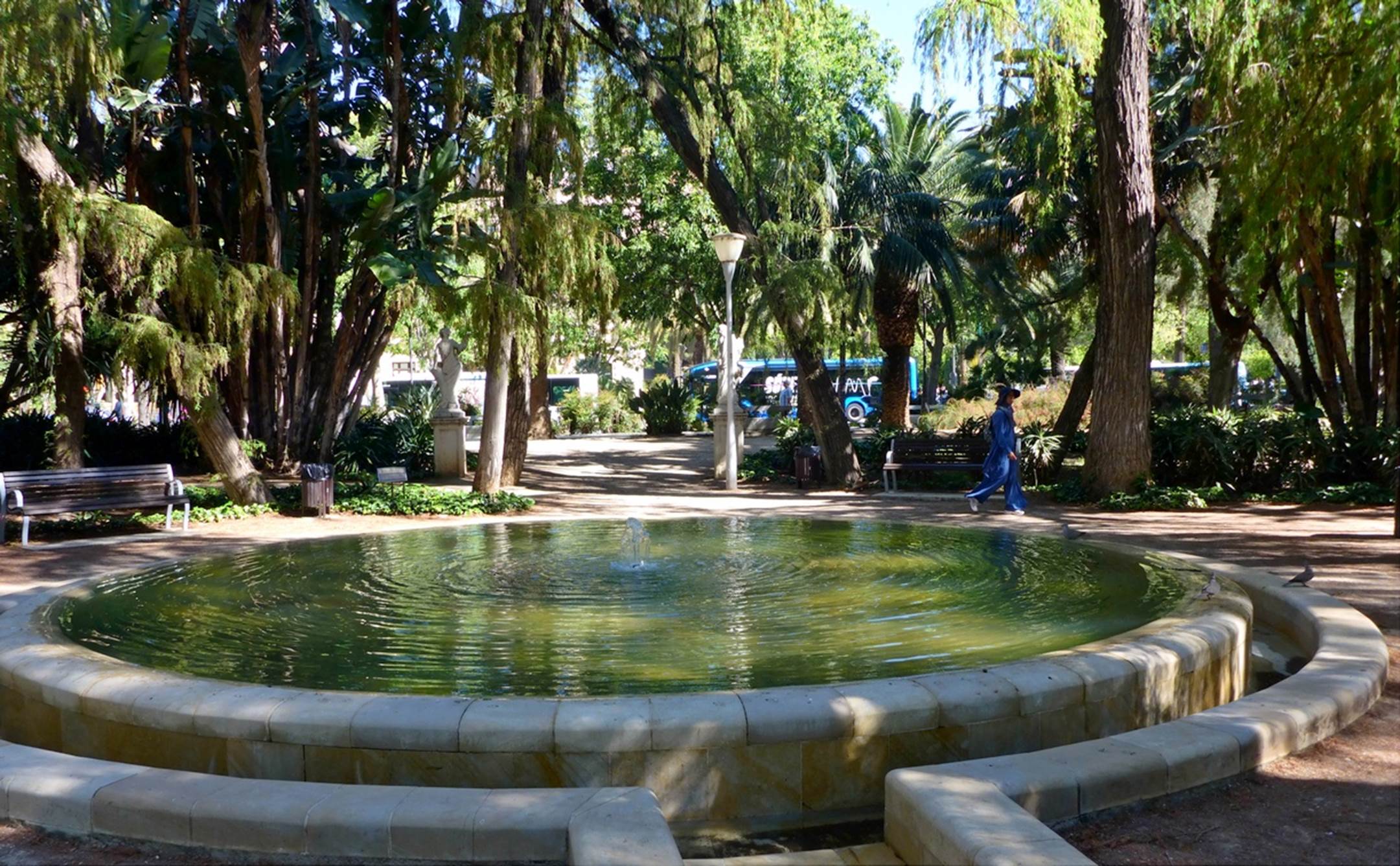
Part of the waterfront park
It was a nice walk, probably between a mile and a mile and a half, past some shops and restaurants and one of their main beaches, lined with large hotels.

Nice beach, but not many people in the water
We got back to the cruise ship terminal, relaxed, used their rest rooms and waited for the next bus to come by for us to Hop On. When we got on the bus this time, all the upper-level seats were taken, so we grabbed a couple of seats on the lower level. The view was not quite as good, but we had already seen it and we were not sitting in the bright midday sun.
On the first loop we had not gotten off at the fortress Castilio de Gabralfaro on the top of a hill overlooking Malaga, but I had spotted what appeared to be a good overlook to get some photos from, so this time we got off. We checked the fort, but there was a long line to get in and we had seen enough forts already, so we skipped that option.

People lined up to enter Castilio de Gabralfaro
We walked down the road a little and found the overlook that I had seen previously and I got several photos, including some panoramic shots and the one below. This photo shows our ship in the harbor, much of the city, and the bull ring just below us.

A nice view of the harbor, the city, and the bull ring
When the next bus came around, we got on it and continued our ride. We got to that plaza I mentioned previously about 11:45 and it seemed different now: more people moving around and louder. In the photo below, from a lower perspective, you can’t see much difference from the earlier photo, but something had changed. Perhaps you can get a feel for it from this short video of the square.

The plaza seemed different now.
Soon after passing by the plaza, we crossed the Rio Guadalmedina River that flows through the city and we got off because I wanted a couple of photos here. There were a lot of people milling around, but I assumed that people were out enjoying the nice day during their lunch break. The river is usually just a trickle through the town but when there is a heavy rain the river becomes flooded as it empties out into the sea, less than a mile downstream from us. There were a couple of interesting photos here, such as the large paintings on the side of a building.
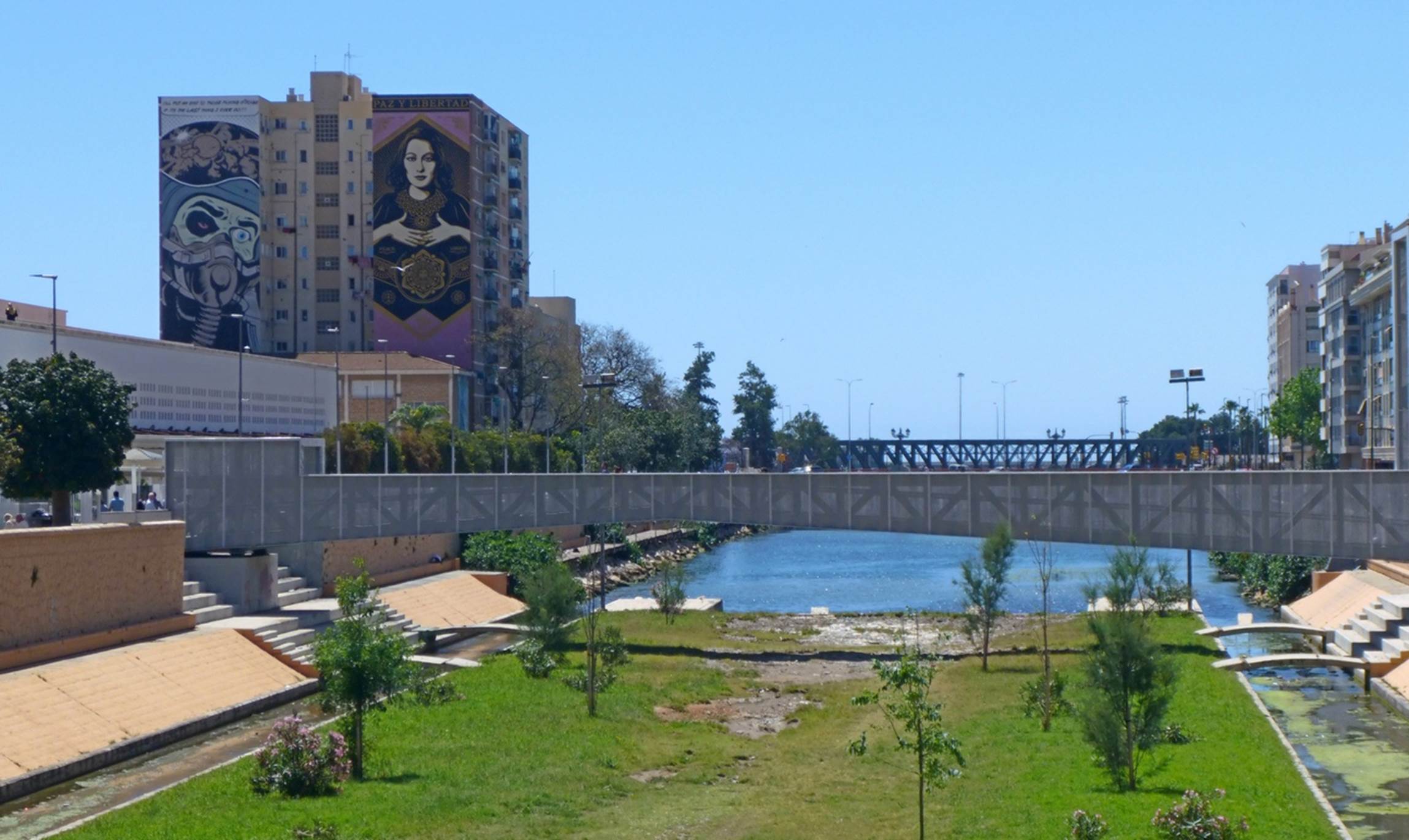
The paintings reminded me of the wall art we had seen in Valparaiso (Chile) in January.
There were several pieces of artwork sitting around, such as the face carved in stone, below.

More interesting artwork
We got back on the next bus that came by, but this bus soon deviated from the normal route. The driver said that we would soon stop (at the train station) and we would have to transfer to another bus. It seemed a little strange, but not unreasonable, so we did just that. Once on the new bus, we noticed that the traffic seemed to be getting worse, with traffic jams and stoppages. The bus slowly made its way, but deviated on a different, longer route that would take quite a bit longer to get back to the harbor area. By now we noticed that the traffic lights did not seem to be working, probably causing at least some of the traffic problems. Although the new route the bus was taking was only about 4 or 5 miles further, we were moving so slow that we were beginning to wonder when we would get back to the ship since we had some events scheduled for the early evening. For one stretch of about a mile, we watched one pedestrian walking on the sidewalk beside us and he was making progress faster than we were. Finally, we got to an area we recognized from the first time around the route and we knew we were about 2 miles from the ship. After a short discussion, we decided to abandon the bus and head out on foot.
We were starting from an area not quite a mile further from the ship than where we walked in the morning, but the traffic and people were almost unbelievable. We walked past/through one major city bus stop where multiple routes crossed and there were hundreds of people lined up to get on a bus. One line looked long enough to fill 4 or 5 large commuter busses, if they ever showed up. We kept walking and soon got to somewhat familiar territory and finally made our way to the ship, after a good bit of exercise. (When we started running into major traffic problems, I did not think to take any photos.) Once we got on board the ship and headed to the Waves Grill for something to eat, we heard some people talking about the major power outage affecting the entire city. As it turned out, this was the huge power outage that had shut down all electrical power throughout Spain, Portugal, and part of France. We had been participating in a historical event and did not know it!
For the rest of the day, we recovered from our long walks and relaxed until time for dinner in the GDR. After dinner, while in Martinis having a glass of Port (for a change) the captain announced that there were high winds and some waves predicted for the next day and there was a significant chance that we might not be able to get into and docked at the port of Cadiz. I knew that there had been weather problems along the Atlantic coast of Spain recently, causing issues with a number of cruise ships, so I was not surprised. The entertainment this evening was another good show with Nichole Ward and then we headed to the Horizon lounge for a glass of wine listening to the “Rock the Boat” band.
Tuesday, April 29: Cadiz (Not!)
Shortly after we awoke this morning, the captain came on the PA system and announced that, as he had suggested, the winds were too strong to attempt to get into the port of Cadiz, so we would have a “Day at Sea”. When I looked out our veranda, I could see the effects of the wind and it was blowing pretty good. Where the ship was at that time, we were still somewhat protected from any large waves by the distant Moroccan coast, but the sea was very choppy and a strong wind exerts a very powerful force on large ships, making maneuvering and docking very difficult, so I understood the decision. By early afternoon the wind was dropping and the sea getting calmer, but of course, by that time it was too late to consider trying to get into Cadiz.
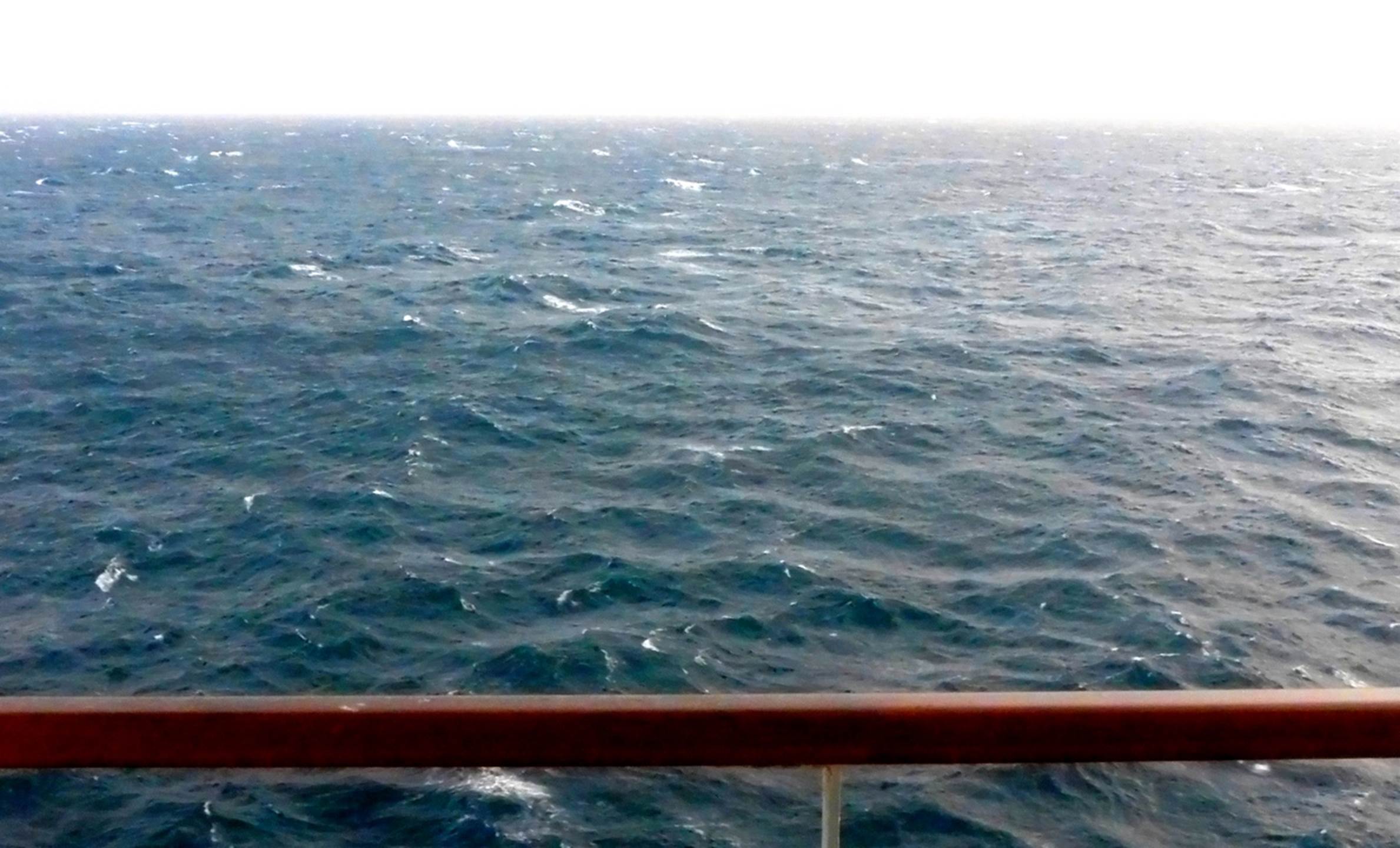
The waves were not large, but the wind was very strong.
The ship quickly went into “Day at Sea” mode with all kinds of extra activities for the guests. One activity that was rather extensive and I thought interesting was a “Art Scavenger Hunt”. Participants were given a couple of sheets of paper, each with a number (about 20) of small photos of just parts of paintings or other artwork from around the ship. The objective was to find the artwork which included that image and note its location on the paper. People were wandering all over the ship, papers in hand, examining all the paintings and sculptures.
There were the usual extra trivia contests, bingo games, Ping-Pong tournament and sales pitches for the shops on the ship. We mostly just relaxed, read our books and watched the other people running around the ship. I was still feeling the effects of whatever my ailment was, so was somewhat glad to have a day to relax after several days of somewhat vigorous exercise.
We had our normal pre-dinner wine in Martinis lounge, followed by dinner in the Red Ginger restaurant, seated with another couple. On our previous Oceanic cruise on the Sarina, we were not enthused about our meal in that Red Ginger restaurant, but either the menu had been changed or we ordered better, as we both had very good meals this evening. There was another “Song and Dance” production by the crew this evening but we skipped out of the “Salute from the Crew of Marina” and headed to the Horizon lounge to enjoy the “Global Dance Party” with the “Rock the Boat” band.
Wednesday, April 30: Lisbon
Since we did not visit Cadiz, we were arriving in Lisbon earlier than scheduled: about 8:00 rather than the scheduled 10:00 AM. One of the main sights to see on the way into Lisbon, is crossing under the April 25 bridge. If you are not familiar with it, that name deserves some explanation. On April 25, 1974, the people of Portugal revolted against the dictator government. It is sometimes called the “Carnation Revolution” because no shots were fired and no one was killed. The people just took over the government and the dictatorship quietly folded up and shut down. The bridge, which had been in operation since 1966, was later renamed in honor of the date of the revolution.

Coming up on the April 25 bridge
If you think the general design and color of the April 25 bridge looks familiar, it was built by the same company that built the Golden Gate bridge in San Francisco. For the full effect of sailing under the bridge, check this short video. The monument at the other end of the bridge deserves comment also. The “Christ the King” monument was built after the Cardinal Patriarch of Lisbon visited Rio de Janeiro and thought the “Christ the Redeemer” statue there looked good and that Lisbon should have something similar.
Because we were not scheduled to arrive before 10:00, none of the excursions started before about 1:00. After looking at the neighborhood from the ship, we decided to take a walk on our own. It was an interesting neighborhood with some colorful buildings.

The red building used to be a major train station and is now a hotel
We got through the cruise ship terminal and walked toward the former train station. About the time we got to the road just before the train station/hotel, a couple of motorcycle police came up with lights flashing, then two police cars, then several big black SUVs came by. They appeared to go into the building just this side of the hotel, the one with the orange roof, which is the Military Museum. We have no idea what that was about, but it added a little excitement. We walked a little further but, when it did not look very interesting, we turned around and headed back, walking along some of the back streets. We noticed that Lisbon, at least this part of it, has the same love for decorative balconies as we had seen previously.

They like ornamental balconies here also.
We walked past the ship, going the other direction, toward a small harbor where some tourist type boats were looking for business. Another large cruise ship had just come in and docked behind the Marina, so there were plenty of tourists around. After walking for about an hour, we went back onto the Marina, had some lunch, and waited for time for our excursion.
Since we had spent a couple of days in Lisbon about 2 years ago, most of the excursions were going to places we had been to previously, so we chose the “Gardens of Lisbon” tour, a visit to several of Lisbon’s botanical gardens. Shortly after 1:00, our tour started and we had a 30 minute bus ride to the first garden, the Queluz Palace Gardens. The palace was the residence for two generations of the royal family and the gardens were created around the palace buildings.
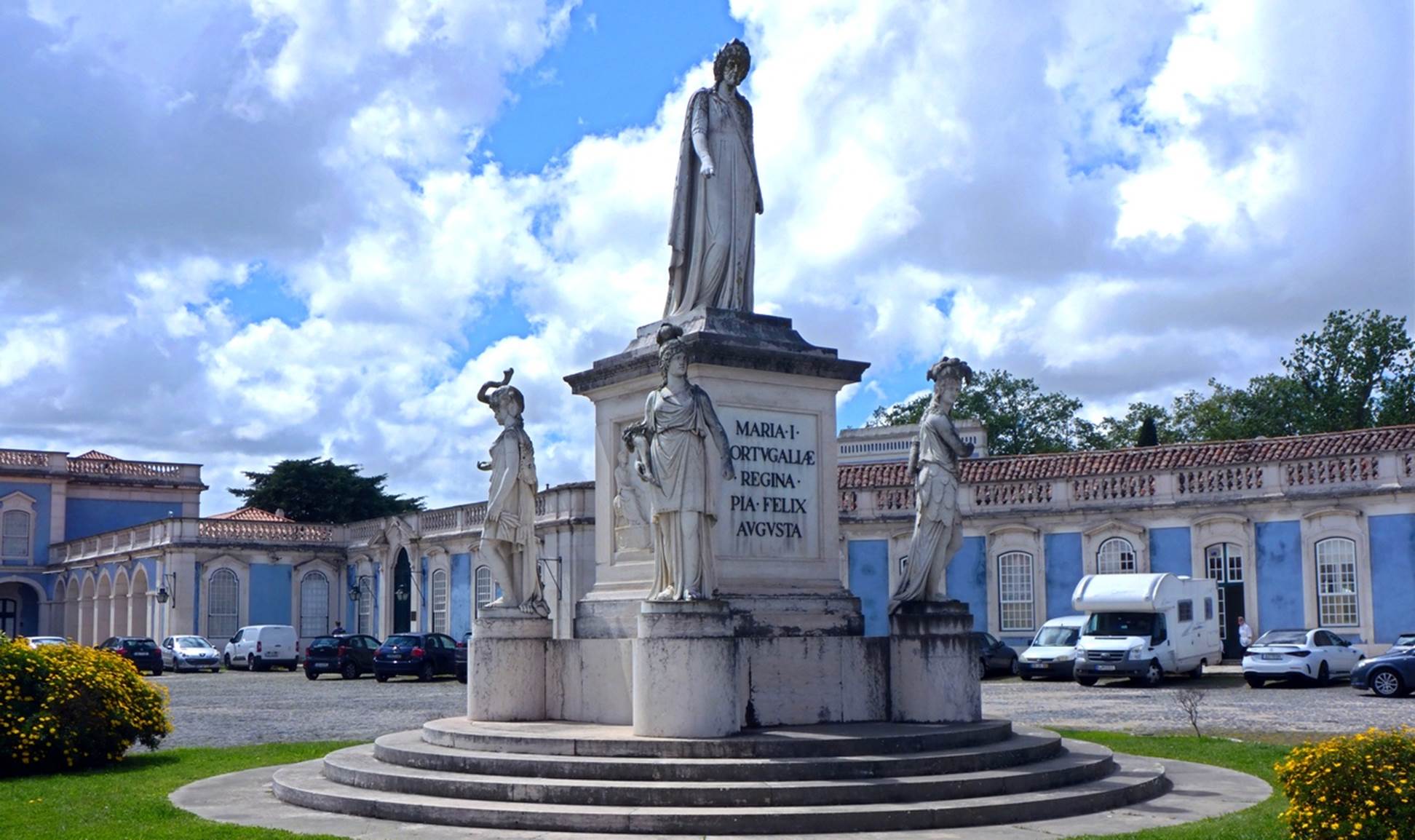
Outside the entrance to the palace and gardens
We were not visiting the palace itself, as that is a separate tour, but we did have to walk through part of the palace to get to the gardens. What we could see was rather impressive.
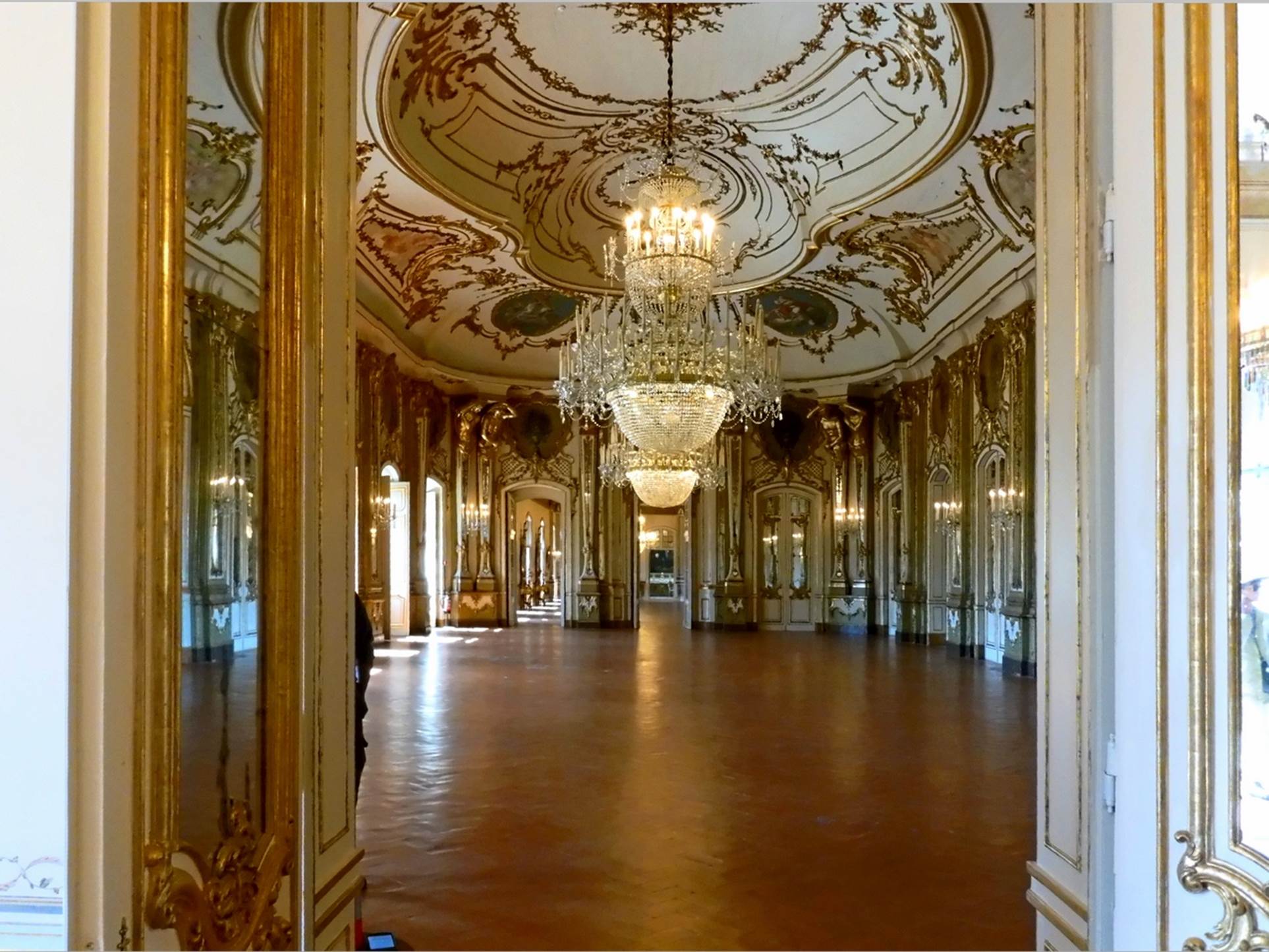
One of the rooms we passed on the way to the gardens
When we entered the gardens proper, it was rather impressive. Some say that the palace and grounds were patterned after the Palace of Versailles in France and there is certainly a resemblance. The gardens appeared to be very carefully maintained with all hedges perfectly trimmed and no weeds or plants out of place.

The gardeners and caretakers have a full-time job.
In addition to all the palace buildings and the garden plants, there were numerous statues and memorials. The “Fountain of Neptune” is probably the most ornate of the artwork in the gardens.
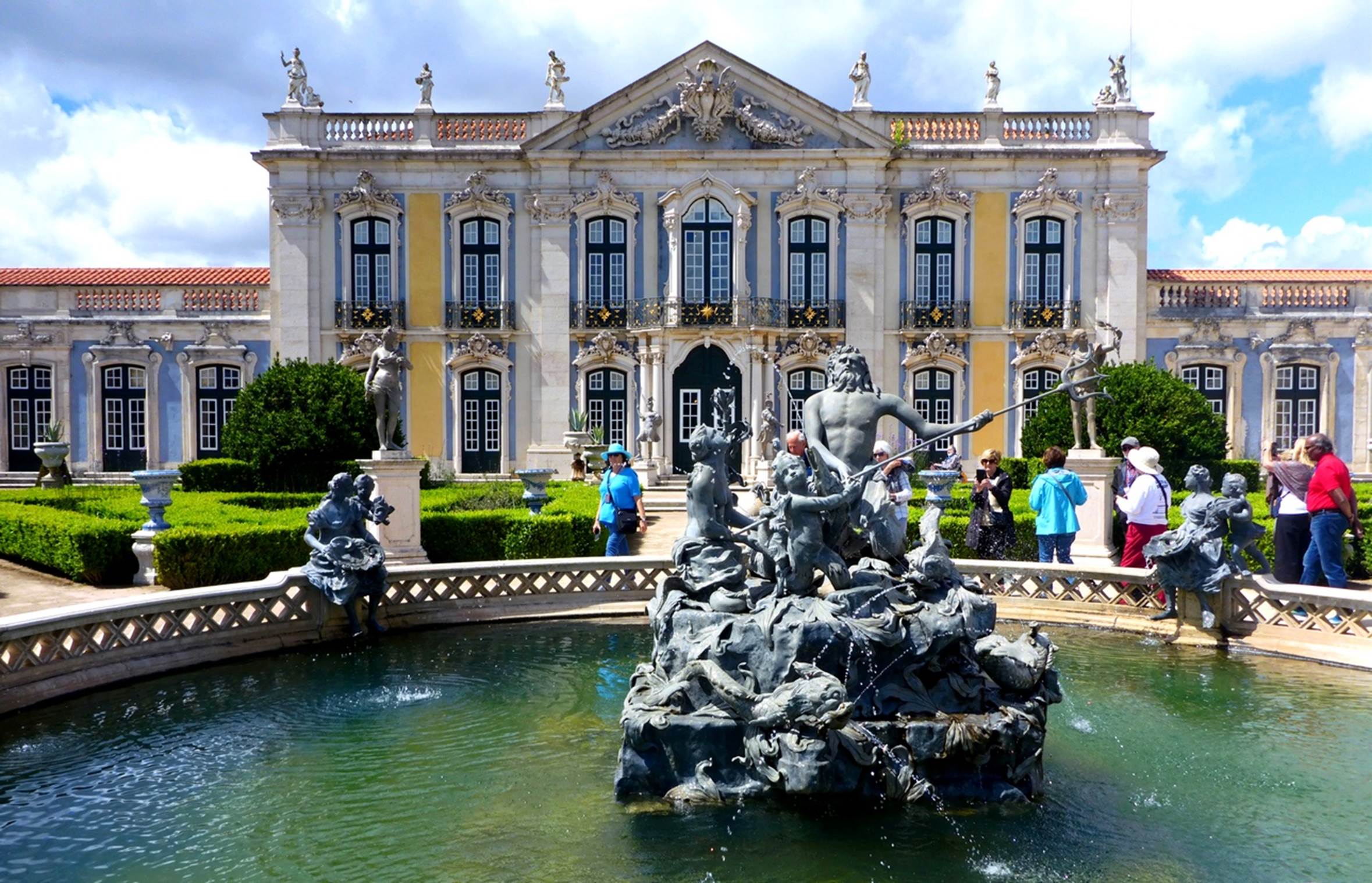
The Fountain of Neptune in the garden of Queluz
Around the corner from the large garden was an area with several structures covered with painted ceramic tiles. It was not just a few tiles, but several rather large “murals” on the sides of the structures, but executed using ceramics. As you can see in the photo below, the designs are not simple and had to be well planned out as the painting has to be done on individual tiles, before they are fired in the kiln.
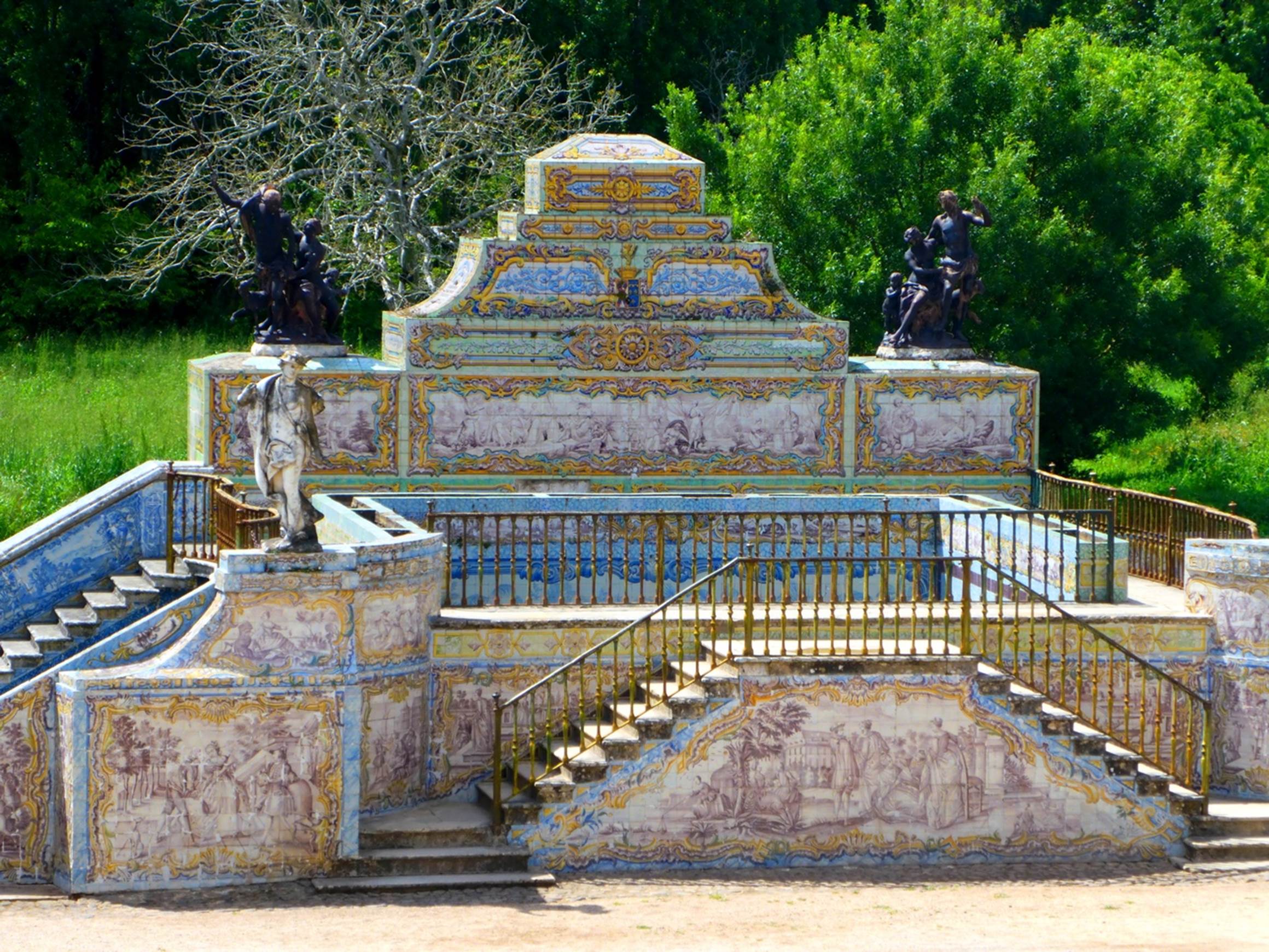
Just a part of the painted ceramic structures
Besides the beauty and uniqueness of this ceramic tile approach, there is a practical reason also. In the late 1700s, the available paints were not very good and would only last a couple of years in the sun. But, by firing the paints into the ceramic base, the paint colors now last hundreds of years: they do not have to be repainted every few years.
In another part of the gardens were some hothouses and planters that are designed to accommodate and foster the more tropical plants, like some fruits and, especially, pineapples. It seems that the people were enchanted with pineapples and spent a lot of time and effort growing them.

Hothouses for pineapples and other tropical plants
After getting a good look around we headed back to the bus, got on, and drove to the next botanical garden. This next garden was the Botanical Garden of Ajuda which is considered to be the first Botanical Garden established in Portugal. While this garden probably had a wider variety of plants and trees than the Queluz garden, I’m afraid that it was not being maintained nearly as well.
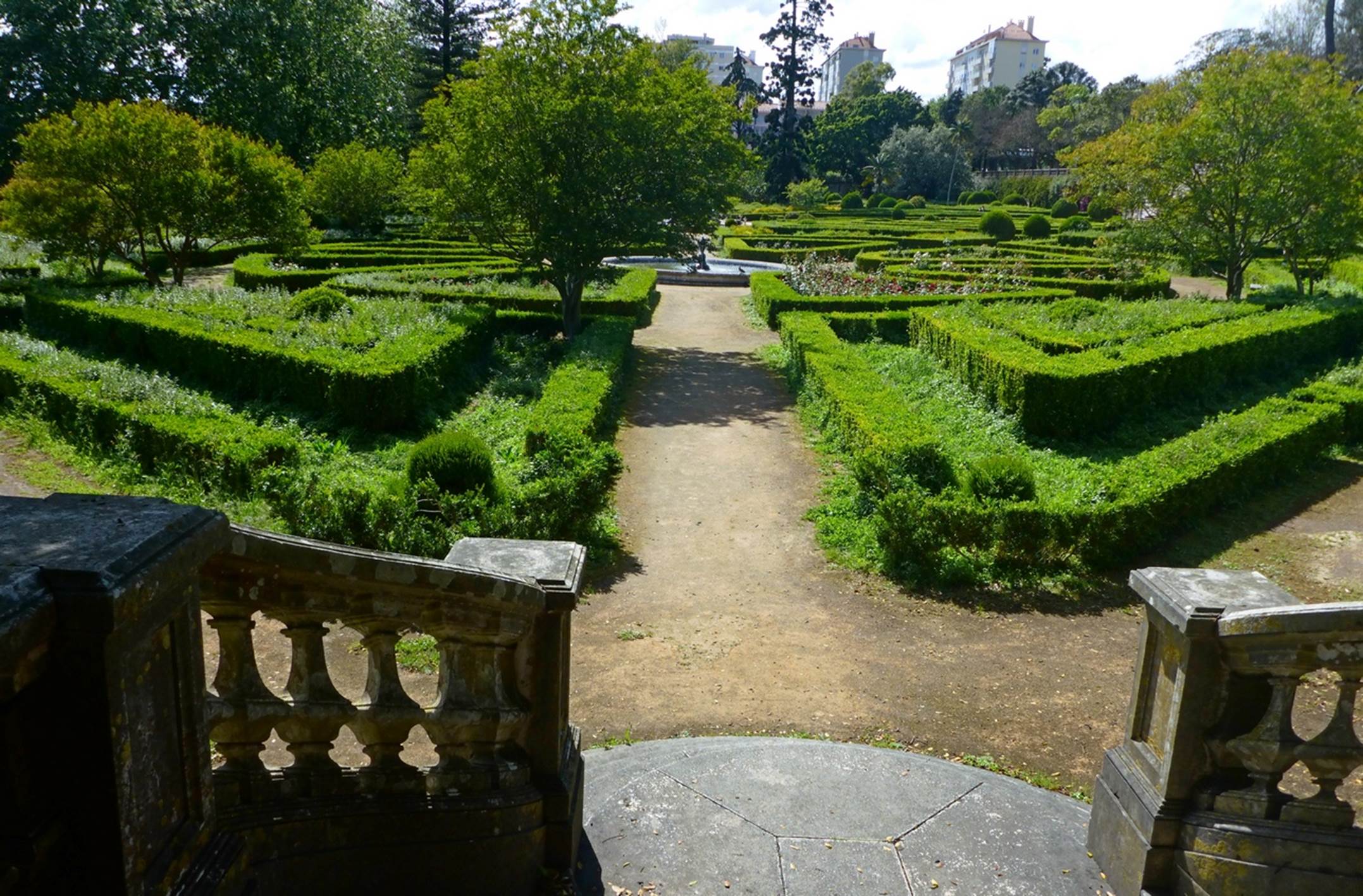
The general layout is good, but it needs a lot of maintenance.
Many of the hedges needed trimming and the weeds had about taken over in numerous places. It appeared that there had not been much (any?) maintenance in about 4 – 6 months. While not as extensive as at the Queluz garden, the several pieces of artwork were impressive, although the water in the fountains, as well as the artwork itself, needed to be cleaned.
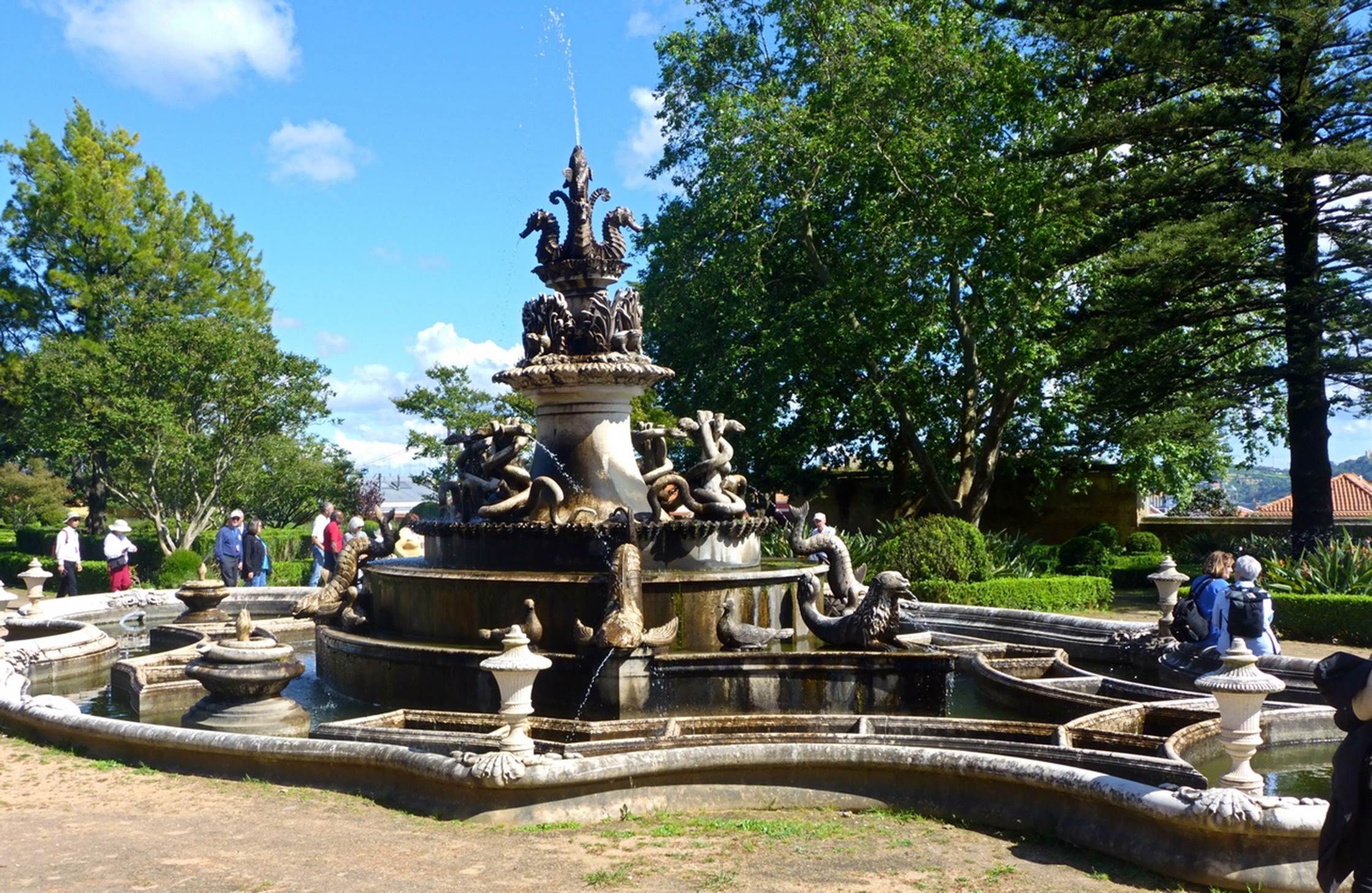
No Neptune, but something like 40 water spouts
I’m not sure if there are actually 40 water spouts (I didn’t attempt to count them), but there are quite a few and there are some live animals in the pools surrounding the fountain.
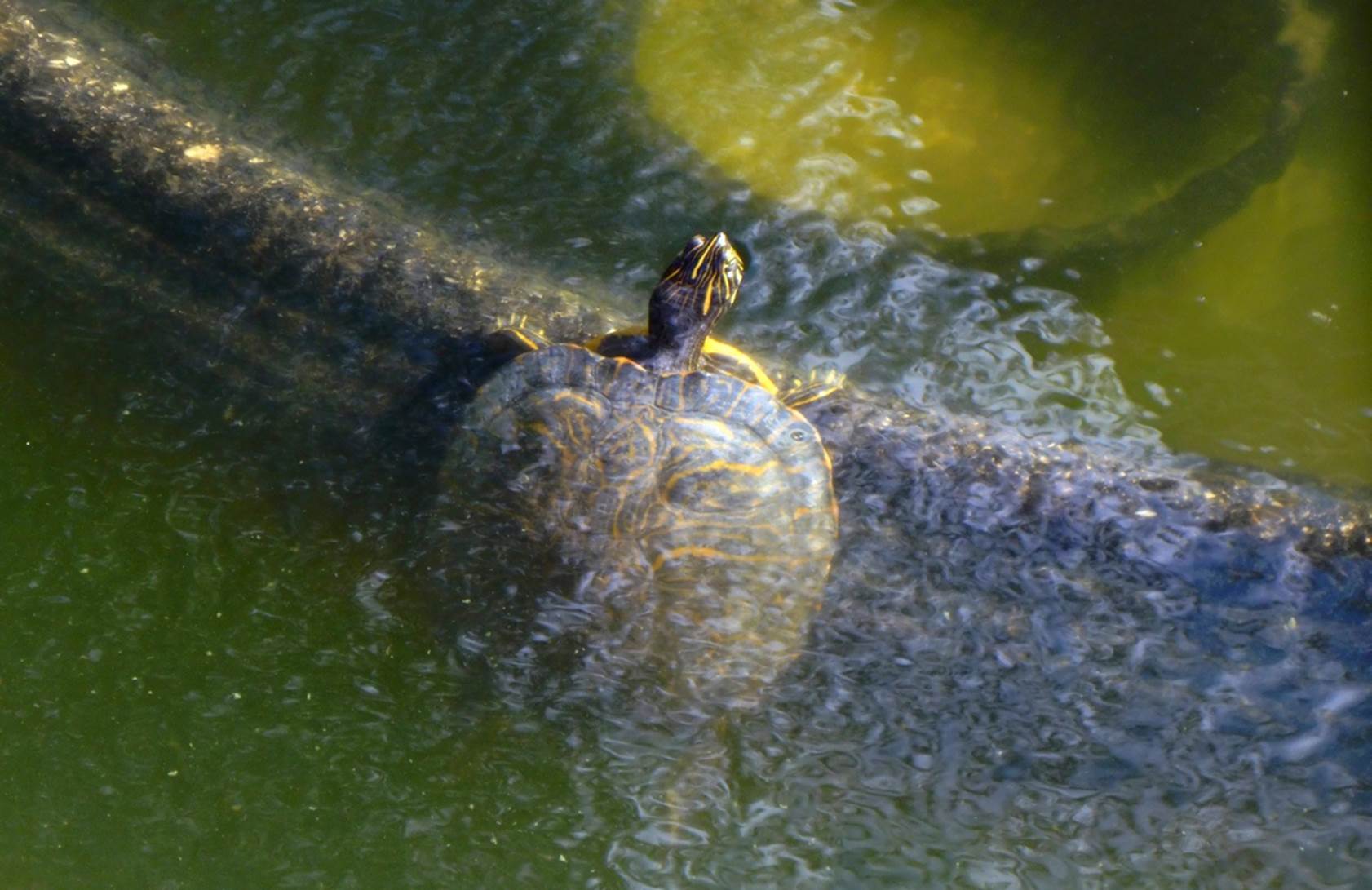
A turtle appeared to have found a home here.
There were numerous unusual and beautiful plants, such as the Bird of Paradise plant in the photo below. On an upper level were several unusual trees, a couple of which were being supported by steel structures to keep them from collapsing.
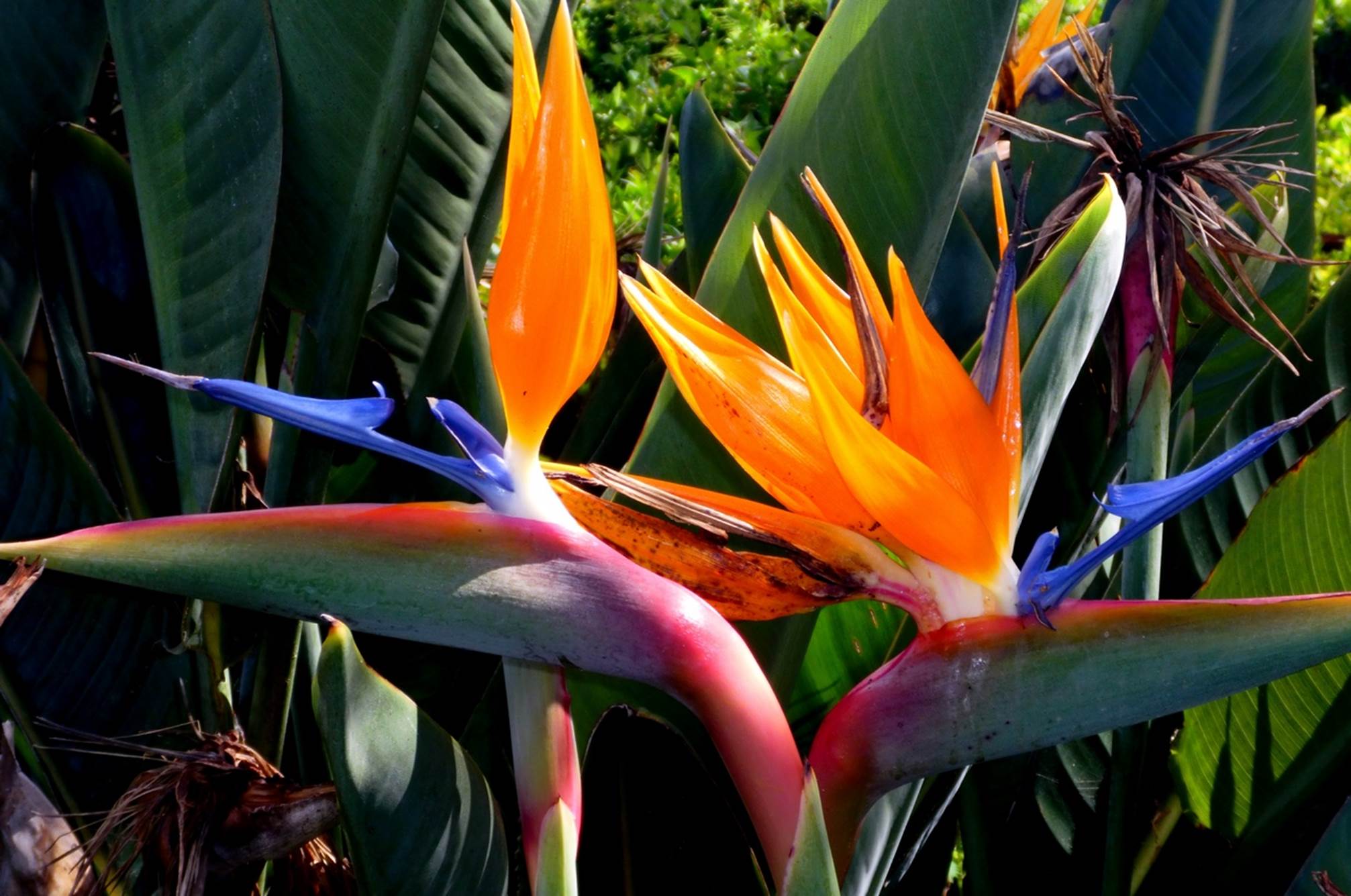
Bird of Paradise blooms have always fascinated me.
At one point we could look across the garden and see the April 25 Bridge and we were obviously on the other side of it from the ship. From our previous trip, I had a pretty good idea of just where we were in relation to some other sights we were supposed to visit on this excursion, although the time was getting a little late.
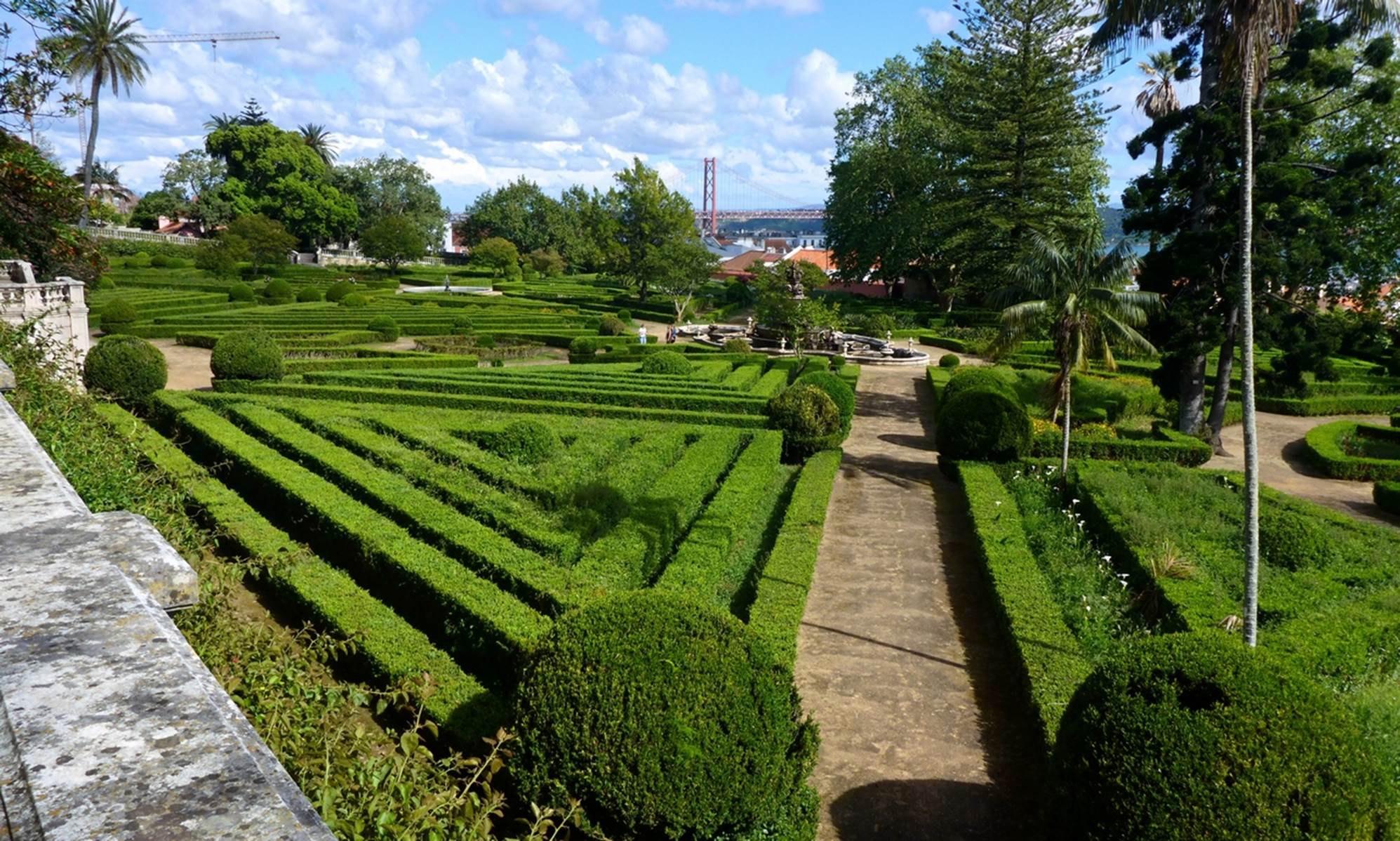
A view of the garden with the April 25 Bride in the distance
For about the last 15 or 20 minutes we were in the garden, I had been hearing a very loud bird call that I recognized as a Peacock, but I could not locate the bird. As big as Peacocks are, you would think that it would be easy to find, but it turned to be a bit hidden in front of the information/ticket office at the entrance gate. This Peacock was a pure white one, instead of the more common multiple-colored birds.

A very white Peacock
Our guide through the tour was obviously very knowledgeable and enthusiastic about the gardens, but it appeared that she was not very organized or aware of the planned schedules. When we got to the exit gate, it was locked: we had stayed 15 minutes beyond the closing time! A maintenance worker did come and open the gate, but some of our group were getting worried.
By the time we got on the bus, I estimated that we were about 45 minutes behind the schedule we should be on to complete the tour as described. We were supposed to drive to and stop briefly at the 16th-century Belém Tower and also the Monument to the Discoveries, both of which are along the riverfront, not far from the garden. Apparently, the guide and bus driver decided we were too far behind schedule and dropped these sights from the tour. Susan and I did not mind as we had spent significant time at both sites on our previous visit to Lisbon, but I suspect some people were disappointed. Even dropping the visits to those sites, we still ended up being almost an hour late getting back to the ship. Because of some new traffic restrictions, busses had to take a very round-about route back to the cruise ship terminal. What should have taken about 20 minutes, took almost an hour instead. Normally it would not have been an issue for us, but we were to meet our friends on the ship and time was running short by the time we got back on board.
Our friends, Emily and Murray, had used their “Vista suite influence” to get us all into the Polo Grill for our last evening’s meal, and we met in Martinis lounge for a drink (or two) before dinner. We also had to do most of our packing early so that we could quickly finish packing and get our luggage out into the hallway after dinner, before the 10:00 deadline. Dinner with our friends was fun and, although the Polo Grill was out of their prime rib, we did discover a very good Italian wine. After dinner we made a quick stop in our cabin to change into what will be our traveling clothes, throw the rest of our clothes into our bags, and put the bags out, just as the crew were coming by to collect the luggage. One last visit to the Horizon lounge to listen to the band made a good end to our cruise.
Thursday, May 1: Lisbon Disembarkation
A slightly early wake-up alarm, followed by breakfast in the Terrace Café, and we were ready to leave the ship by 7:30, although our group was not supposed to be called to leave until 8:00. We waited in the main lounge and when our group had not been called by 8:05, we got up and into line to leave the ship. As we were walking on the dock, leaving the ship, we heard our group called. One of our bags was not where it was supposed to be, but we were able to find it quickly and one of the crew pointed us to our car and driver for the transfer to the airport.
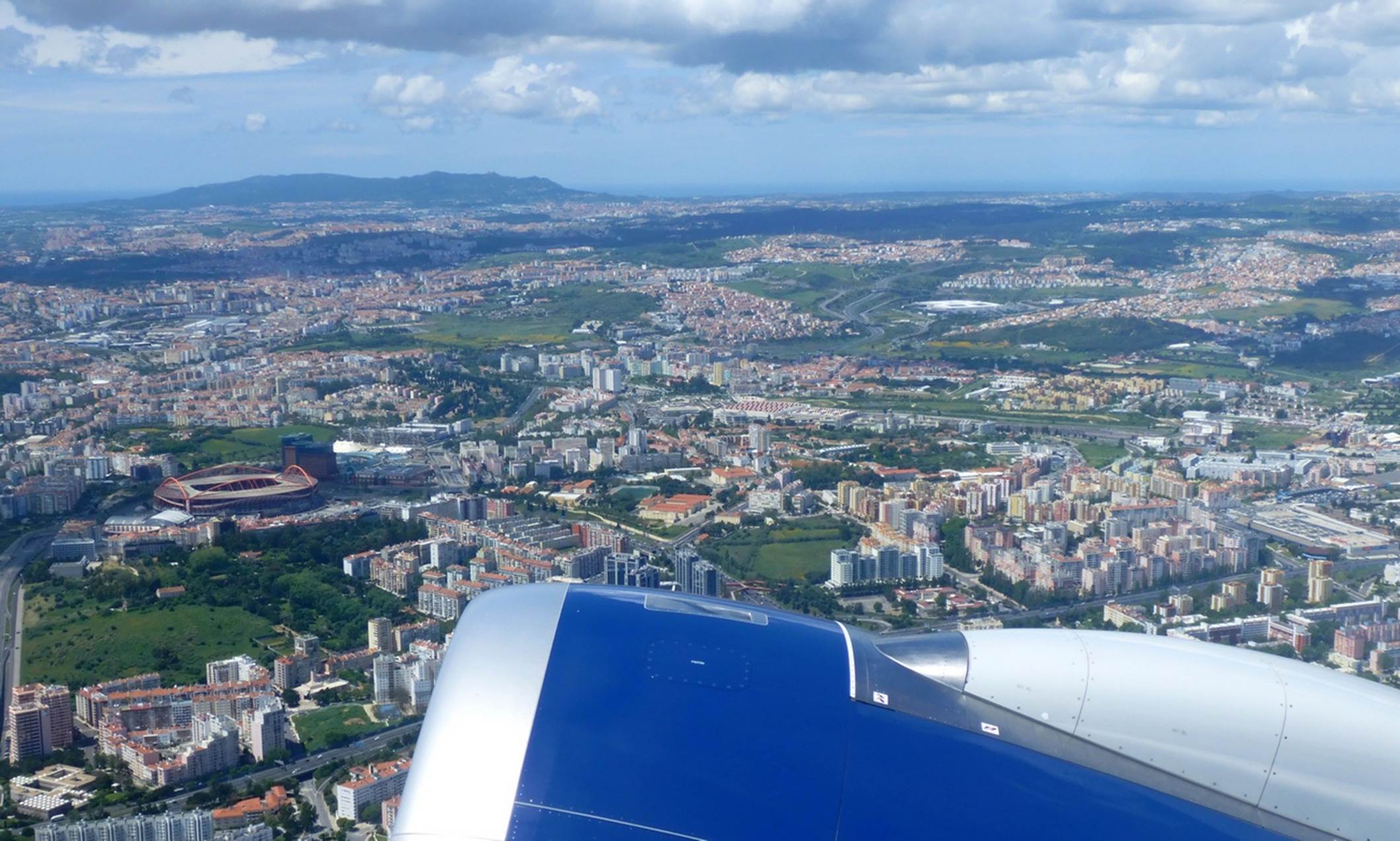
Leaving Lisbon
You should now click on your browser’s “Back Button” (probably several times) to go back to the main page to finish the report.