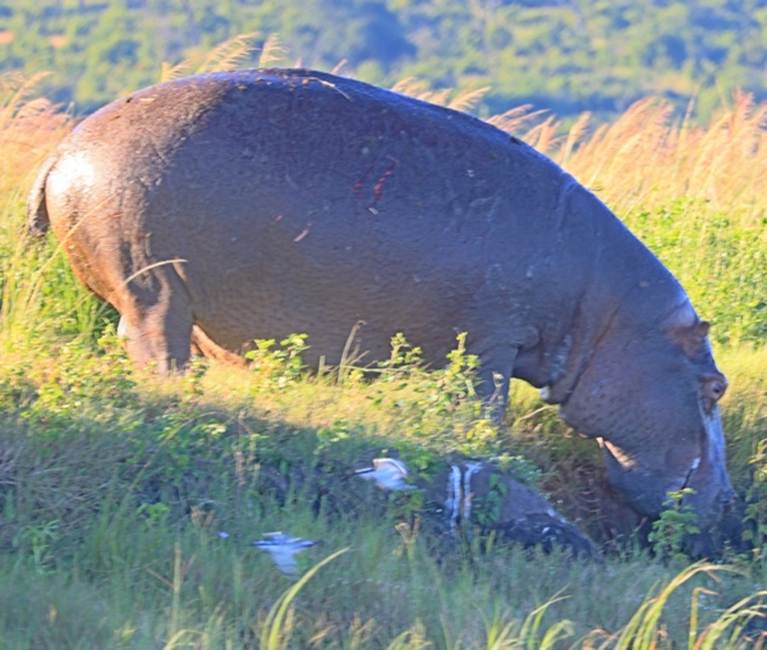
 Chapter 2
Chobe River
And the
Zambezi Queen
March 9, 10, 11, 12

Heading north from Cape Town to Chobe River
Monday, March 9: From Cape town to Zambezi Queen
In my daily log that I keep, I referred to this day as our “passport killer day”. We passed through parts of four different countries and each had to get the corresponding stamps in our passports. In addition, two of them required Visas (at a cost, of course) to enter the country. It ended up being a somewhat long day, so let’s get started.
We had a slightly early start with breakfast in the hotel before the bus ride to the airport. Of course, the travel companies always want to get you to the airport early in case there are any problems, so we got through the check-in process and immigration (passport control for our stamp to exit South Africa) and then then had a two hour wait until time to board our flight. All of our flights within Africa (all four of them) were arranged by AMA Waterways and were on an good size airline, AirLink, which was flying relatively new aircraft. All our flights were reasonably comfortable (economy/coach class), on time, and, when possible, with some kind of light meal.
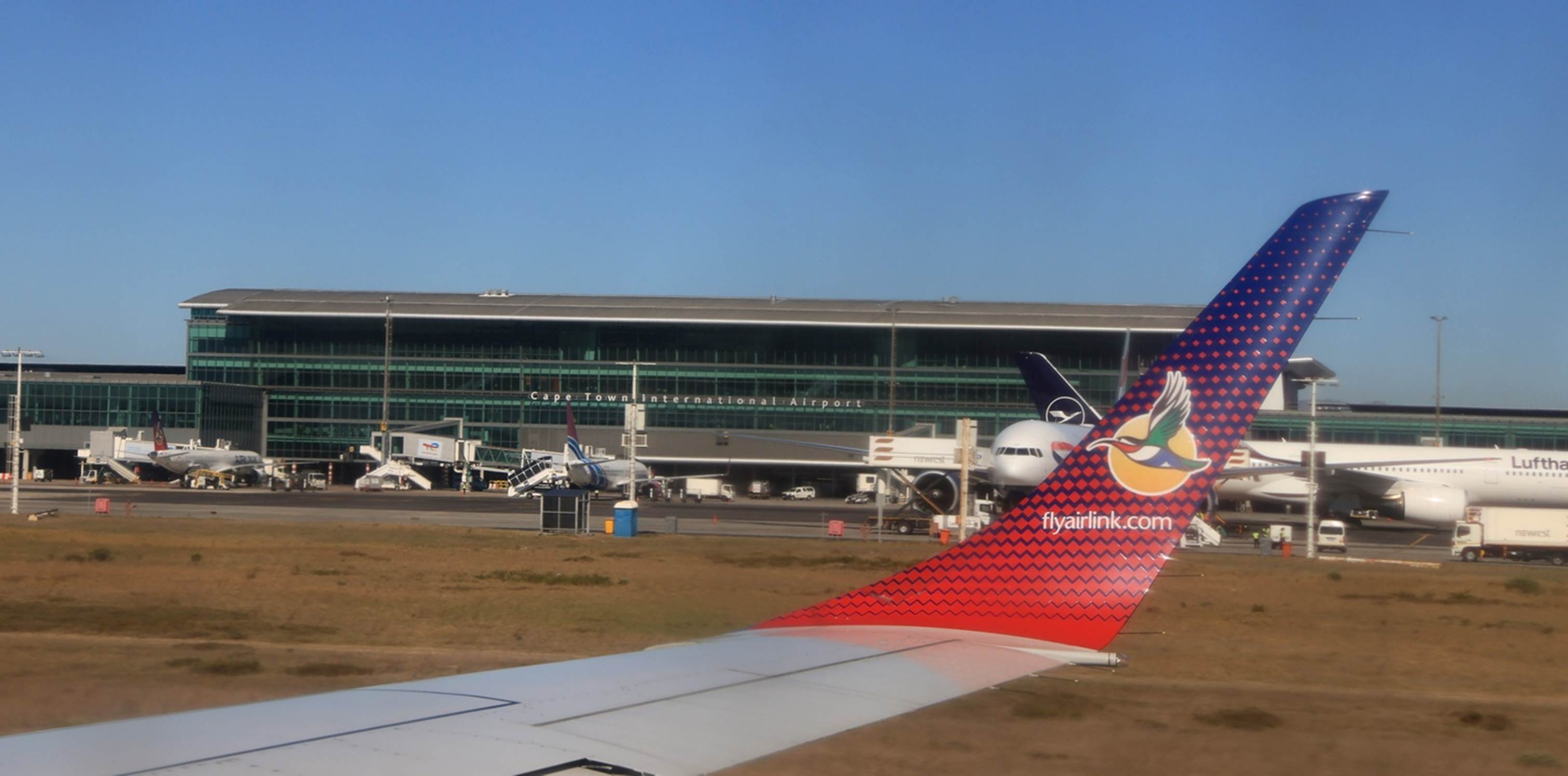
Taxiing out to leave Cape Town
We were going to the Victoria Falls airport in Zimbabwe, although we would not be in that country for long. It was a about 2.5 hour flight and, since it included the lunch hour, we got a light “box-lunch” on the flight.
As we approached the Victoria Falls airport, I tried to identify about where the falls were and noticed what appeared to be an area of smoke or fog. I realized this was probably the mist coming up from the water going over the falls and that turned out to be correct. Keep in mind that the airport is well south of the falls and we were south of the airport when I took the photo below, so we were about 15 miles away from the falls.
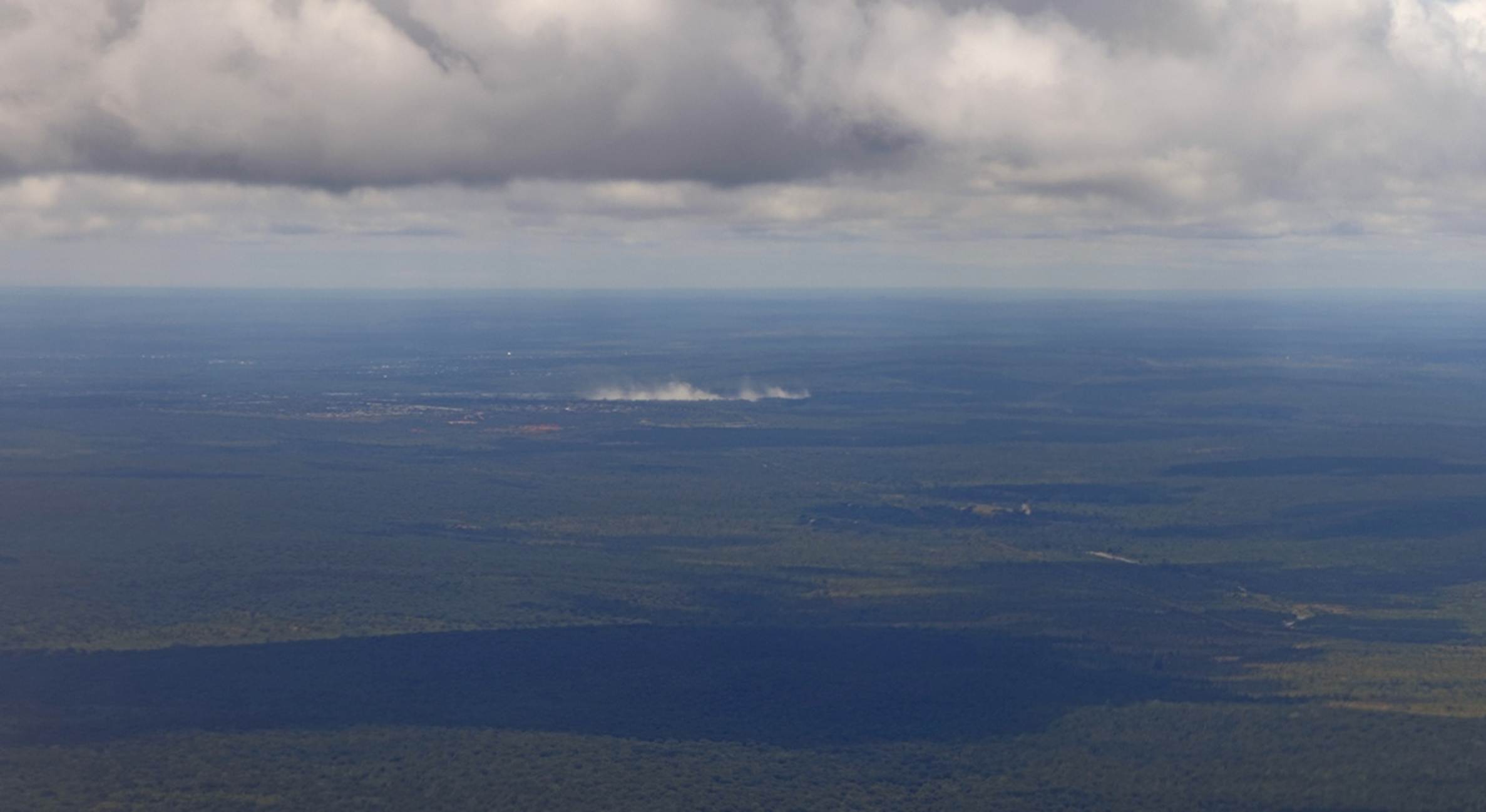
Mist from the Victoria Falls
We landed and had to go through Zimbabwe Immigration and customs, which included purchasing a Visa ($20 each) and getting another passport stamp. The airport appeared to be rather new and modern, although some of the procedures did not seem to be well thought out.

The town is known by the same name: Victoria Falls
As we exited the terminal building, we had to surrender any shoes that we were not wearing so they could be sanitized. We would be stepping in a tray of disinfectant for the shoes we were wearing. There was a group of young men at the exit in what I believe were supposed to be Zulu warrior costumes and performing some appropriate dancing. While somewhat entertaining, it did seem a bit strange to me since the Zulu tribes were nowhere near this area of Africa, but rather about 1000 – 1500 miles southeast of here. We would see these guys, or others like them, several times over the next 5 or 6 days.
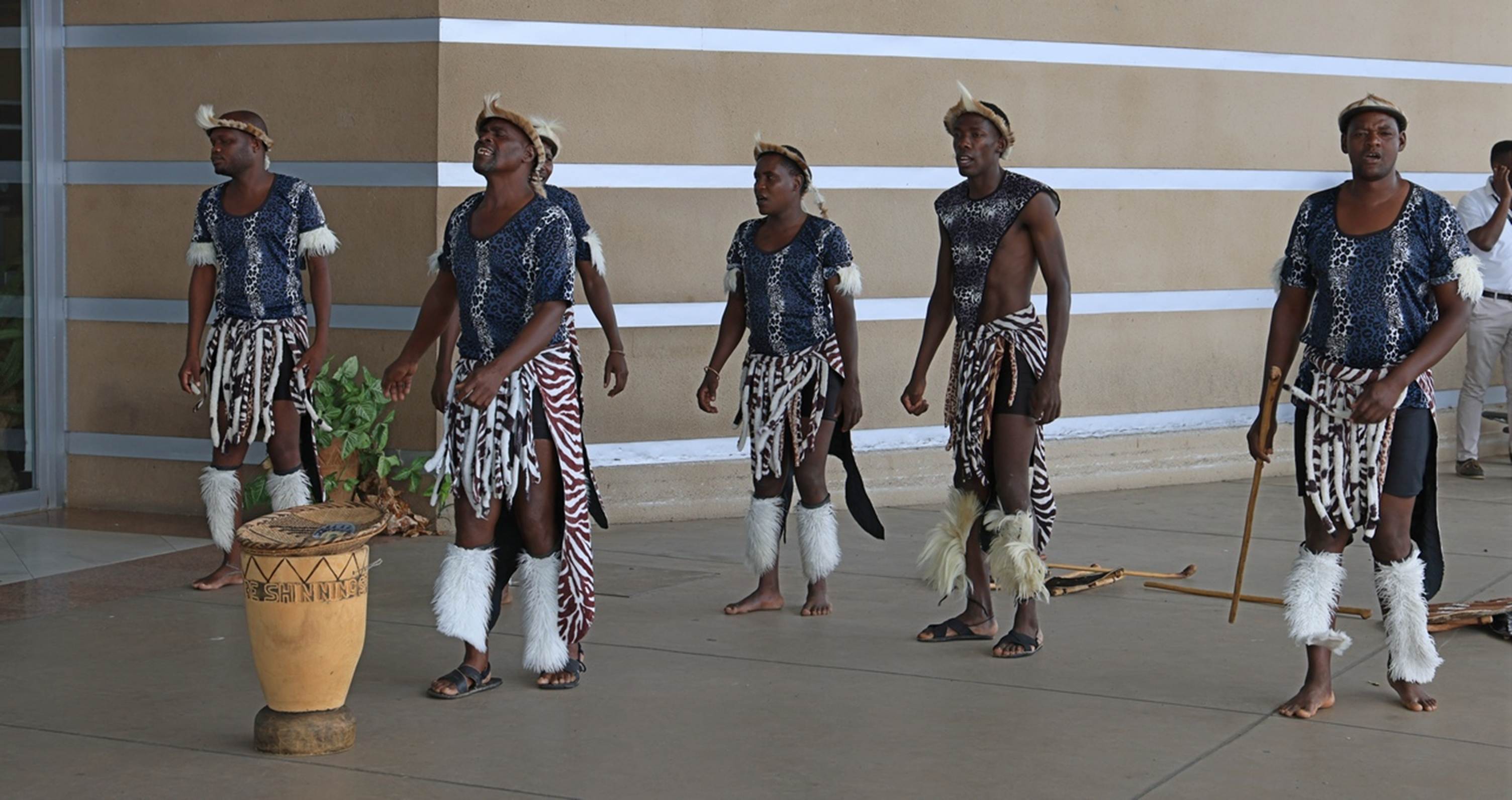
“Zulu Warriors” at the airport
Although we were at the Victoria Falls airport, we were not going to Victoria Falls… not yet, anyway. We loaded onto a bus and headed the opposite direction from town, toward Botswana. We were definitely in rather wild country and wild animals could show up about any time, such as the group of Warthogs in the photo below.

Warthogs alongside the road.
At the airport exit we had been given another “box lunch” that most of us ate when the bus started moving. After about 45 minutes of riding, we got to the border between Zimbabwe and Botswana. We had to unload from the bus and go into the Zimbabwe immigration building where we got the exit stamp in our passport. We had been in Zimbabwe for about 2 hours and had two stamps. Most of us did not even get back on the bus and just walked the 150 yards, across the border, and into the Botswana immigration building where we got our entry stamps (no Visa required).
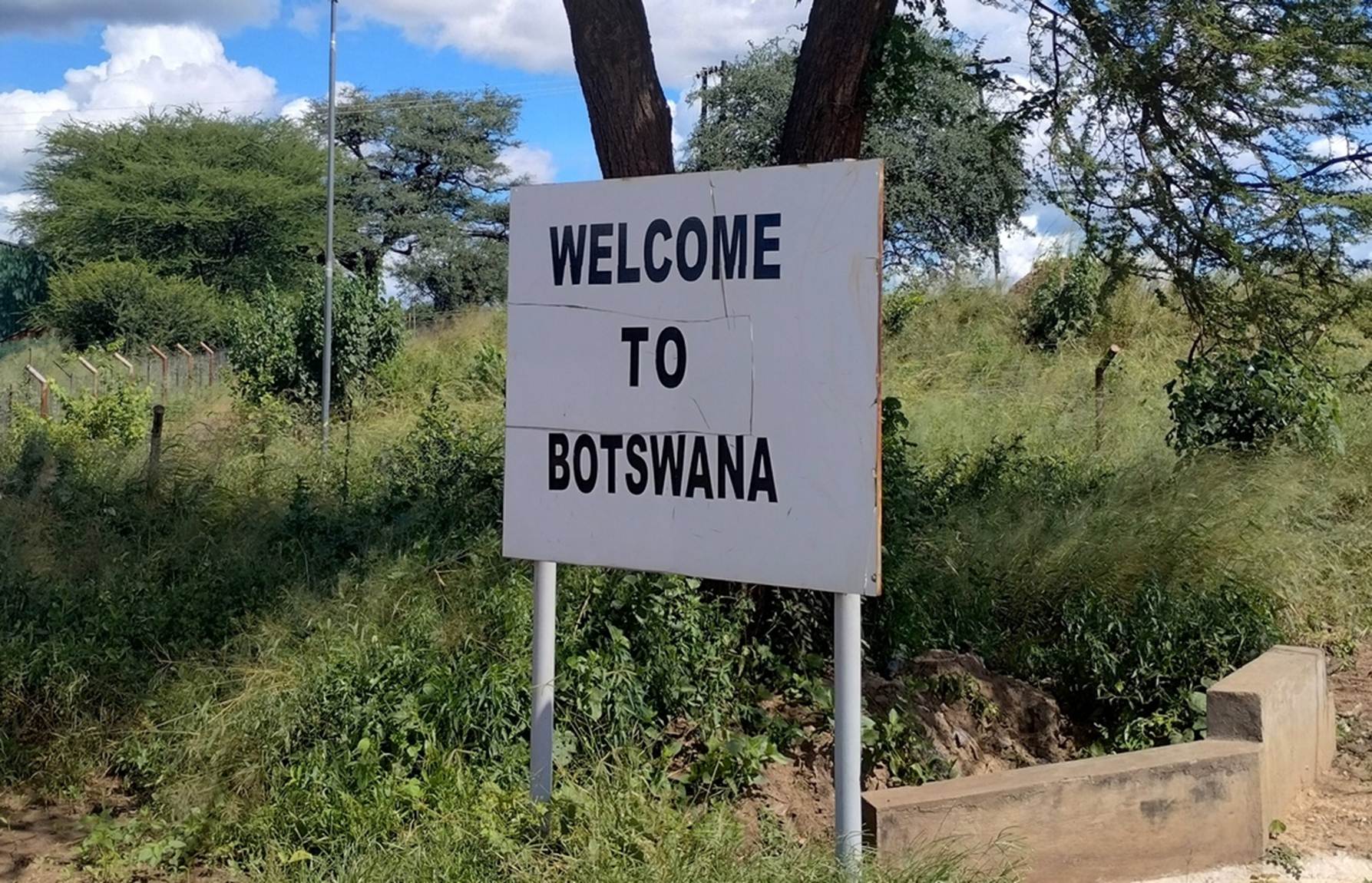
Entering Botswana, but not for long
We loaded back into the bus and rode for about another 40 minutes until we got to the banks of the Chobe River where we would transfer to excursion boats to take us to the Zambezi Queen. But, not before we went through the Botswana immigration facility here to get our exit stamp after being in Botswana for about an hour. We loaded onto the excursion boats and our luggage went on a separate “cargo” boat. We’ll be back here in a couple of days.
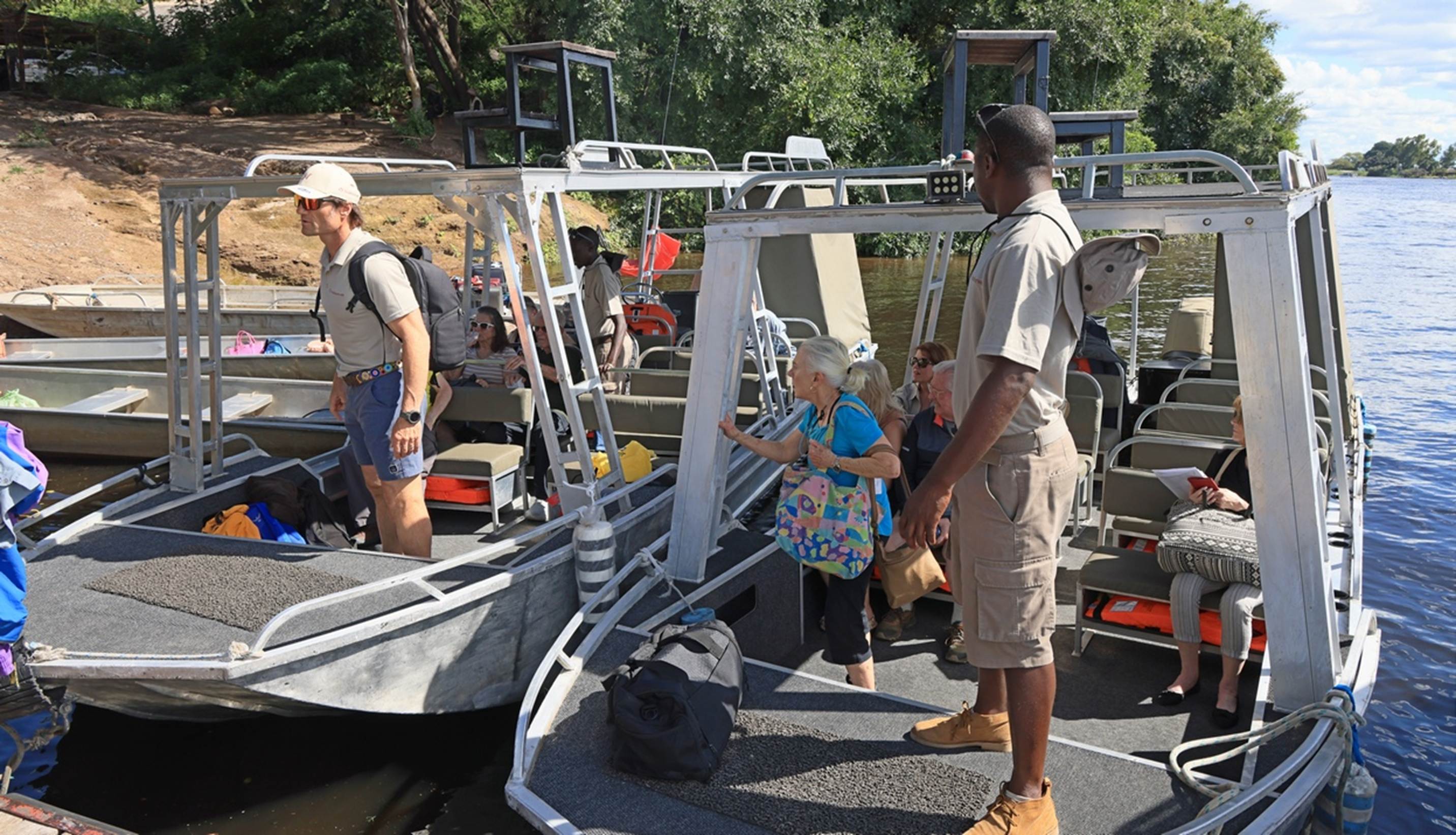
Kirsten is watching, making sure everyone gets aboard.
Once on the boats, we headed out across the very wide river. This was at the end of the wet/rainy season, but this had been a very wet summer and flood waters were still coming down the river: the river was not expected to crest for another two or three weeks. The photo below should give you an idea of just how wide the river is in these conditions.

In the dry seasons, the river gets much smaller, or so we were told.
In this section of the river, the boundary between Botswana and Namibia goes down the middle of the river and the Zambezi Queen normally moors on the Namibia side of the river, so we were entering Namibia and had to stop at the appropriate immigration office. We got out of the boats (no dock, just pulled up onto the beach) lined up at the immigration office (one immigration officer), presented our Visas (which we had gotten online), got our entry stamps, then got back in the boats.
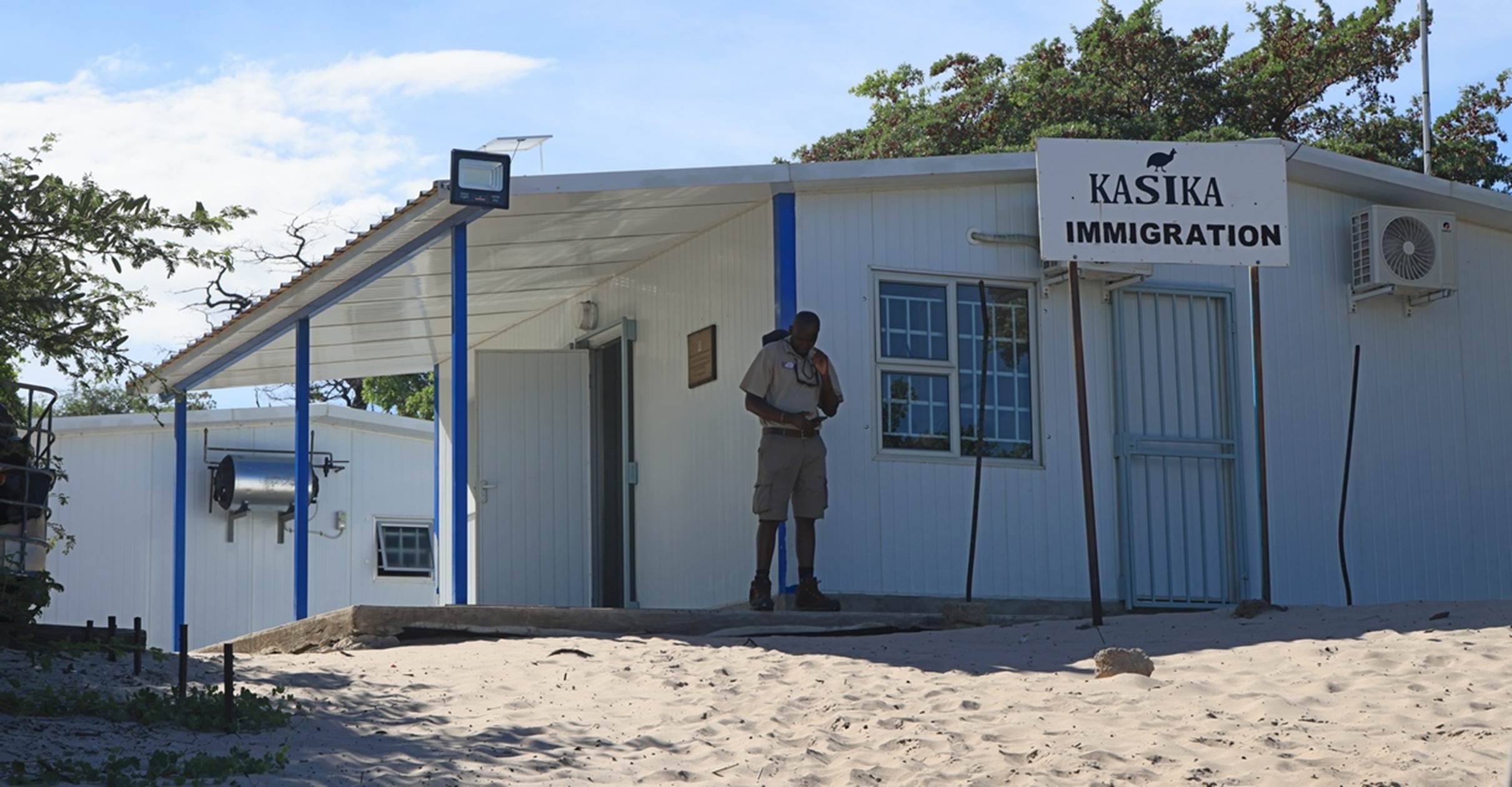
The Namibia Immigration office for this area
From the Namibia immigration office, it was just another 5 minute ride to the Zambezi Queen where we tied onto it and boarded it. Our luggage was soon delivered so we got our cabin straightened out and things put away.
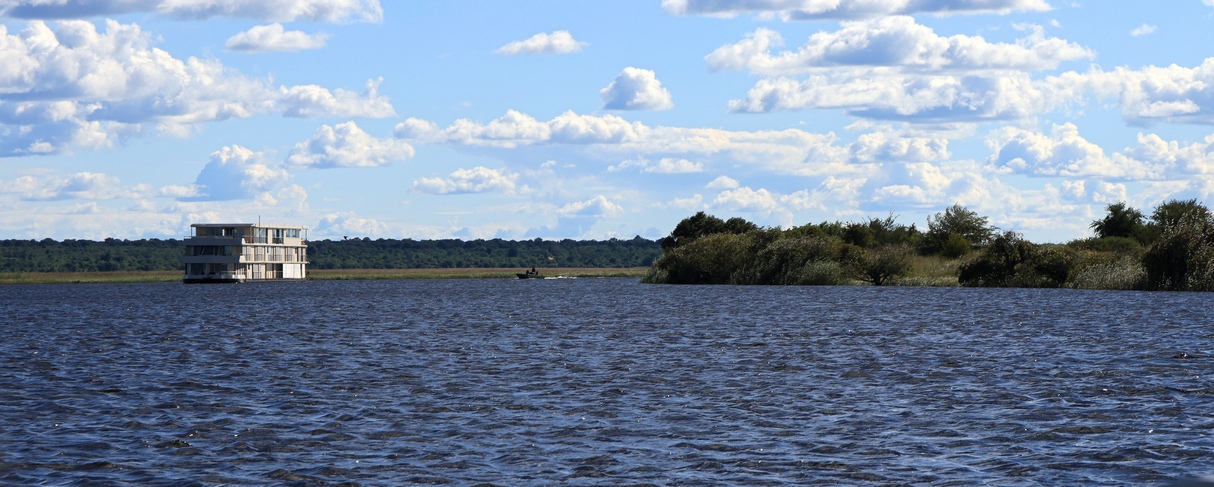
The Zambezi Queen at her normal mooring spot on the Chobe River
Once organized, we joined the rest of the passengers on the third deck where the “public area” was with a lounge area, the bar, a dining area and sightseeing/viewing areas on the bow and stern. For people who did not get enough to eat on the plane and bus, there were “snacks” available as well as the usual drinks.
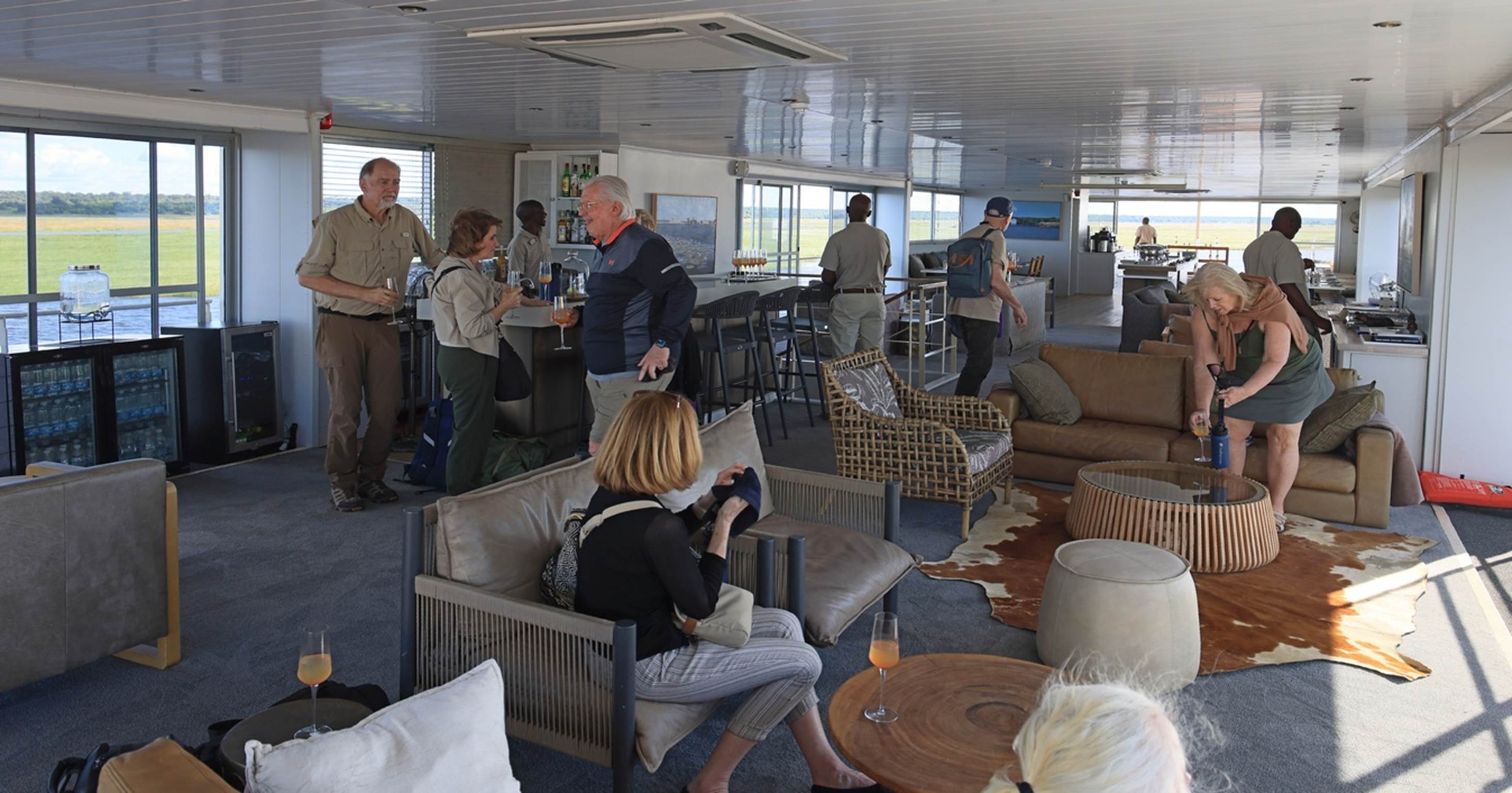
The public areas on deck 3
The Zambezi Queen did not operate like a typical river cruise boat. It did not cruise the river, stopping at a different place each night. While it occasionally did cruise slowly up and down the river, it always returned to its mooring in the same place by 6:00 each evening and stayed there overnight. This first afternoon we did take a slow cruise down the river, probably a couple of miles, then turned around and headed back to the regular mooring. There were always interesting things to see as we cruised the river. You could either sit in the lounge area to watch the river and world drift by, or you could stand on the open bow area (where there was also a very small pool) or the open stern area.

Looking over the bow and very small pool
On this first afternoon cruise. About the only animals of interest in view were some Cape Buffalo that were also being watched by people in another tour boat.

Cape Buffalo along the Chobe River
The captain and Kirsten conducted an informational meeting with information about the boat, normal safety procedures, and what we would be doing the next day. We did have a nice sunset this evening as we ate dinner. All meals on the Queen were good and usually featured at least one different, African influenced, dish which made it more interesting.
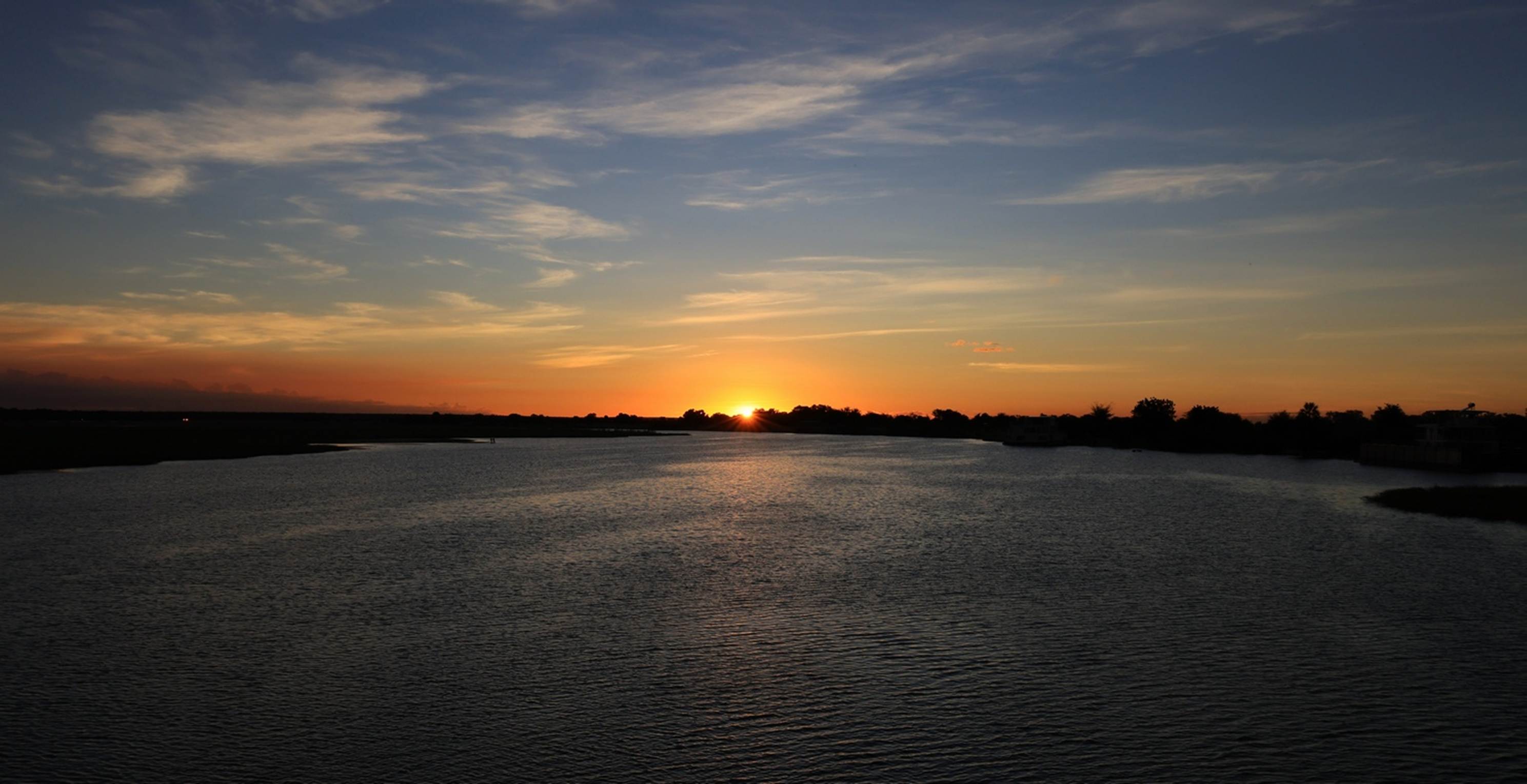
A nice sunset from the bow of the Zambezi Queen
Each evening, the crew would post the activities for the next day so you knew what was coming and decide, for example, if you wanted to get up early enough for the 6:30 departure for the Bird Watching expedition, or go fishing. We decided to go bird watching, but more about that tomorrow.
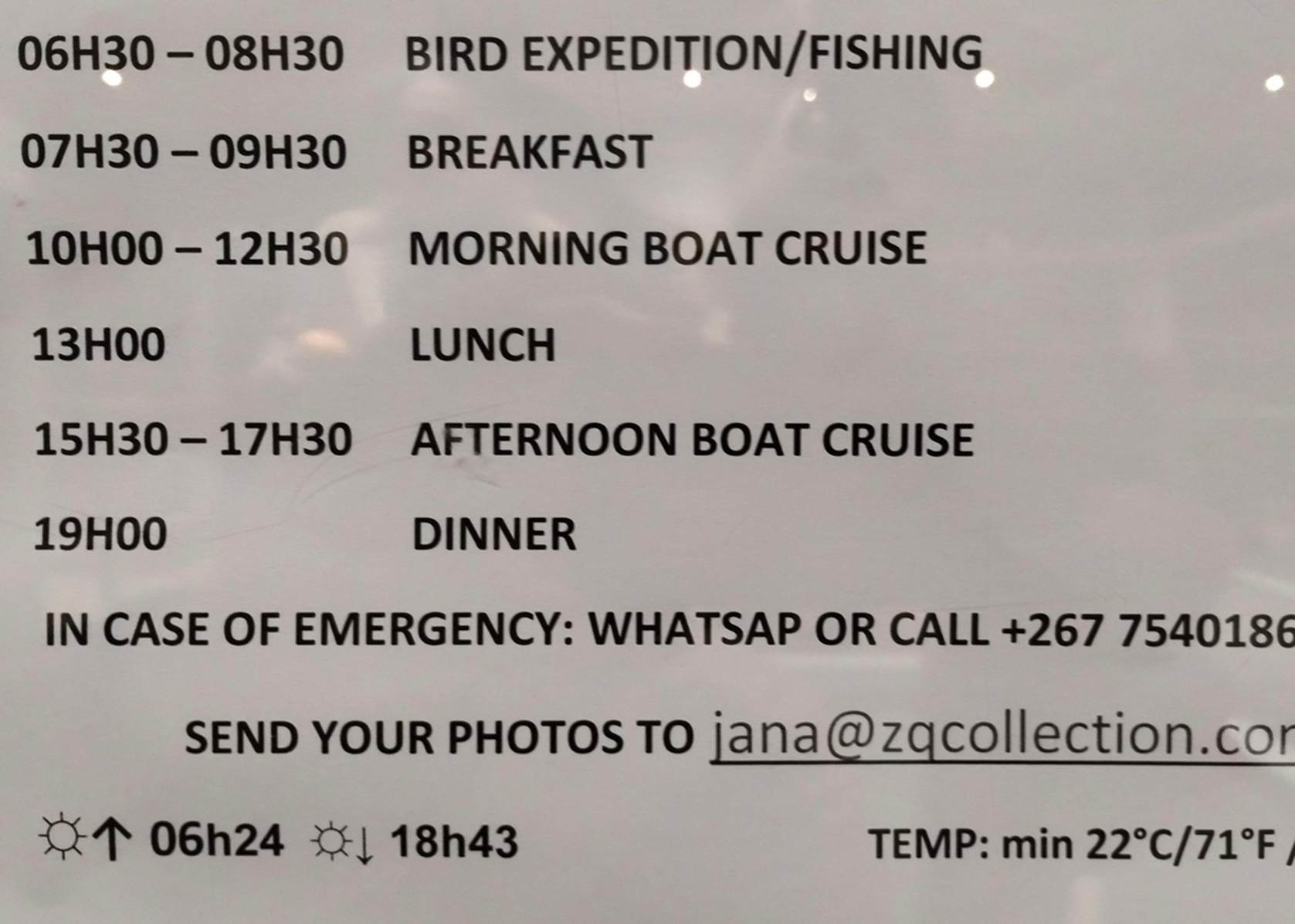
A typical day’s agenda
Six passport stamps in one day… we were exhausted! 😉
Tuesday, March 10: On the Chobe River
My 6:00 AM alarm came early and we grabbed a cup of coffee and a roll to see us through until we got back from the bird watching trip in time for a normal breakfast. The sun was just peeking over the trees as we climbed in the excursion boat with one other couple, Kirsten as a guide, and a boat pilot/guide.
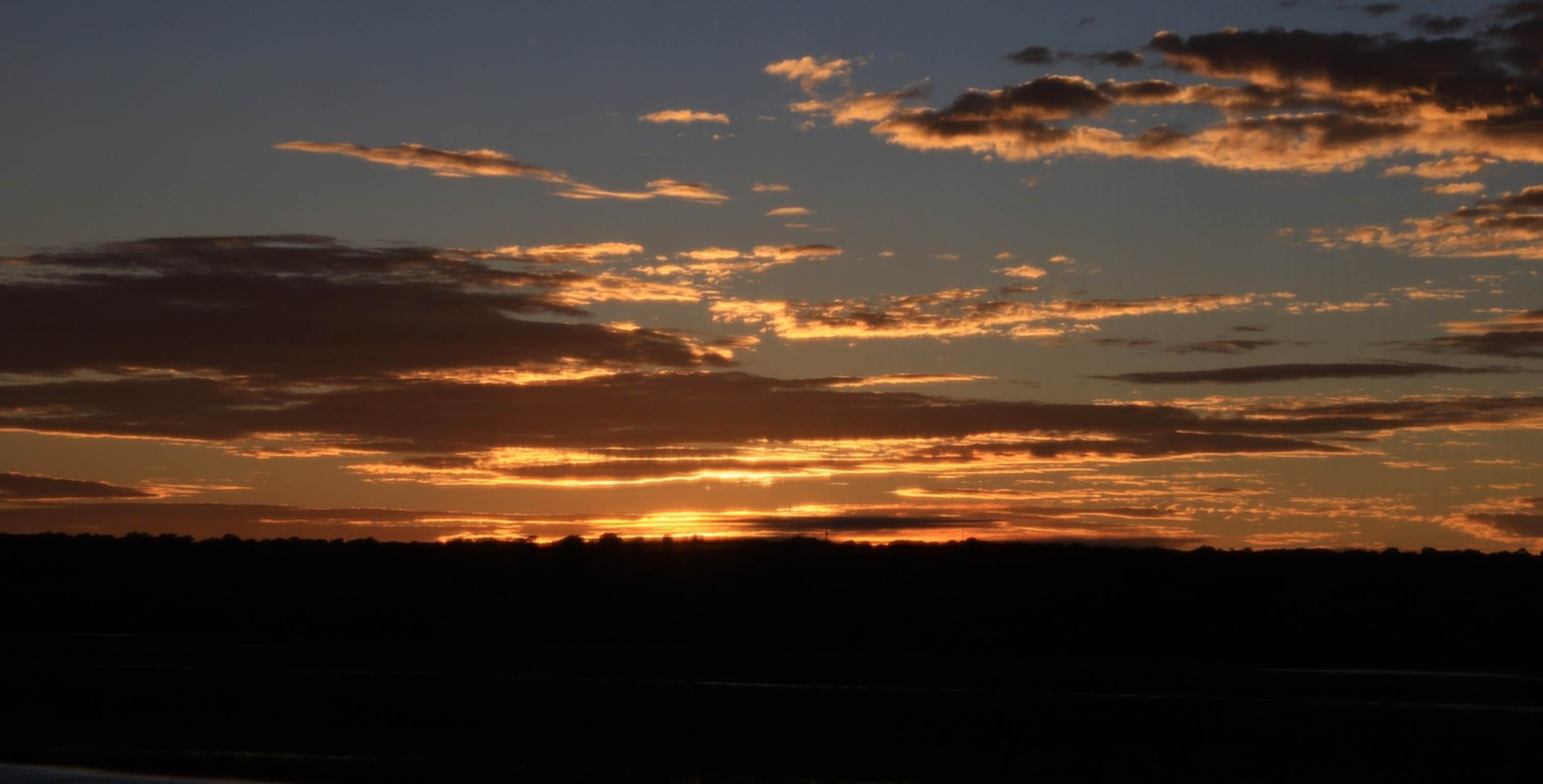
Not another sunset photo, but a sunrise
The other couple were “birders” and Barbara was definitely a birder first class: she had a lens on her camera significantly bigger and longer than mine and I think that, when taking photos of birds, she took at least 5 photos for each one I took. She let Kirsten know that she was mainly (only?) interested in birds and, while he would not promise anything, I think she ended up very happy with what we saw. Our first “sighting” was about as far from a bird as you could get: a very big and fat crocodile.
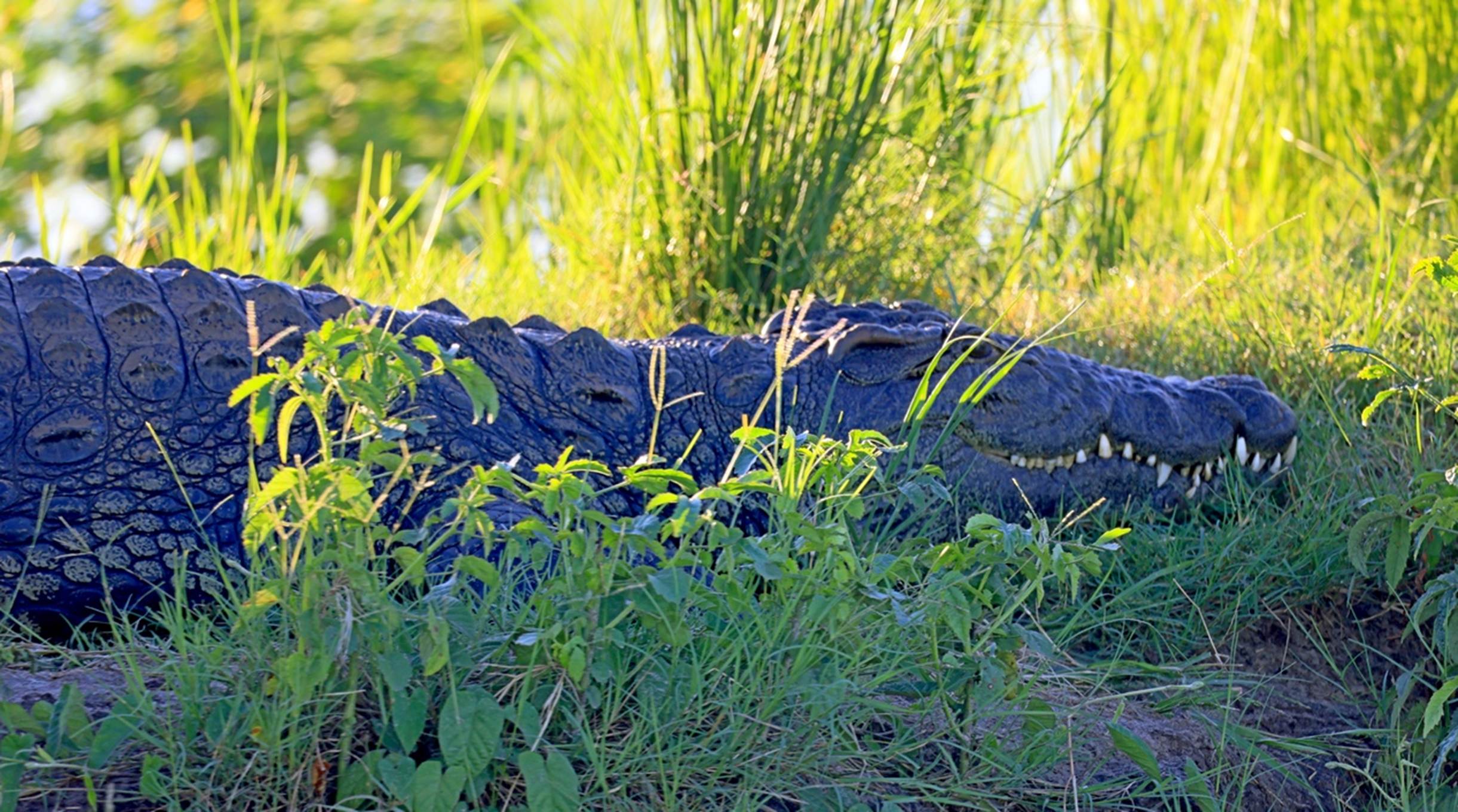
A big croc, probably 16 ft long
When not in the water swimming, crocs like to sleep or sun on a river bank next to the river, as this one was doing until we woke him up. We did soon spot several of Kingfisher birds and these two sitting close together looked cute.
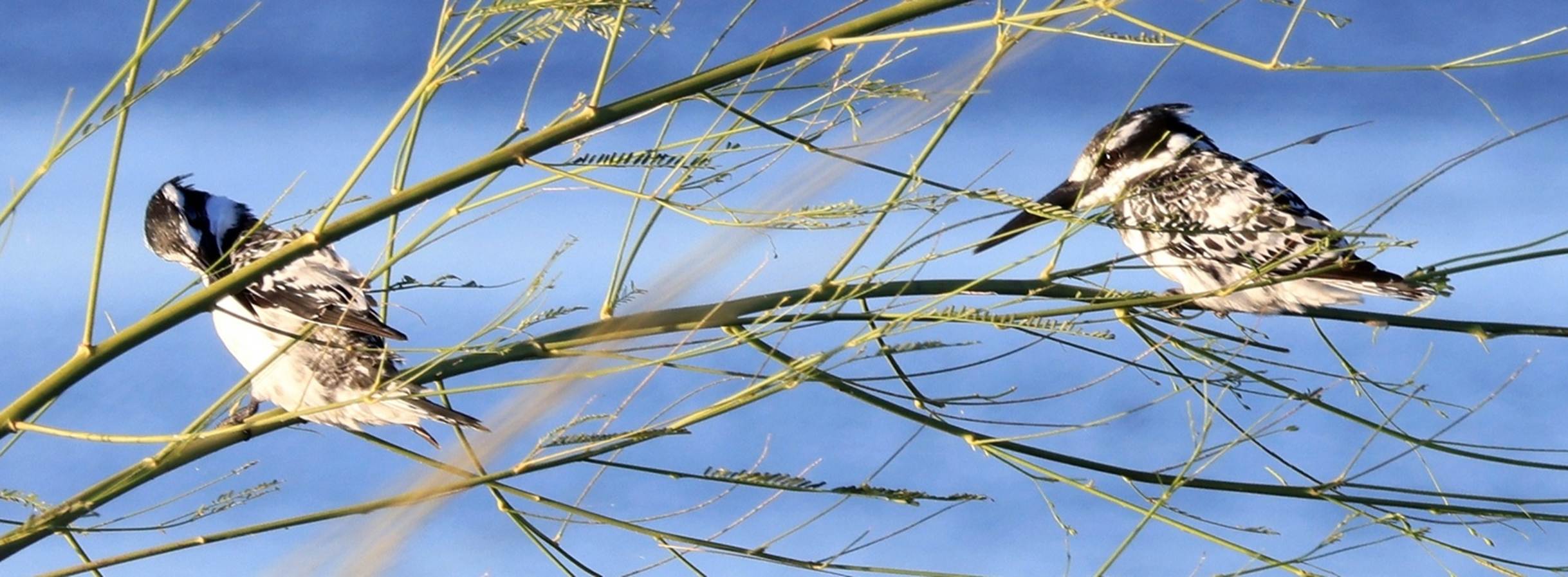
A couple of Kingfishers
A word of warning: I am not a birder and I do not remember the names of most of the birds we saw, such as the ones below. When I do remember the name of, or I feel it is important enough for me to look it up, I will include it, but do not be disappointed when most birds remain unnamed.
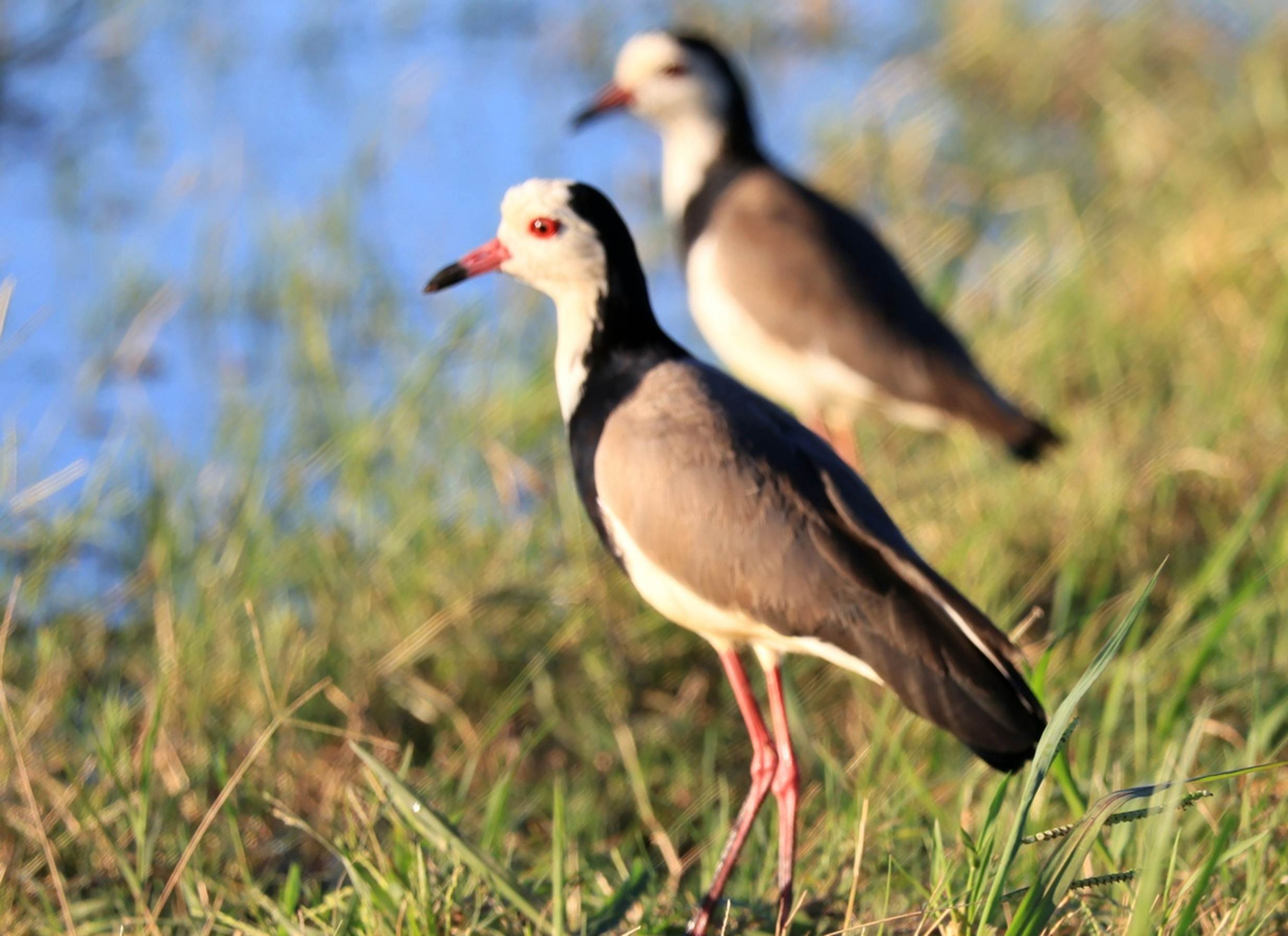
Red ring around the eye, but definitely not a Black Oystercatcher
Our next “encounter” was two Hippos and they were having a rather unfriendly discussion. Although probably 150 yards from us, we could hear them talking to each other in loud “grunts”. This went on for a couple of minutes, until they both appeared satisfied with their performance and they backed away a little. One of them, the one on the right, turned around and started running toward the riverbank closest to him.
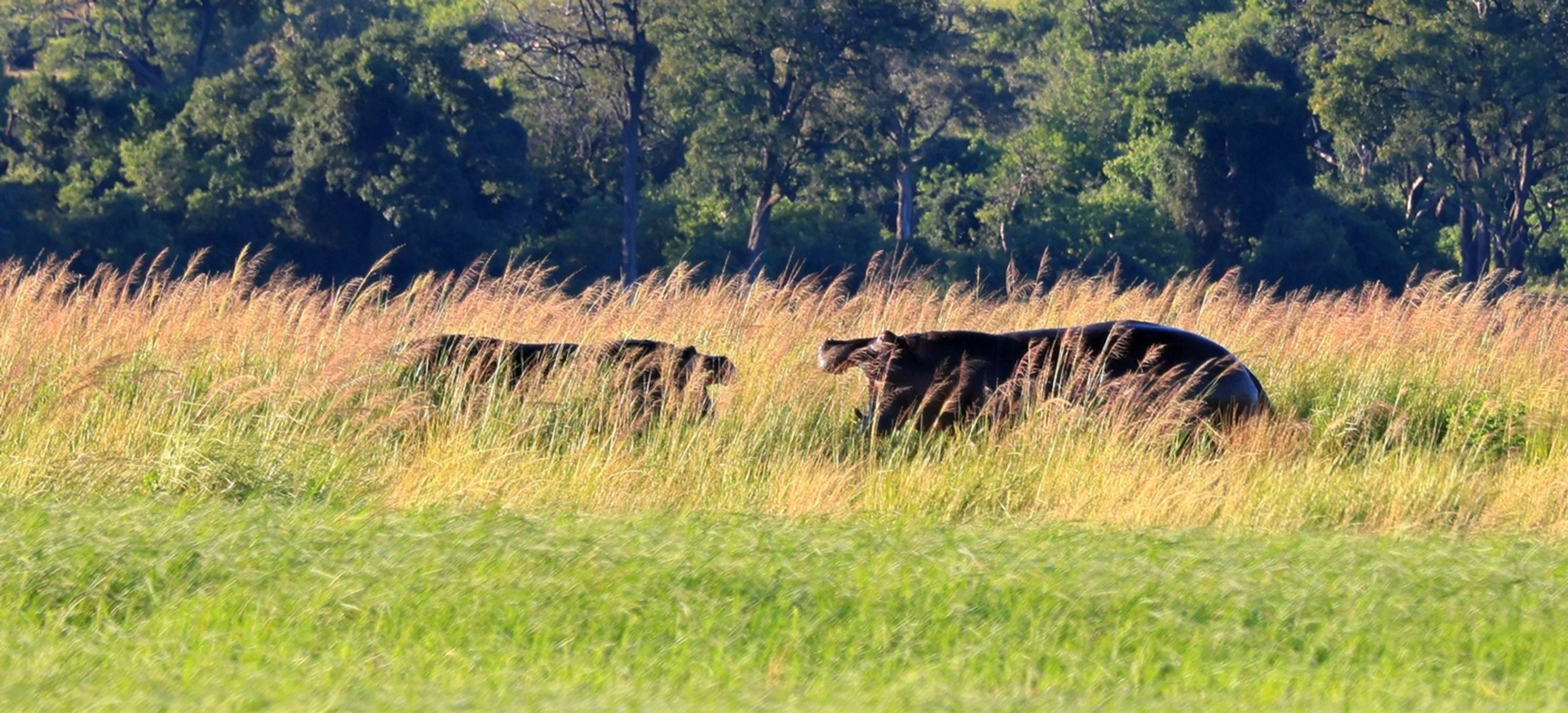
These two were having a discussion
When this hippo got to the riverbank, he was only about 20 or 30 yards from us and he seemed to notice us for the first time. He looked at us for a couple of seconds as if to say “mind your own business” then continued down the riverbank and dove into the water, disappearing completely.
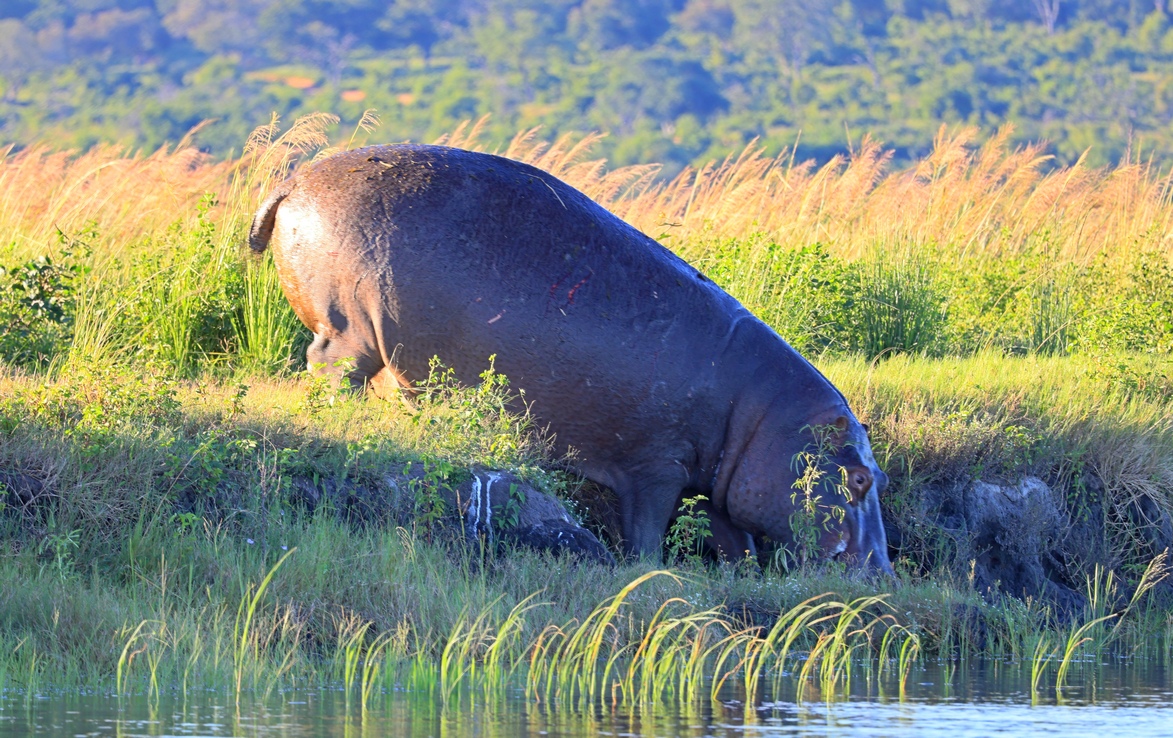
The Hippo gave us a look, and continued into the water.
If you want to see this in a slightly condensed video format, check it out here.
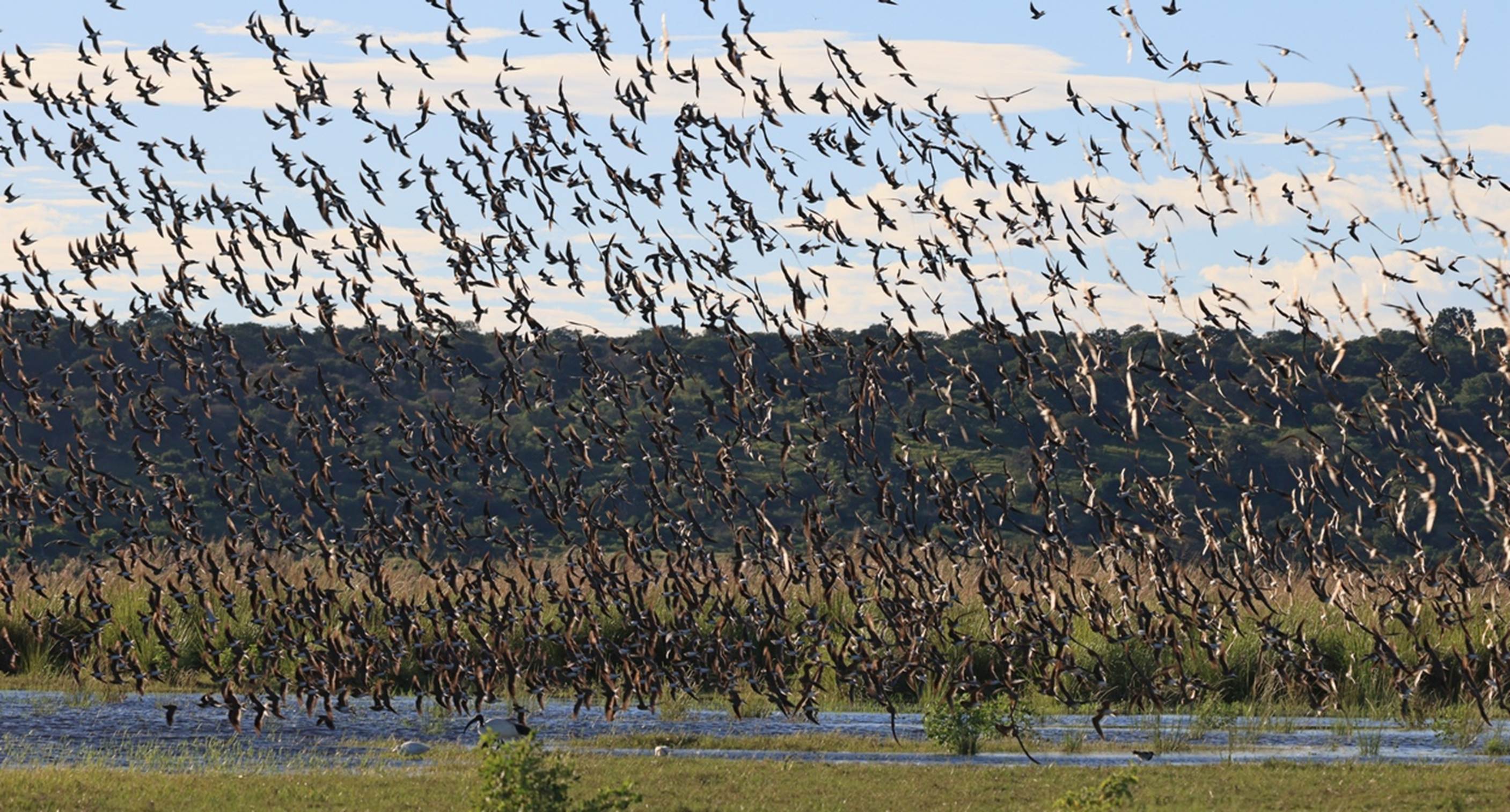
A little further along, we noticed a mass of birds flying, landing close together, and taking off again. There had to be thousands of these birds. You really have to see this in video mode, so here is the most interesting part. We saw another group just like this, doing the same thing a few minutes later.
OK, time for a couple of colorful birds for Barbara.
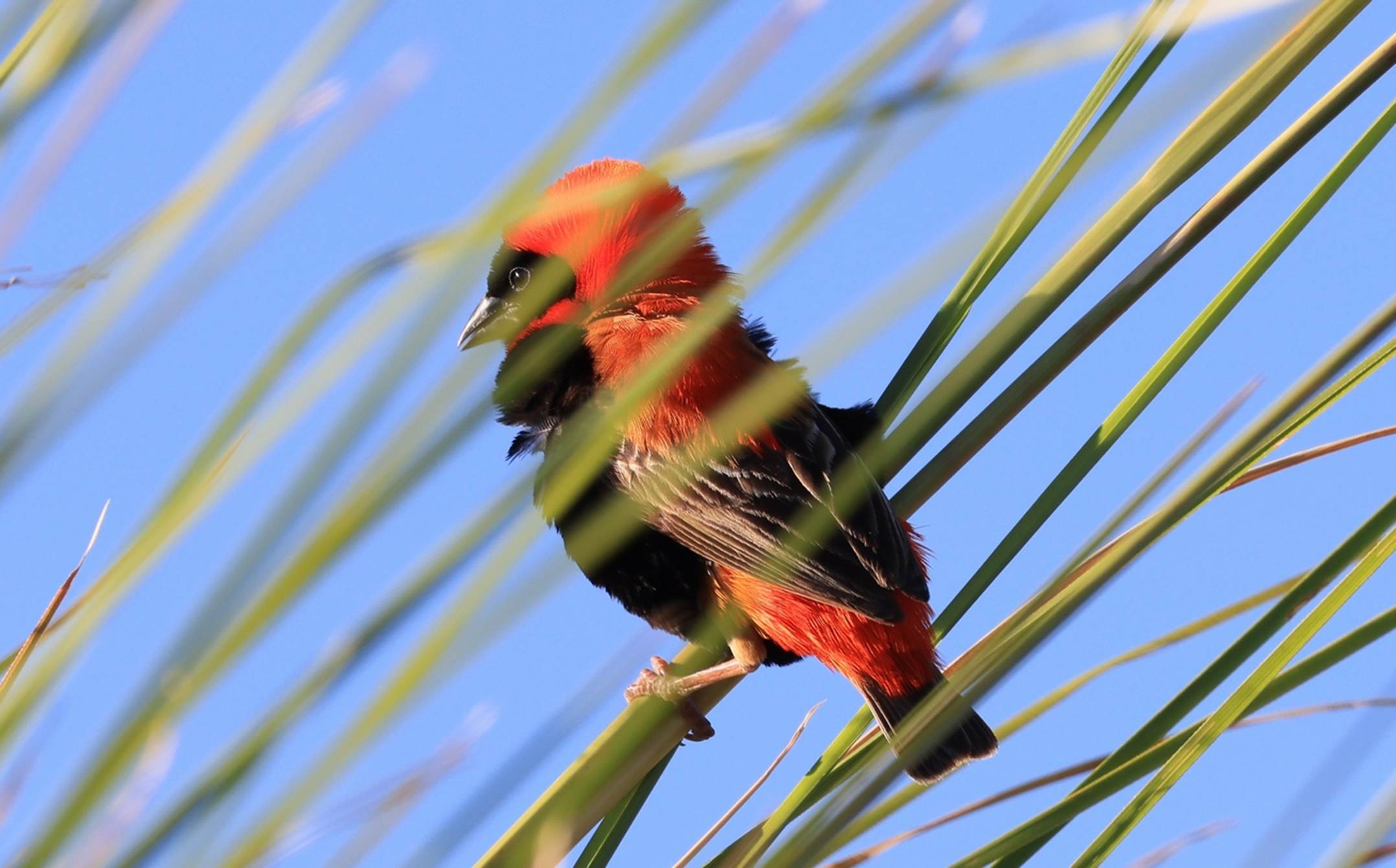
No, I don’t know the name of this bird.

Or this one….
But I do know the name of this next bird: they call this the “Fish Eagle”: it is a member if the Eagle family and lives mainly on fish it catches. We will see more of it.
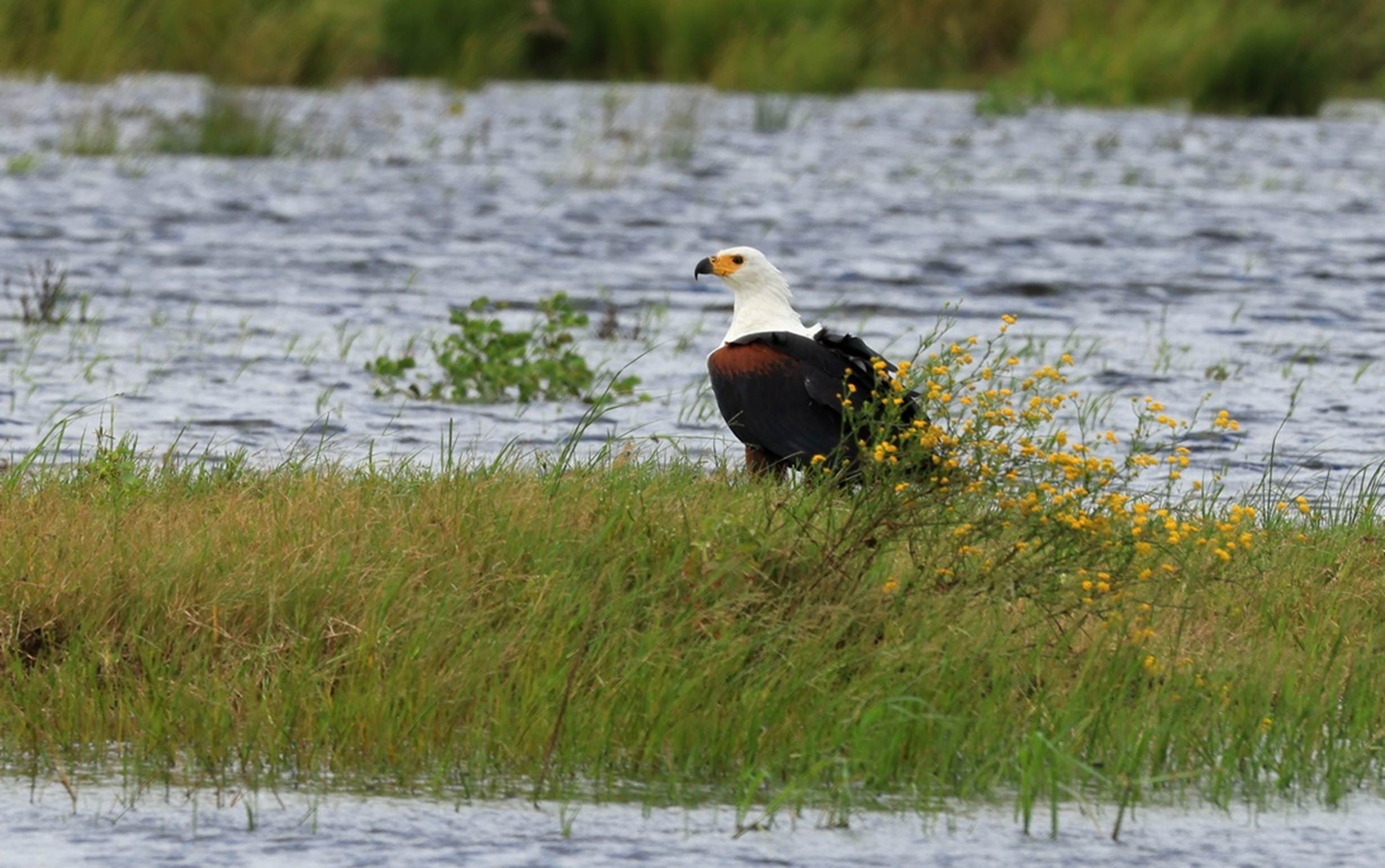
A Fish Eagle
At this point we had been out bird watching about 2.5 hours and headed back to the Zambezi Queen for breakfast. A couple of people had gone out fishing while we were bird watching and one woman had caught a nice Tiger fish (catch and release only) but the men had been skunked. That is why they call it “fishing” and not “catching”. We enjoyed a nice, full breakfast and relaxed for a while before everyone loaded up into the excursion boats and headed out for our 10:00 “Water Safari” and, of course, the cameras came out in force now.
For the photo below, you have a choice. It can be either a photo of two hippos mostly submerged in the water, or a photo of a little Kingfisher. It is actually very common to see a Kingfisher or other bird hanging out close to hippos. Apparently, the hippos tend to disturb the fish, frogs, bugs and about anything else in the water close to them. The birds take advantage of this distraction to grab whatever they find. Little known fact: Hippos do not swim. Hippos either float on the surface, normally with just their eyes, ears, and nostrils out of the water, or they sink to the bottom and stand or walk on the bottom. At first, I thought this was crazy, but after watching them for a while, it appears to be true: I never saw a hippo moving across the water on the surface in any kind of swimming motion.
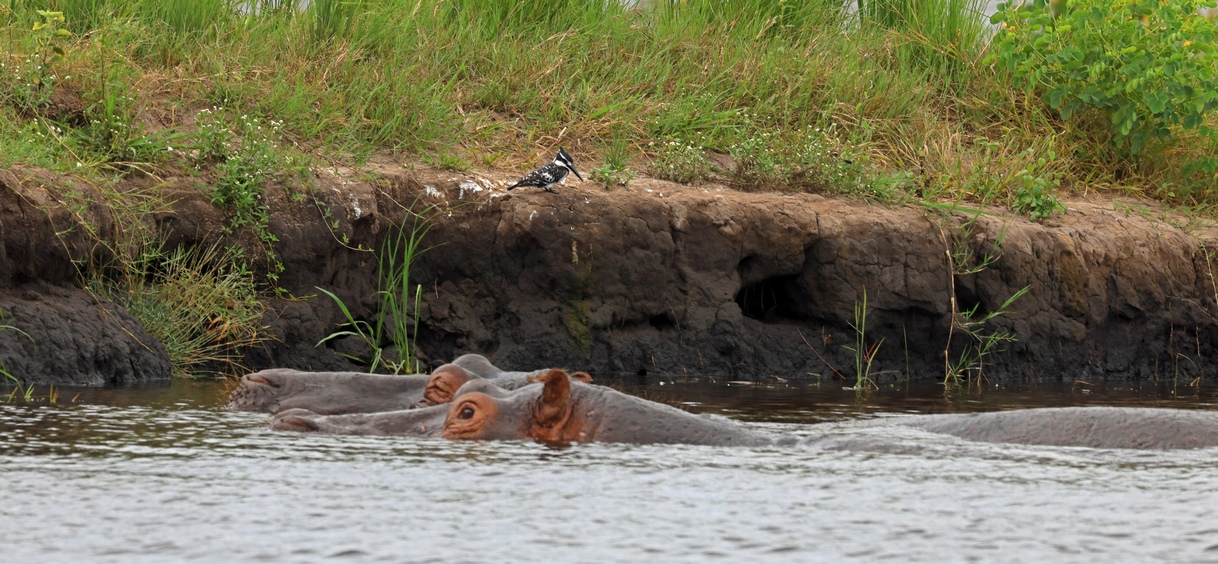
Two Hippos and a Kingfisher
We disturbed another big old crocodile and I realized something: I have never seen a old skinny croc, they always seem to be very well fed, like the one below.
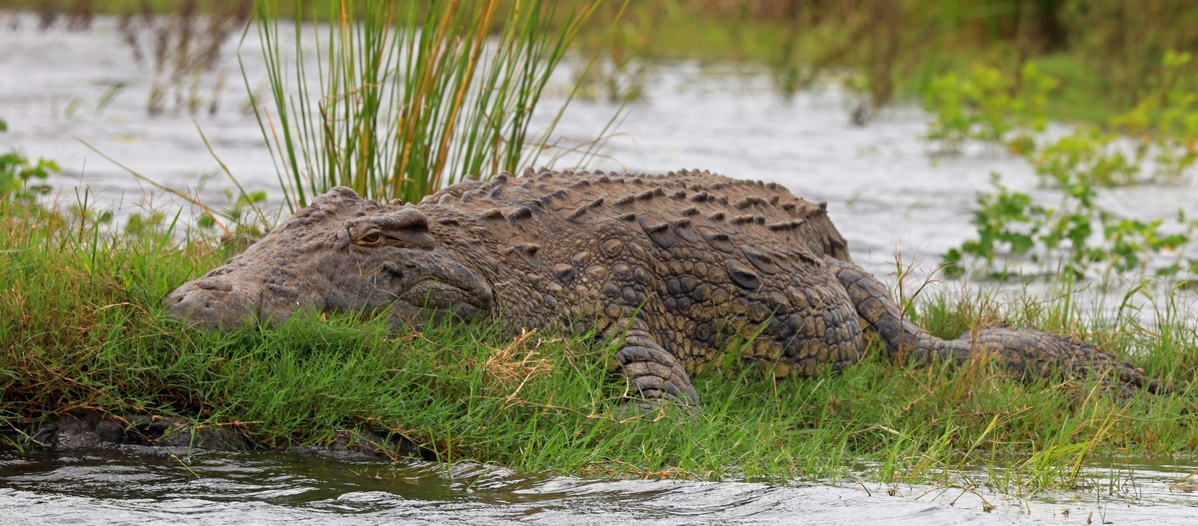
Have you ever seen an old skinny croc?
Moving on down the river a ways, we came to an area with a gently sloping beach which gave easy access to animals looking for water. The first thing that caught our attention were some beautiful Impala. It appeared to be a small family group with several young Impala, including one young male and a couple of young females.
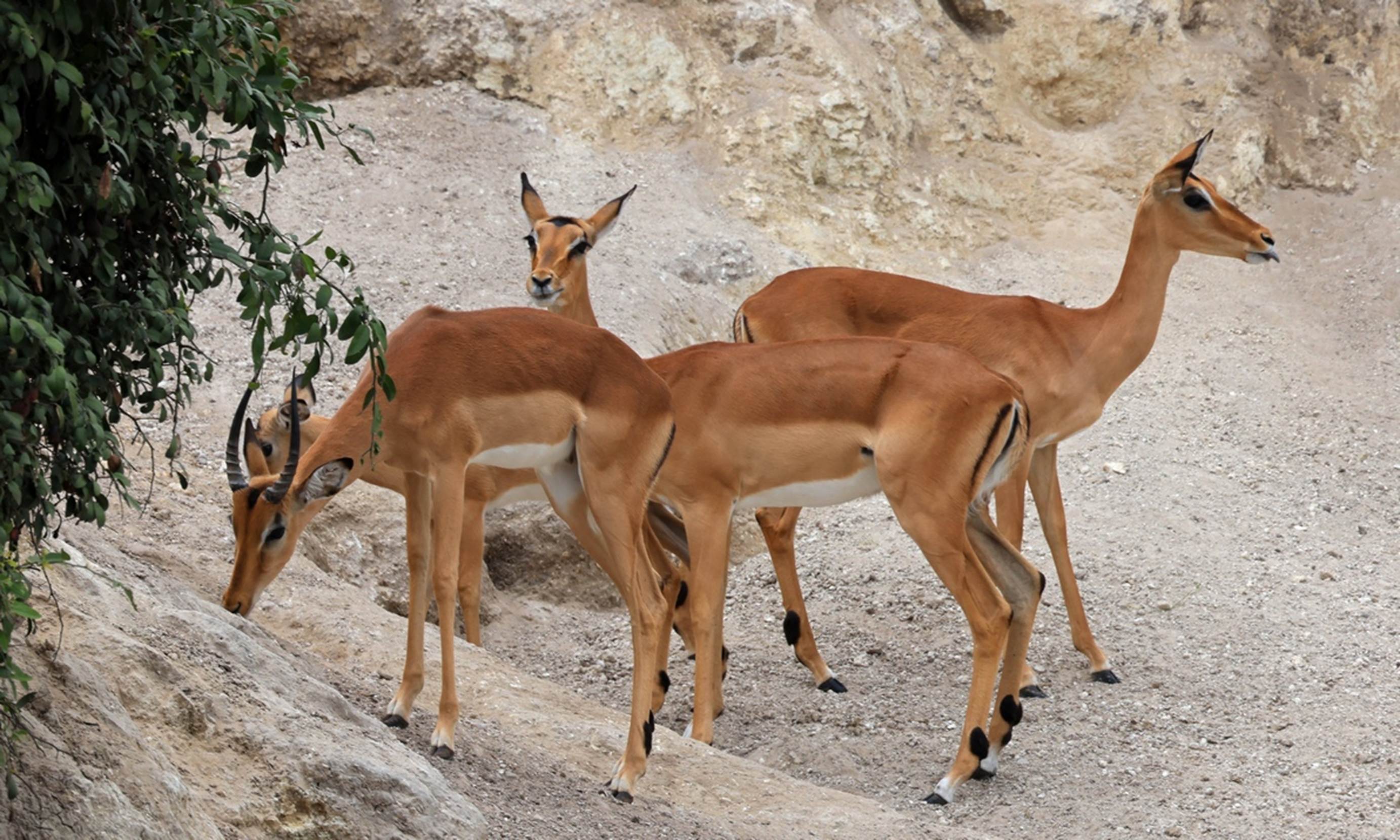
The Impala are always very cautions about their surroundings.
When you see a group of Impala, some will be eating but there will always be several looking around, watching for predators. We noticed the “guards” picking up their ears more and getting a bit nervous and about that time, we saw some elephants coming out of the forest and down the beach toward the water. While the elephants are certainly not really predators of the Impala, the Impala understand that it might not be healthy to get in the way of an elephant or otherwise make it mad.
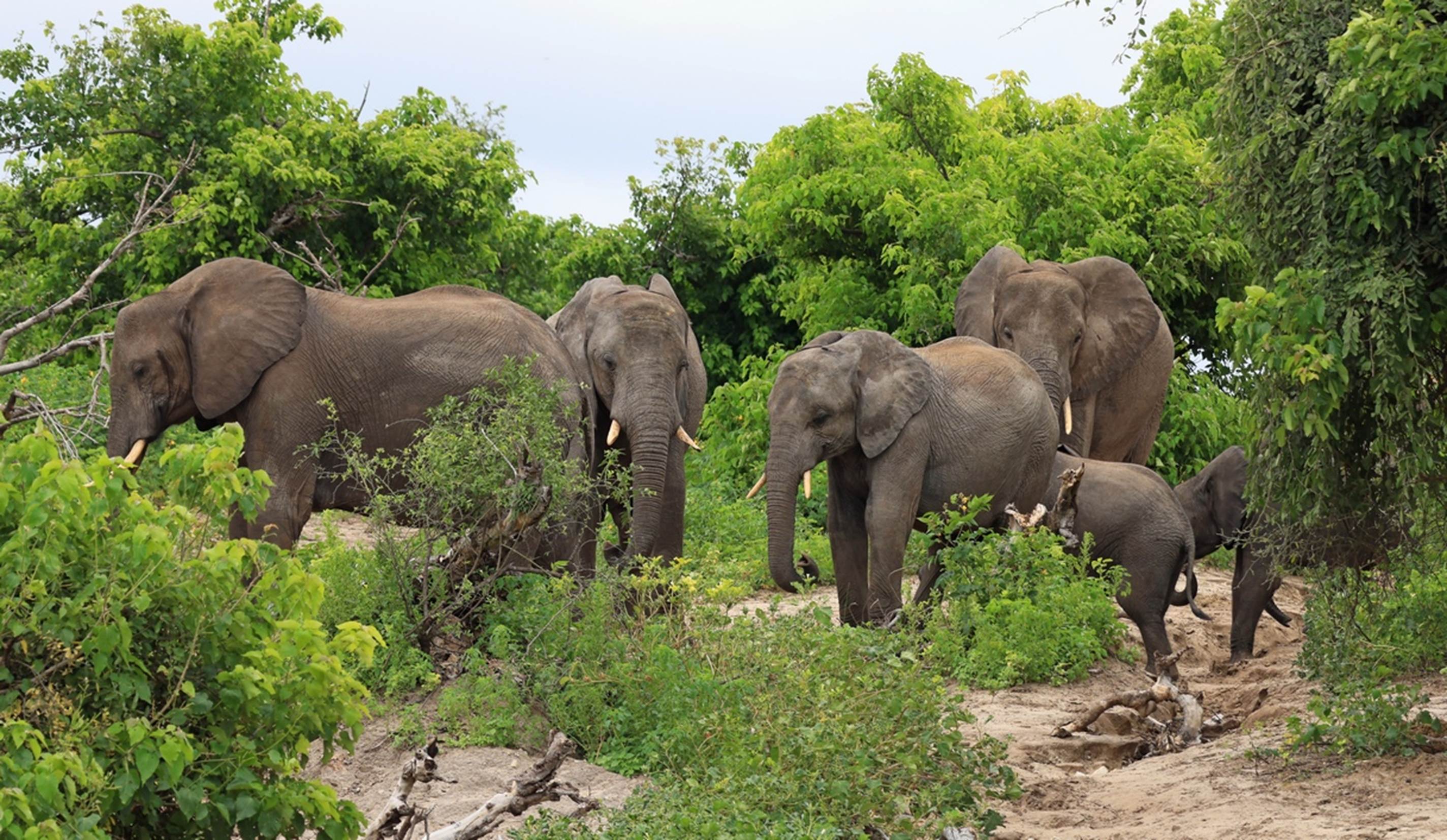
Elephant family makes an appearance
The elephants made their way down to the water, waded in a little and took a drink. There was the matriarch of the family (the Alpha Female), a young calf, several youngsters, a young adult female and a young adult male which was probably about old enough to leave the family.
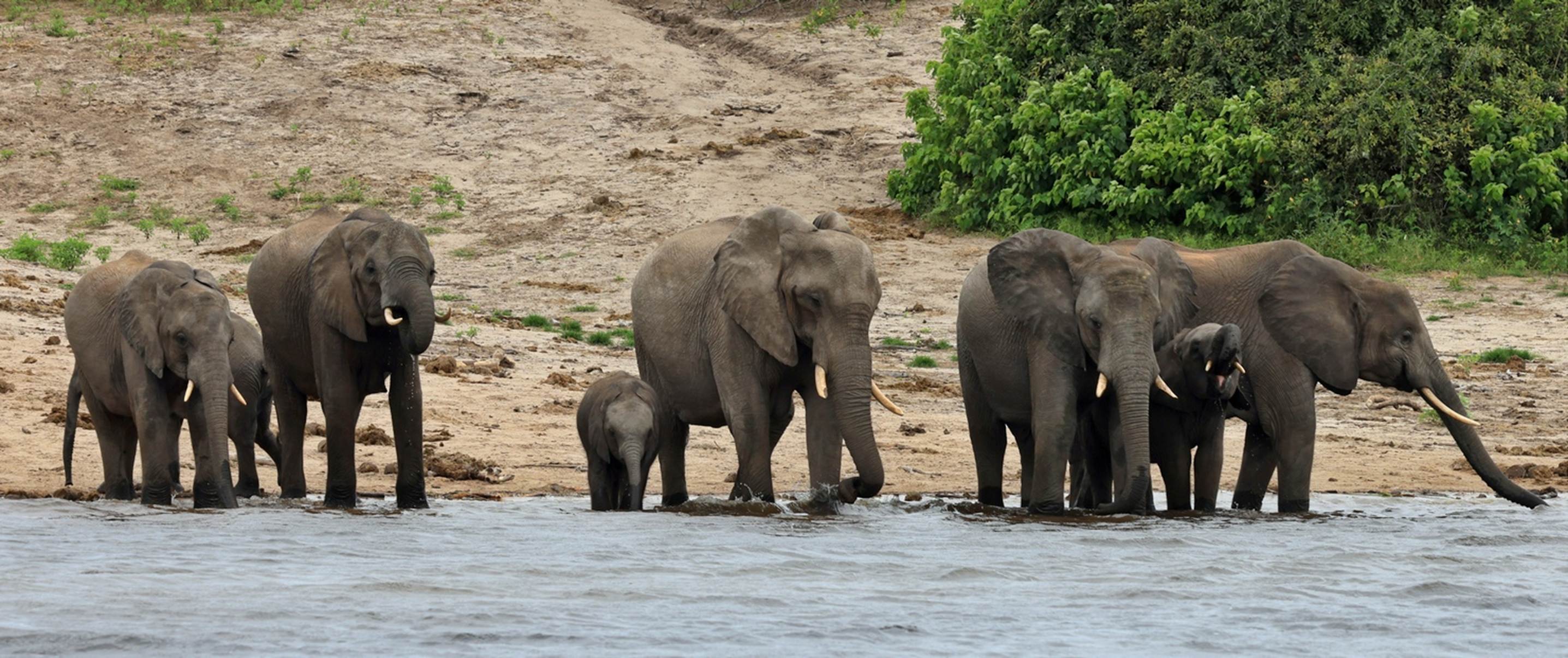
Quite a varied family group
Besides the family, a young male on his own showed up, as well as an older male “Bull” who had apparently lost most of his tusks, probably fighting. Without the tusks, he would be at a disadvantage in contests with other males, so he has probably lost any harem he may have had in the past.
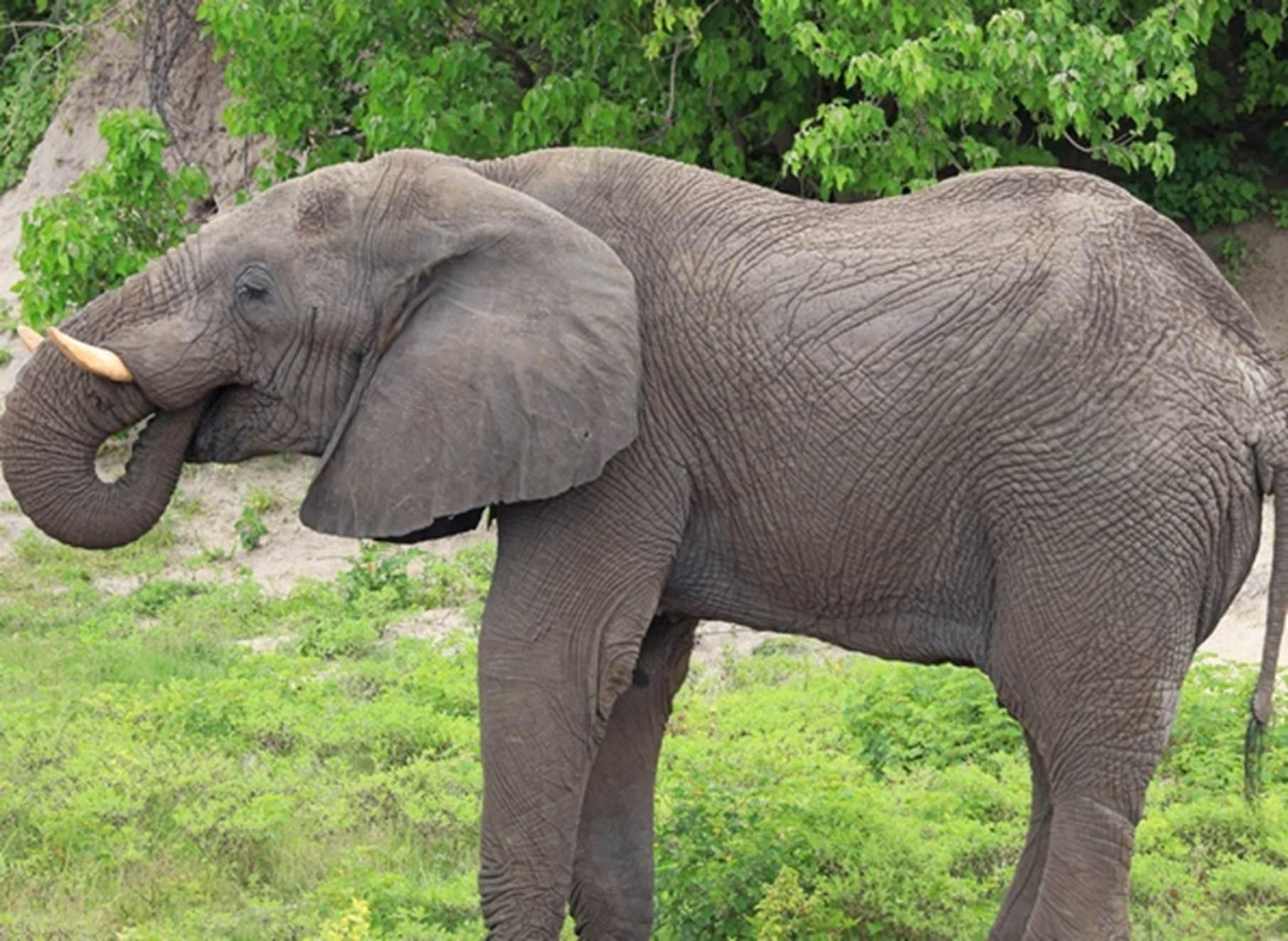
A young male, barely on his own.
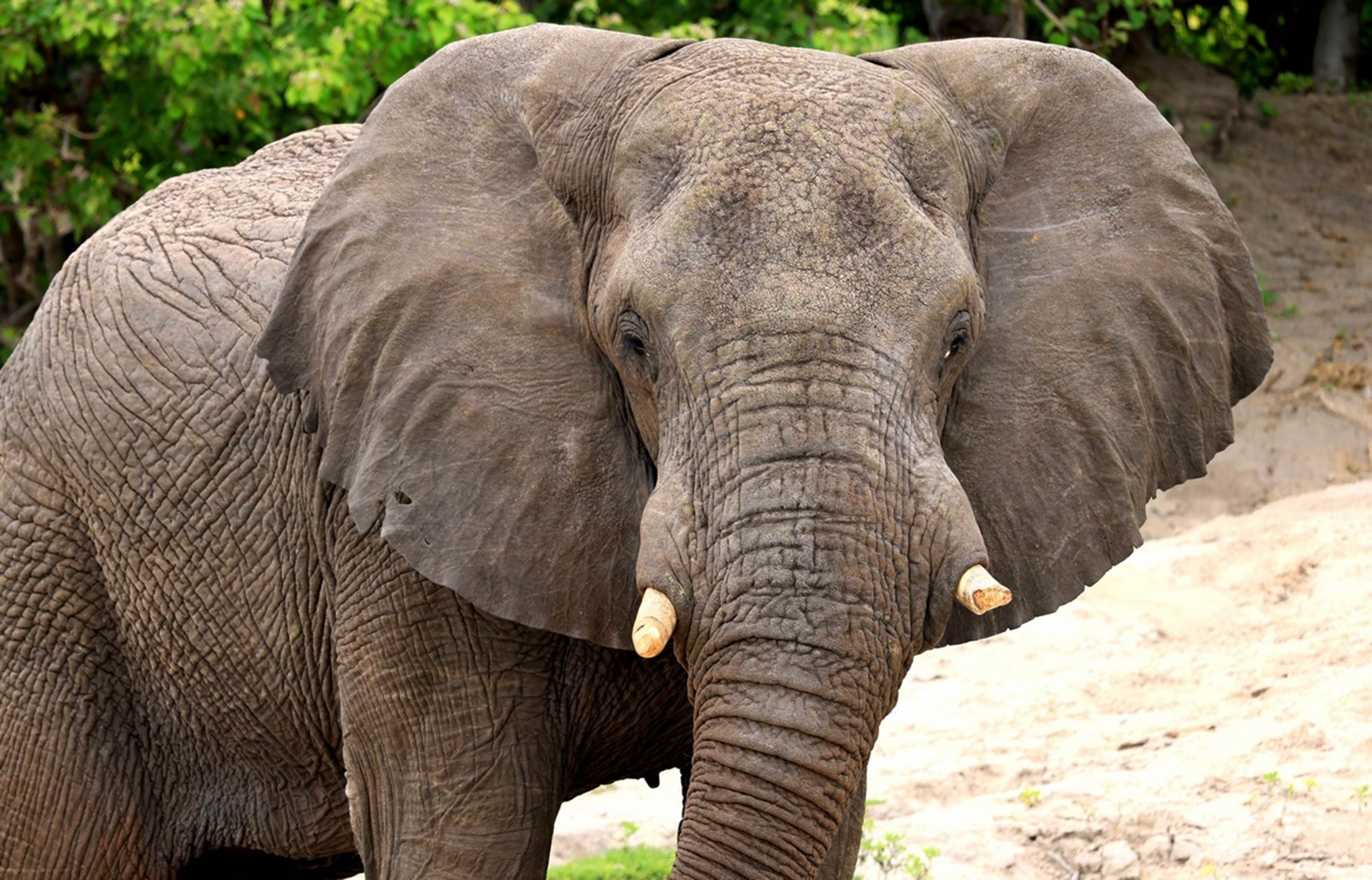
An older male with broken tusks
It occurred to me fairly soon that this is probably a place that the elephants and Impala frequently visit because it is an easy place for all of them to get down to the water. I found out a little later that the name of this place is “Elephant Beach” so it was obviously no surprise when the elephants showed up while we were there.
After watching the elephants for a while, we went a little further down the river to a large flat area alongside the river where there were several Giraffes hanging around.

Giraffes and Impala feeding together
The giraffes and impala seem to get along well together. I suspect the giraffes provide another layer of warning about any approaching predators and, since the giraffe’s primary food is tree foliage rather than grass, the two species do not compete for food. The giraffes come to this area to drink water: they are rather defenseless when they get in their drinking position and want space around themselves to give them time to get back into a normal posture if a predator is sighted.

Even with their long neck, giraffes cannot drink while standing upright.
After watching the giraffes for a while, we headed back to the Zambezi Queen for a 1:00 PM lunch and to relax for the afternoon. At 3:30 we headed out on another “water safari” on the excursion boats. We covered much of the same territory as we did in the morning, so we saw some of the same types of animals.
As we came up to “Elephant Beach”, there was a small family group with an interesting progression of young elephants. It looked like this mother elephant has her hands.. er.. trunk full with this crew.
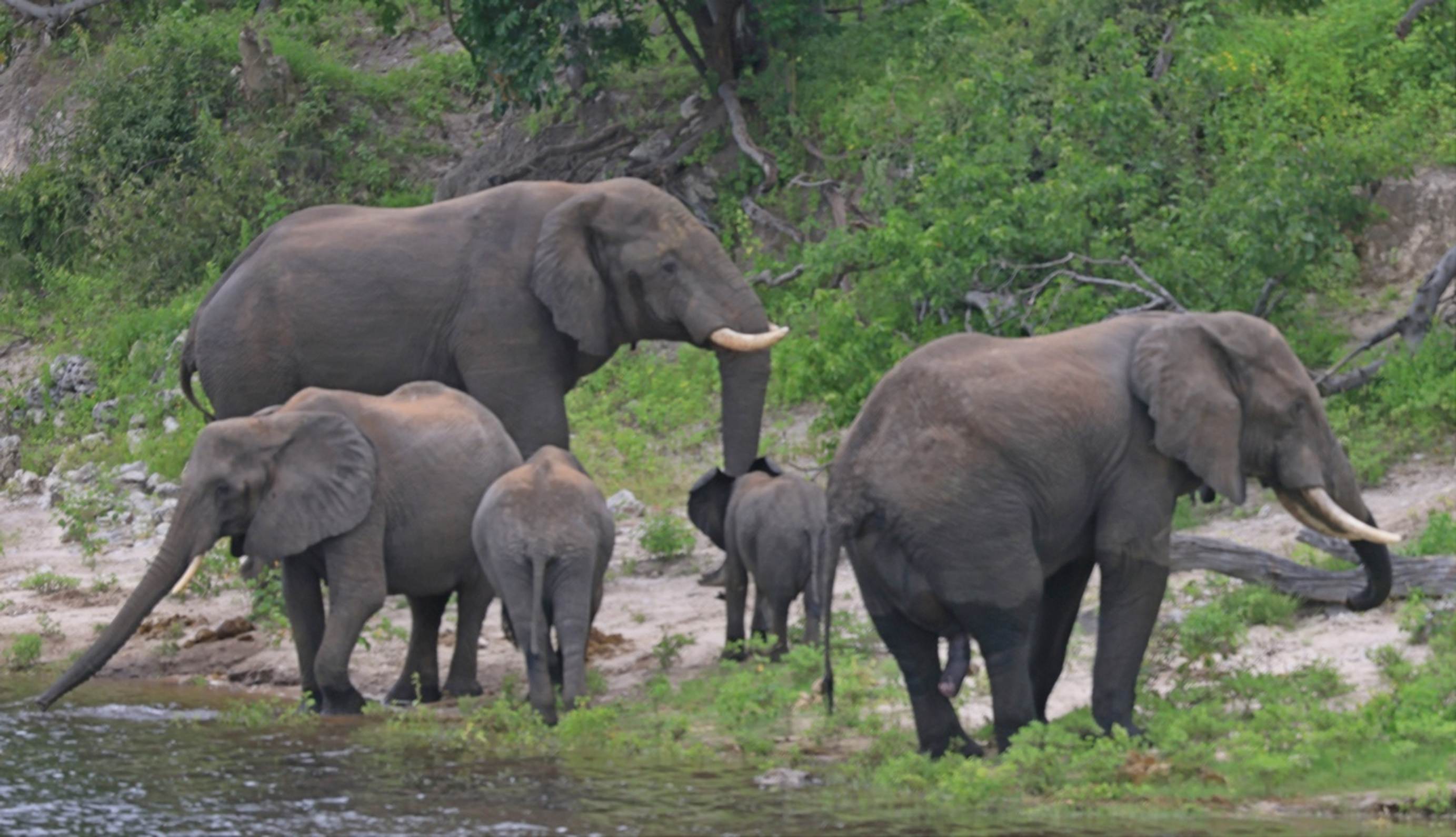
One adult female with four young elephants of varying ages
It seemed that there were always some Impala around somewhere, but they are so striking that I just had to keep taking photos of them.
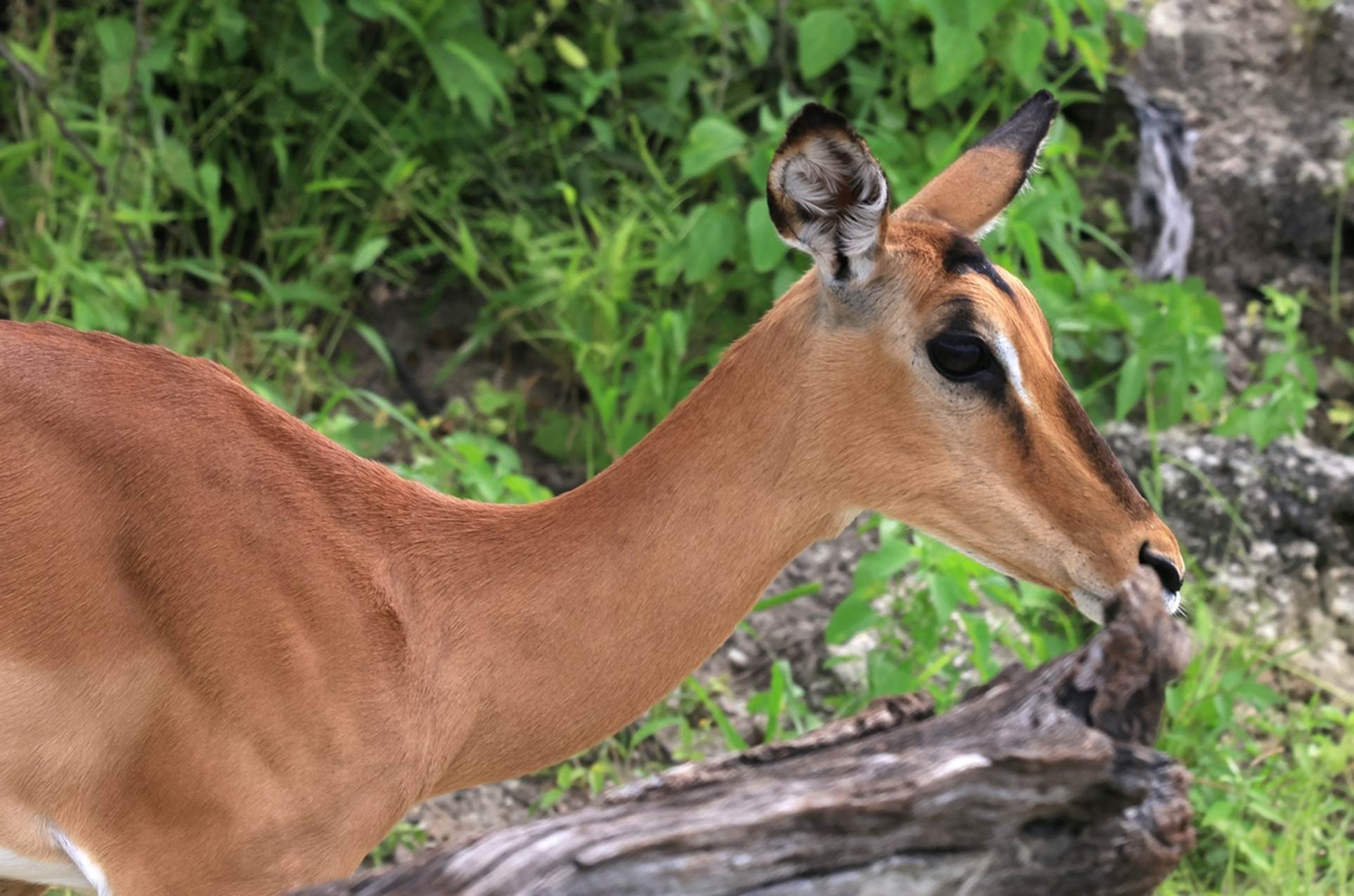
The impala have striking colors and features.
We spotted another Fish Eagle, this time up in a tree. We had actually first spotted another Fish Eagle on the ground that was probably this one’s mate, but I already included a Fish Eagle on the ground in this chapter, so decided to show the one in a tree for a change.
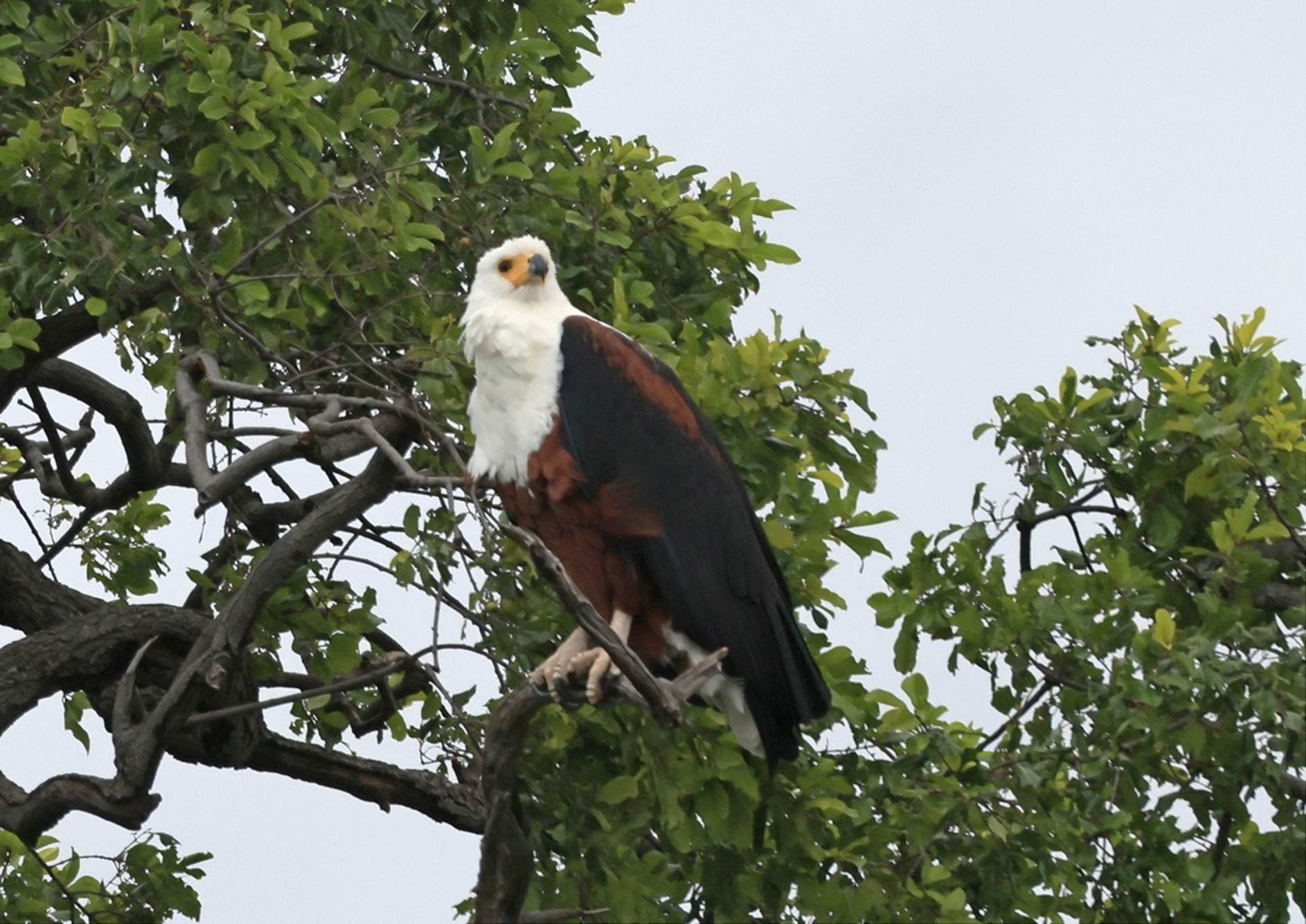
Fish Eagle in a tree slightly overhanging the river: a good place to watch for fish
On down the river, there were again some giraffes in the same area as in the morning. (Hmmm, perhaps “Giraffe Beach”?) In the photo below, the giraffe on the right has it’s front legs spread a little, but will have to spread them some more before it is able to drink.
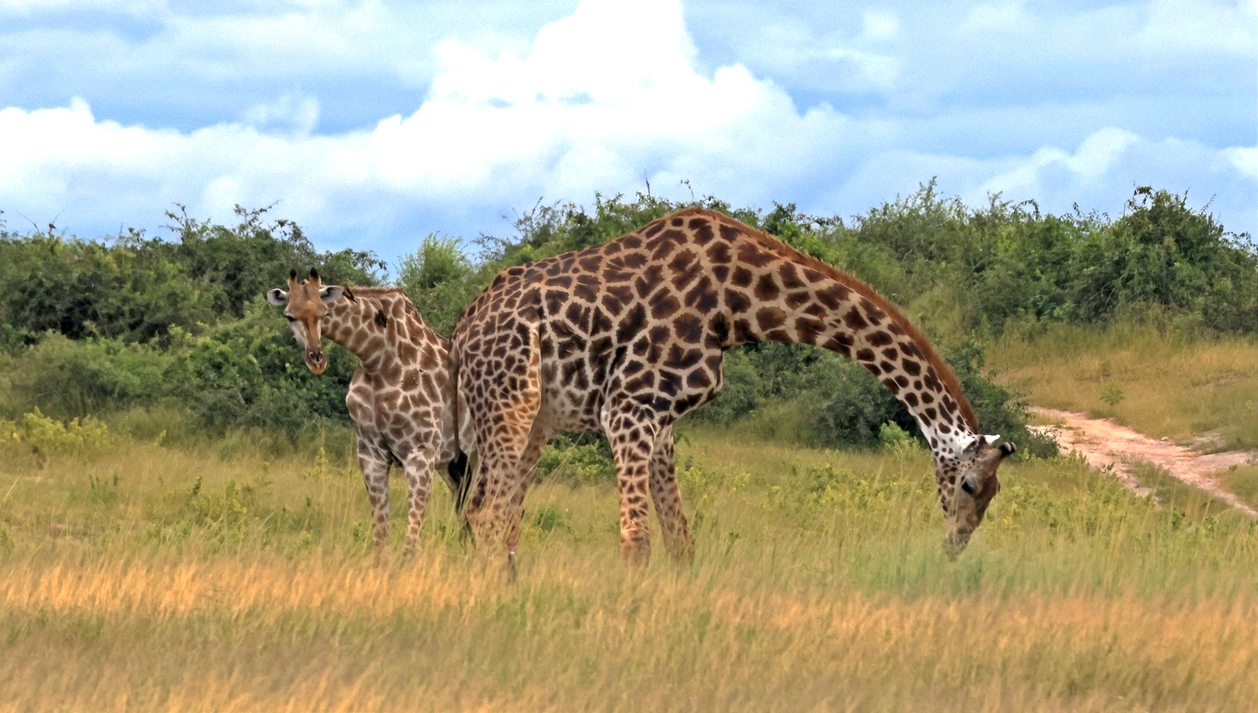
Two beautiful giraffes
Very close to the “Giraffe Beach” we saw a number of hippos in the water. One of them was opening his mouth very wide in a behavior the local people refer to as “yawning”, but which means something much different from a human yawn. A yawn is one way a hippo tells other animals that he is claiming this territory for himself: you do not want to approach a hippo who is yawning: this is an aggressive move that is warning everyone else (other than perhaps female hippos) to stay away.
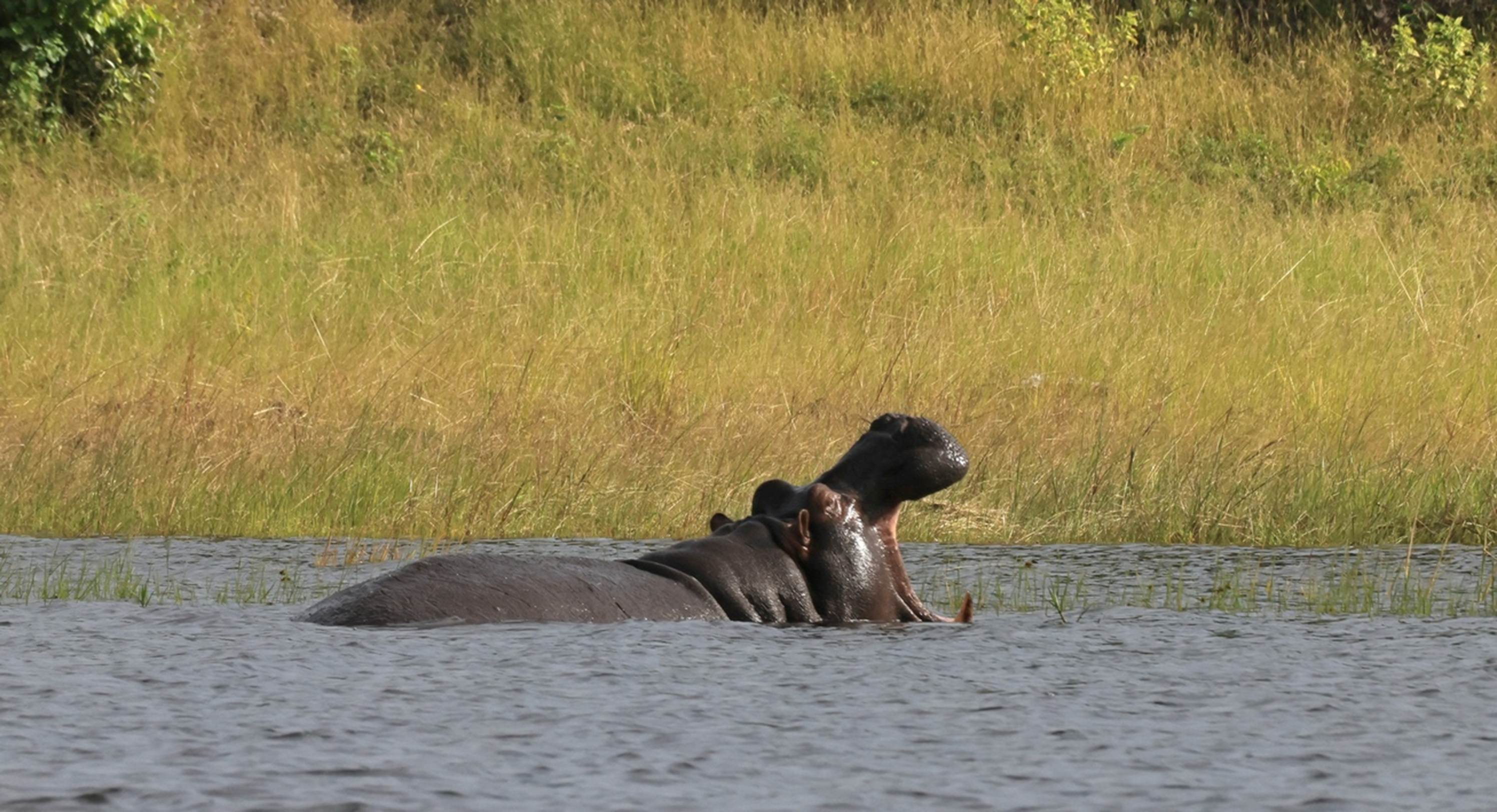
A hippo claiming his territory with a “yawn”
We watched a couple of hippos yawn at each other for a while then headed back toward the Queen, passing by Elephant Beach again where was a different family group this time. The Chobe River National Park (in Botswana) claims to have the largest concentration of wild elephants on earth and, based on our limited experience, I certainly would not argue with that.
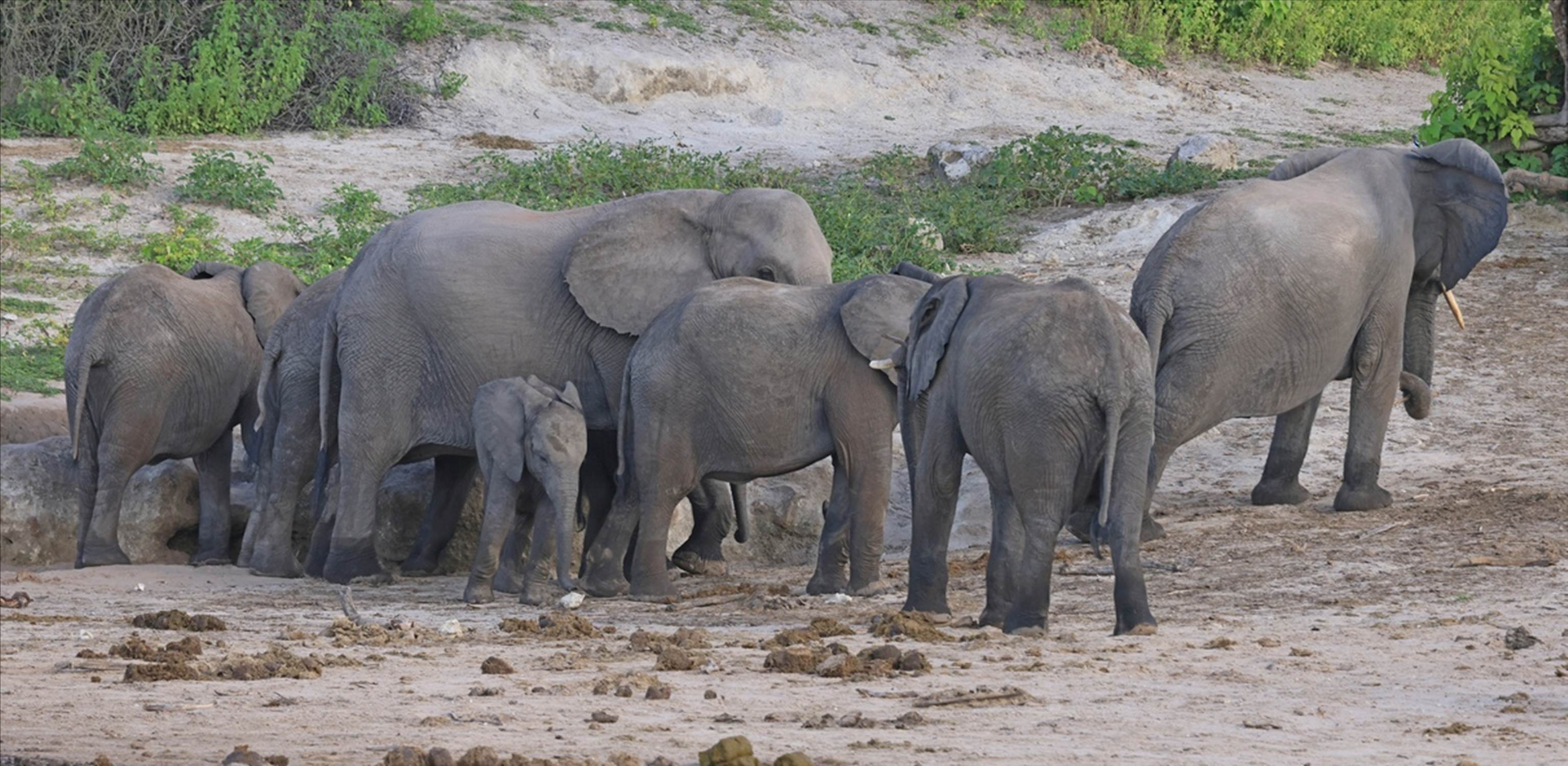
Another elephant family visiting Elephant Beach
Back on the Zambezi Queen, we got cleaned up a bit for dinner at 7:00. Prior to dinner, Kirsten and the captain provided information on the planned activities for the next day and the evening meal was a very nice table service dinner by the crew and we ordered from a limited menu with interesting options. After a relaxed dinner, we sat around and discussed the day’s activities over a glass (or two) of wine.
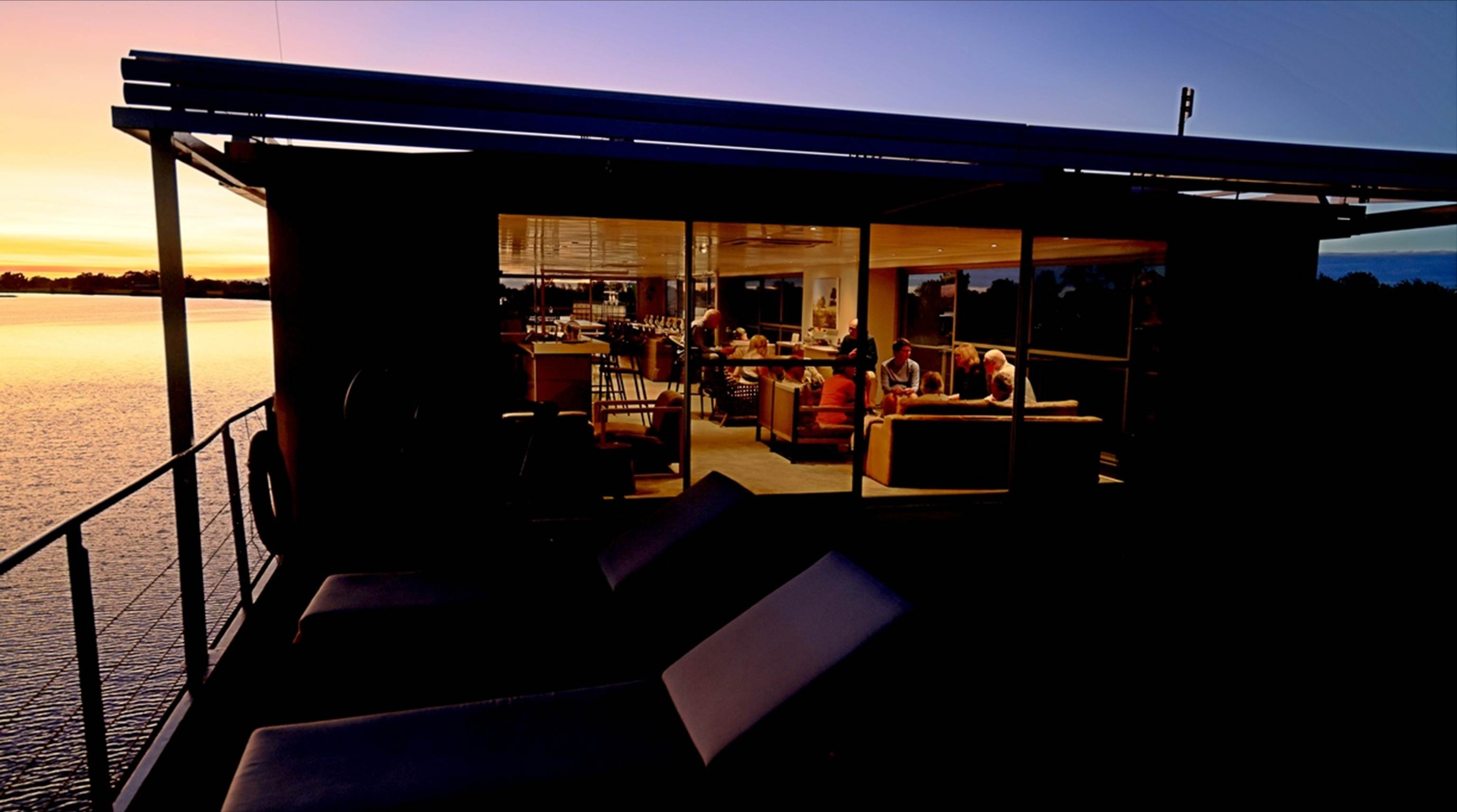
People enjoying the lounge area of the Zambezi Queen
Wednesday, March 11: Chobe Park Safari
Today we would be doing another “safari”, but this time on 4 wheels instead of in a boat. The Chobe National Park (of Botswana) occupies a large area (over 4500 square miles) along the Chobe River and we would be driving through a relatively small part of it. First, we had to get there and that meant visiting the Namibia immigration office (to exit Namibia) and the Botswana immigration office (to enter Botswana): chalk up two more passport stamps.
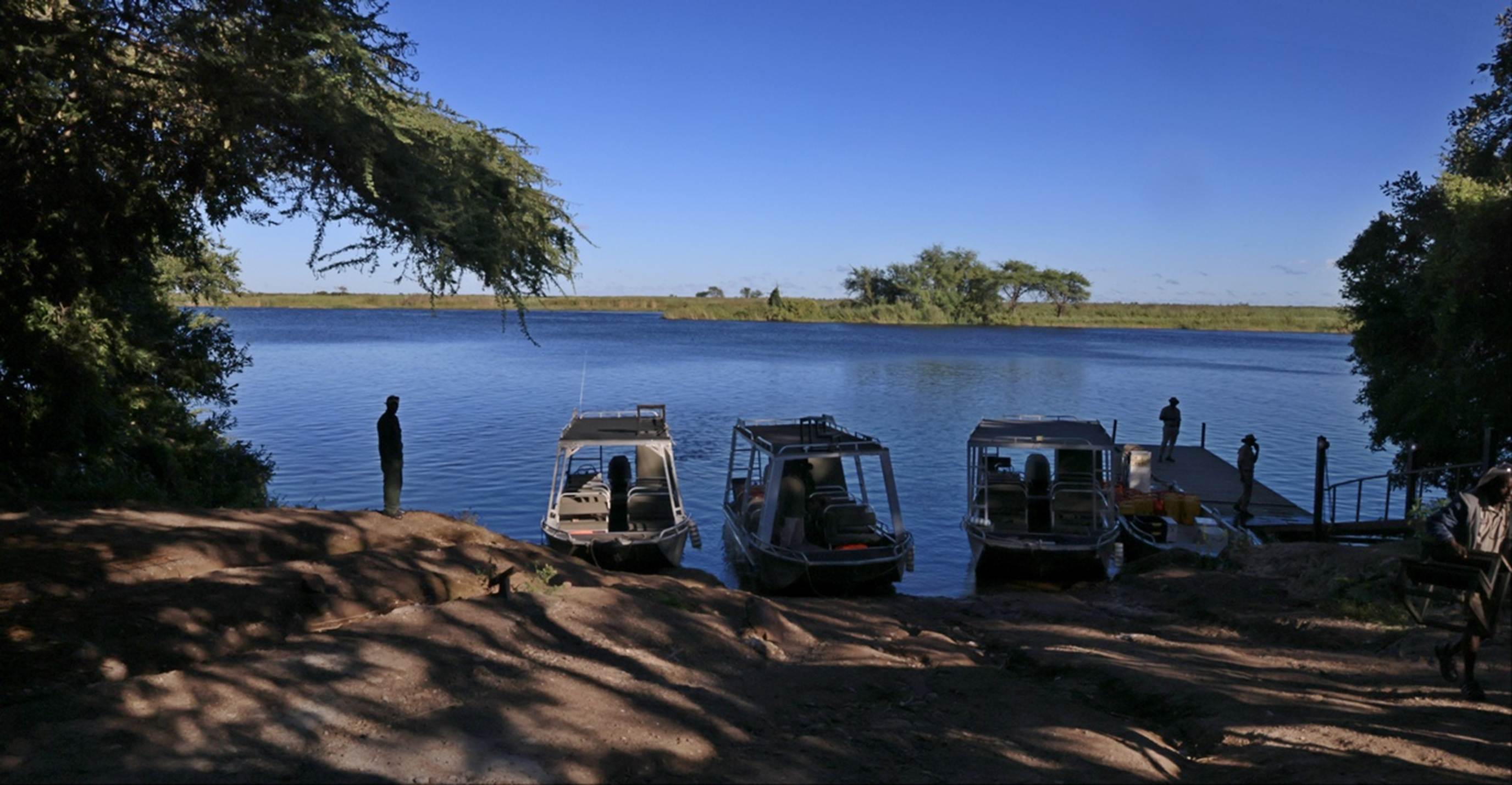
Boats parked on the river bank after we unloaded
After beaching the boats, we climbed out of them, made our visit to the immigration office, and climbed up onto the large 4x4 vehicles for our safari. Compared to some we had seen (and were yet to see) these were relatively new, clean, and comfortable vehicles. I had not boarded our vehicle yet when our guide/driver, a fairly large fellow, came up and introduced himself as “Six”. I thought perhaps he was kidding so I checked his name badge and, sure enough, it said “Six”. We never found out the significance of his name, but he did an excellent job. Six said he had been doing this (driving safari/tours) for over 20 years, since he was old enough to get his driver’s license. We all loaded up and headed down the road a couple of miles to the park entrance.
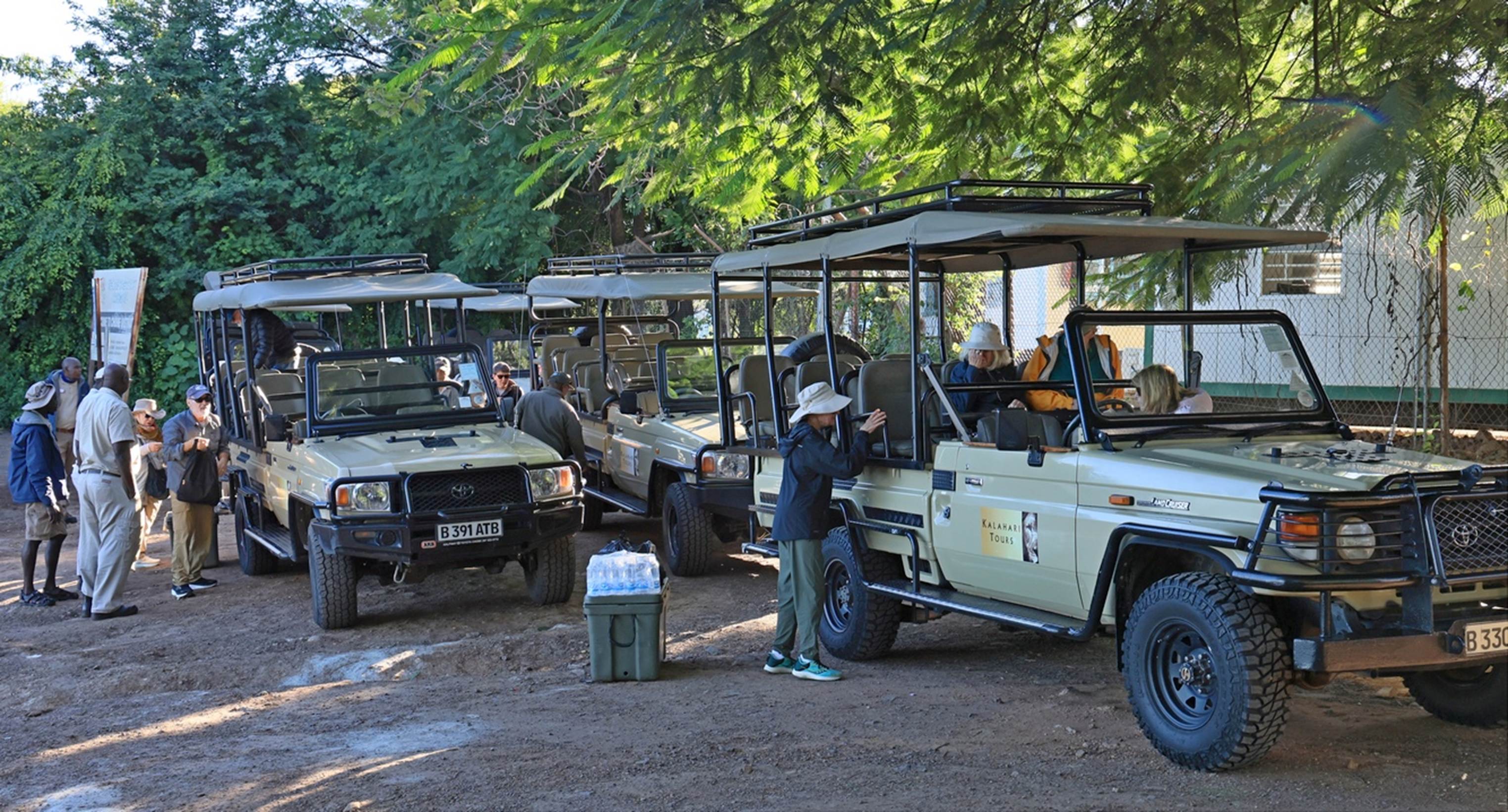
Loading up in the 4x4s: ours is the one on the right.
We were not even close to the park entrance yet when we first saw a baboon alongside the road, then a small group of male Impala.
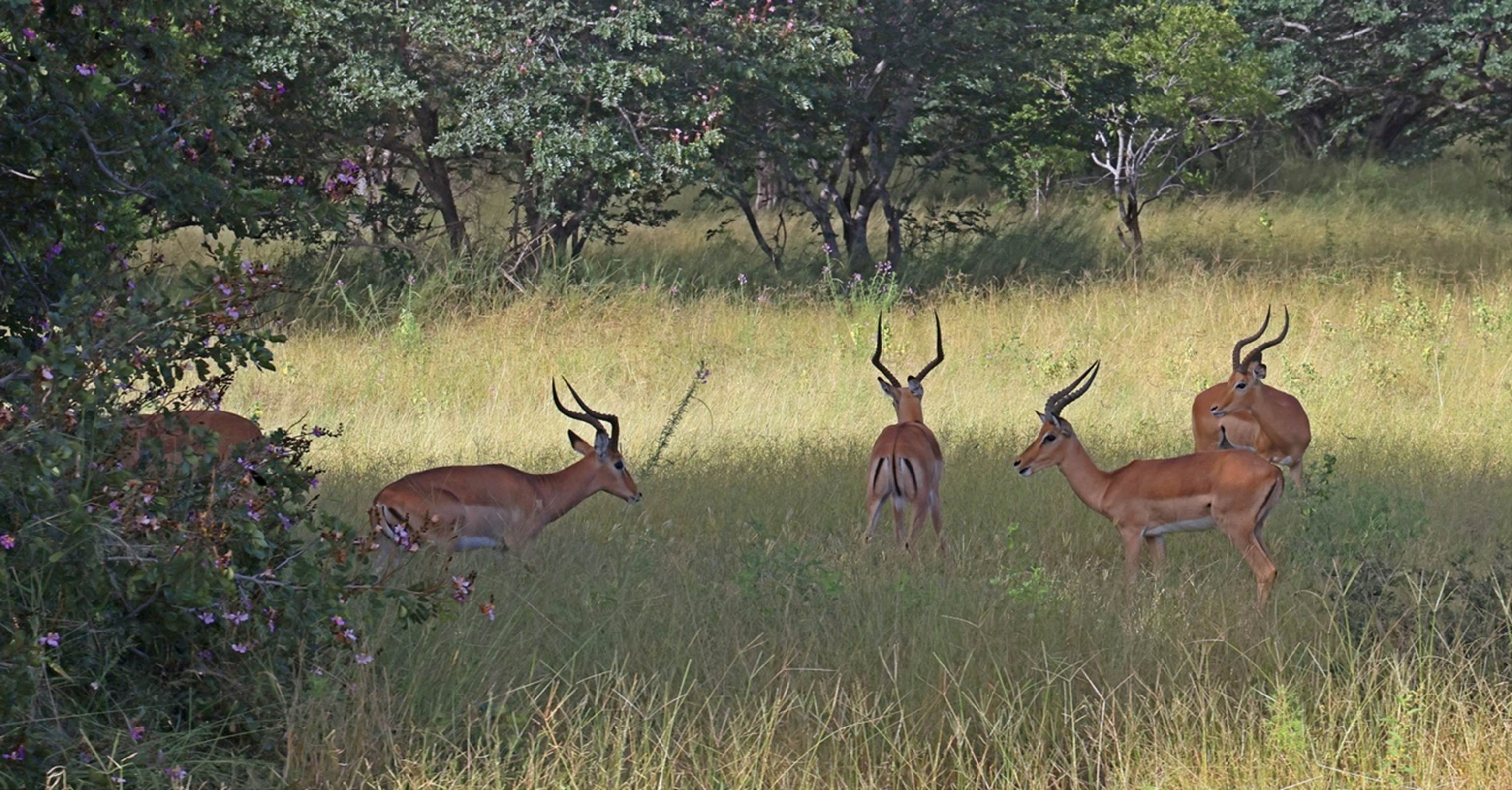
Not even in the park, and there are beautiful Impala.
We stopped at the park entrance for a few minutes for a restroom break (no restrooms within the park) and there was a large sign with the “Park Rules”. One of the rules said “No Off-Road driving”. But, there were no real “roads” in the park, only dirt trails and well-worn ruts: if you didn’t drive “off-Road”, you wouldn’t go anywhere!
The Chobe National Park lies on the southern side of the Chobe River, although my directions were reversed most of the time we were there. Soon after entering the park, we stopped at a scenic overlook and looked back east over the river. With all the water in the river and the green grasses, it was hard for me to imagine what it would look like during the dry season.
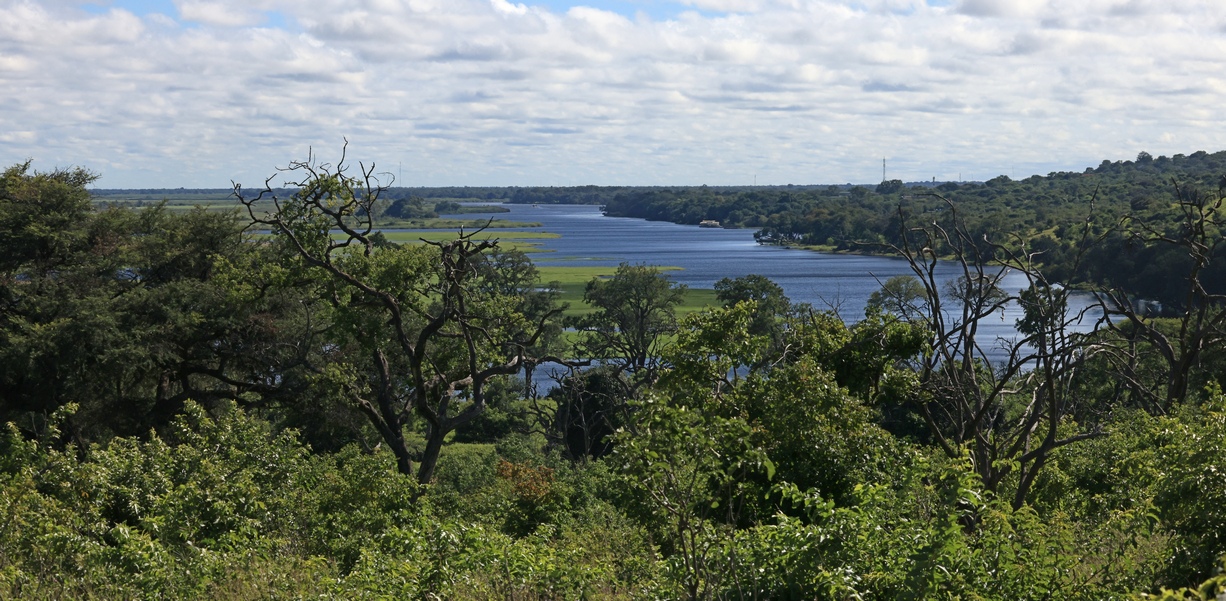
Lots of water in the river now!
About the first animal we saw in the park was about as different as you could get from an elephant: a Pygmy Squirrel (although Six had another local name for it). It was rather cute and posed for photos, but not exactly what we were looking for.

A Pygmy Squirrel
At another river overlook site, we could look across the river at the Zambezi Queen and see an elephant at the same time.
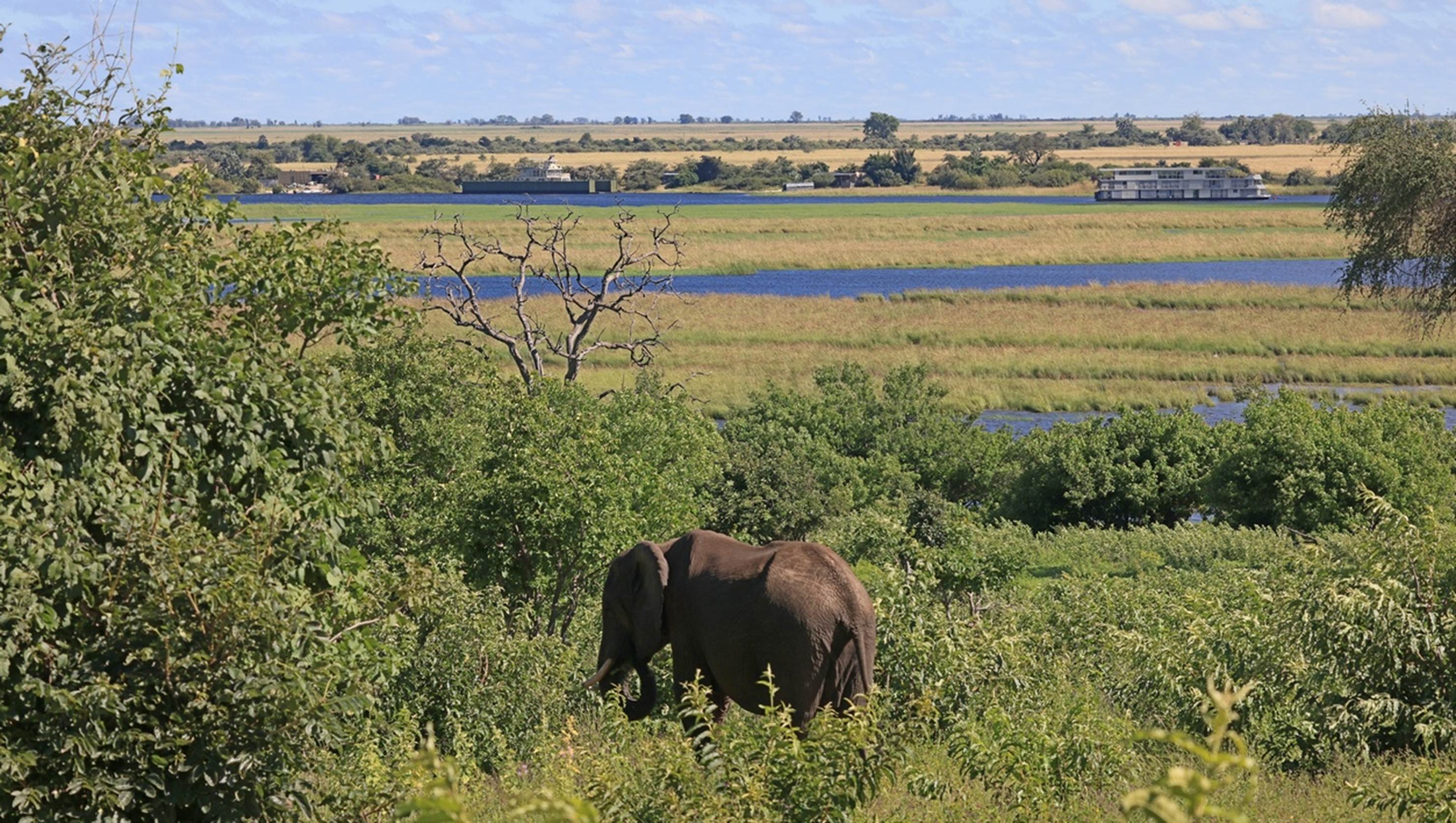
An elephant and the Zambezi Queen
Soon after leaving that overlook, there was a large elephant standing alongside the trail. As I started taking a video of him, I noticed movement in the background and watched as a number of elephants, probably a family, ambled past in the background. Check this video, and remember to look for the movement in the background.
Just a little further on, we came to two elephants “fighting”. I put “fighting” in quotes because I don’t think they were very serious about it: either they were really playing, or possibly, as young elephants, were just learning and practicing. Also, the small elephants right next to them did not seem to be at all concerned. Take a look at this video when they finished their “fight” and see what you think.
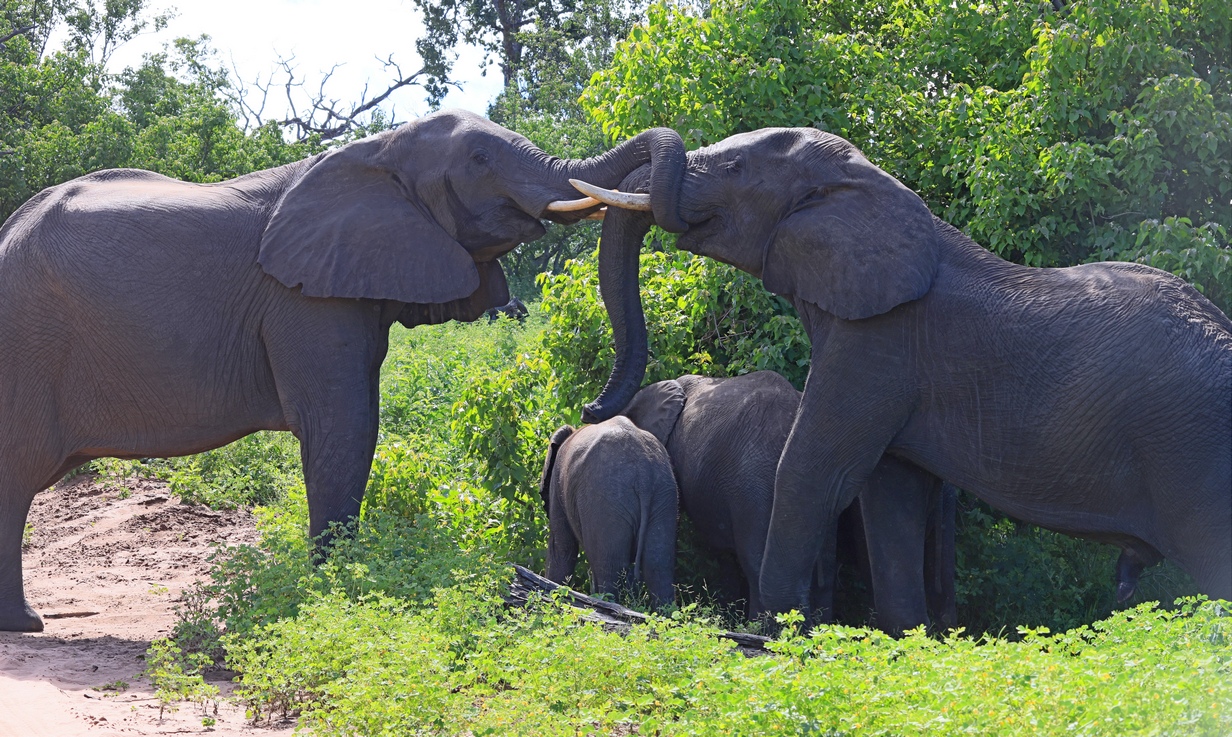
Looked like a “friendly fight” to me
Next up were a couple of adult male Impala and they are impressive looking with those long, curving and ribbed horns. Since they are not members of the deer family, they are referred to as horns, not antlers.

A beautiful animal with impressive horns
Now we go from the very large animals, to one of the smallest animals we will observe, the Chameleon. There are many kinds of Chameleons, but this one is most interesting for the way it walks. Except for the tail sticking straight up, the one in the photo below does not look especially unusual but watch this video of it walking and you will see why it is so different.
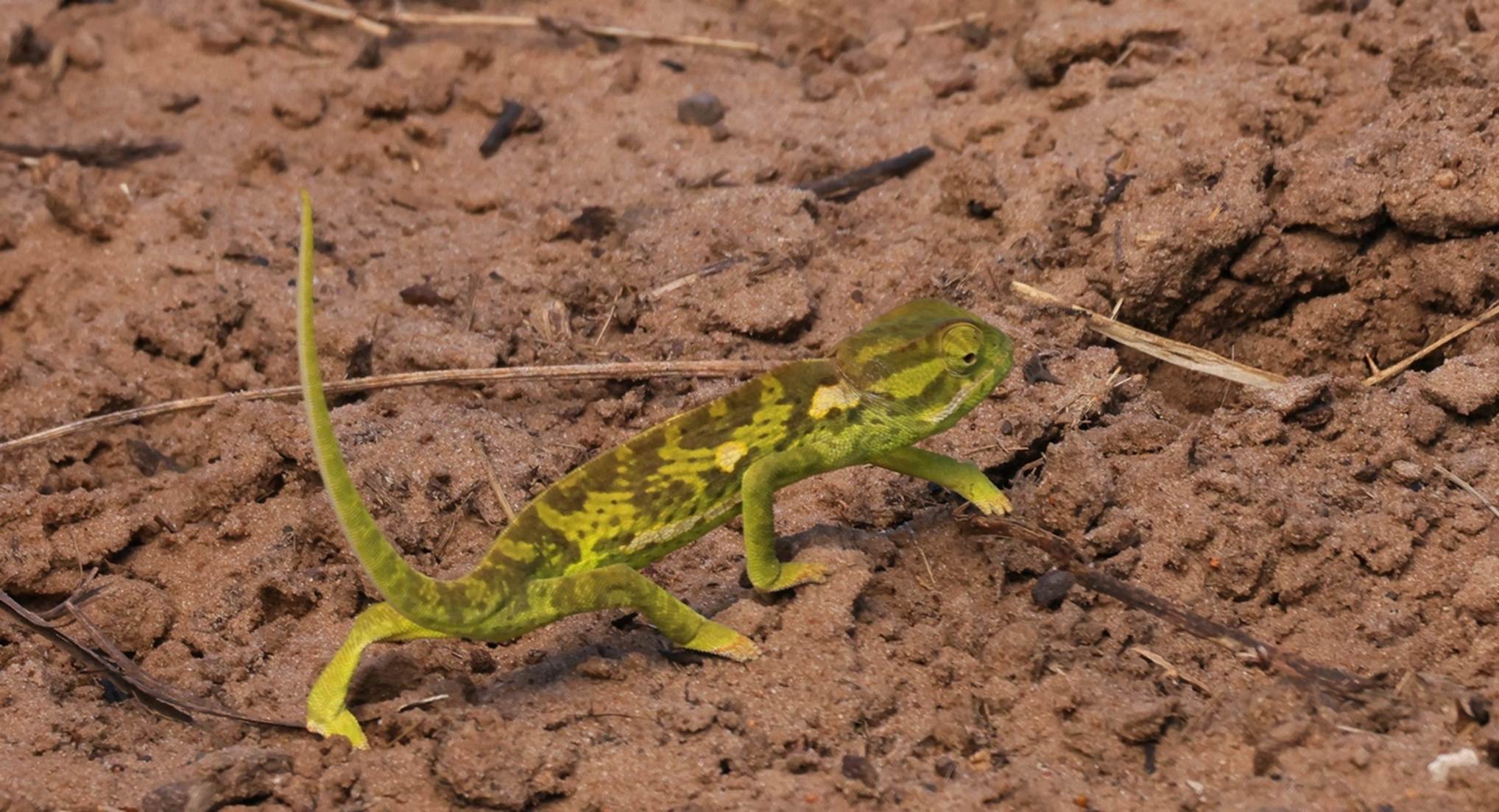
The chameleon looks a little strange just standing there.
Next we came across a large group (herd?) of female Impala: there must have been 50 or 75 of them. These were all female Impala and there were only a few young animals among them. The photo below gives you an idea of the size of the group, but this video givers a much better feel for how many there were.

A large group/herd of Impala
Almost “next door” to the large herd of Impala there were 4 or 5 adult male Impala and two of them were engaged in a fight. While perhaps not “all-out”, this battle did seem somewhat more serious than the two elephants a few minutes before.
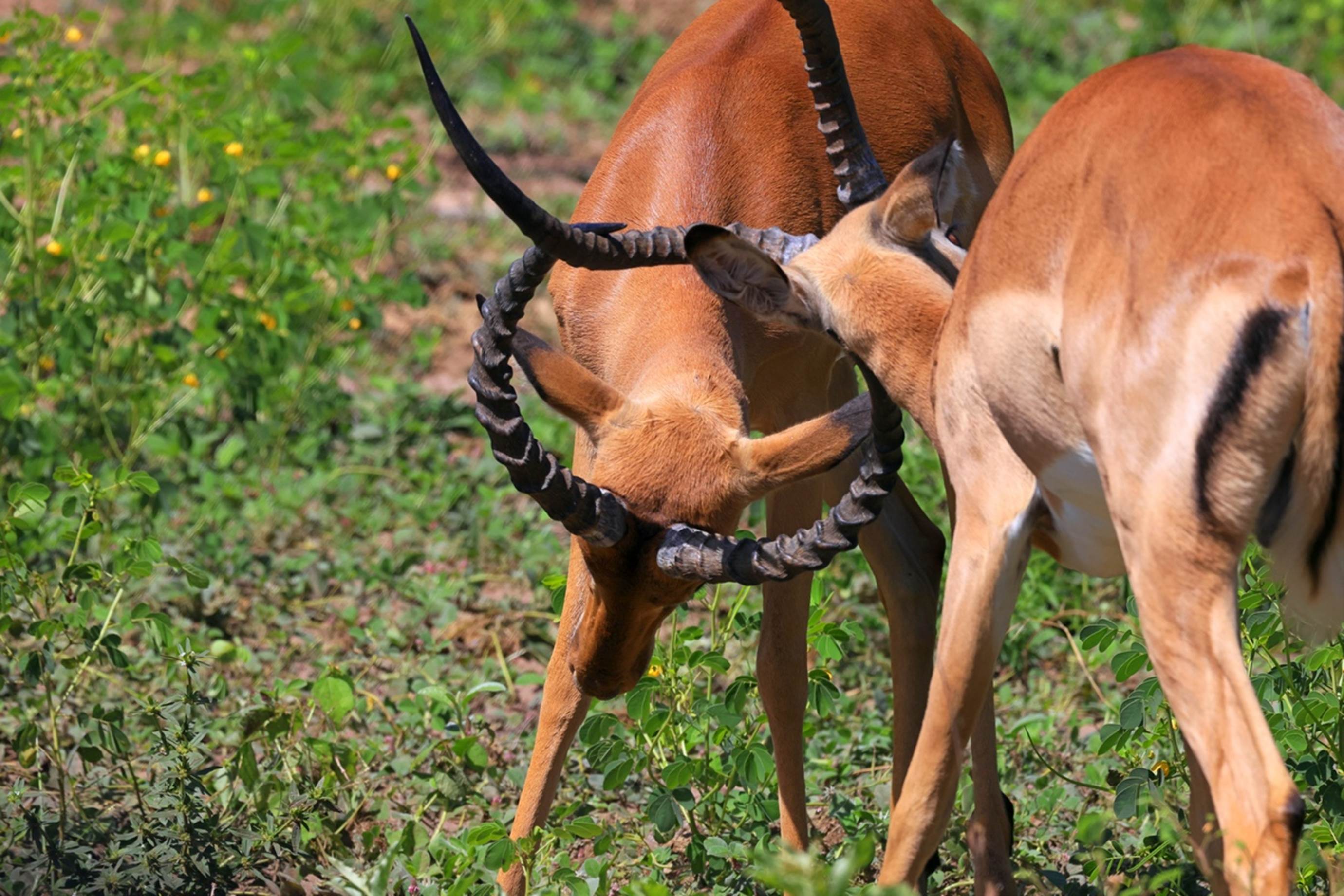
Two male Impala having a disagreement
While the battle did not look real intense, you have to keep in mind that those horns are long and very sharp and the Impala know the result of getting gored by one. Check this video of the fight and see what you think. On the nearby riverbank we spotted a group of ducks waddling toward the water. Watch out for the crocs, guys!

A few relatively normal animals
Almost any time we got close to the river, we could look around and spot some hippos. They are very possessive of their territory and will chase off any other hippo or other animal that invades their space. Hippos kill more people than any other animal in Africa and almost all of those deaths are the result of the person invading their territory. Although they look very bulky and cumbersome, on land they can run 30 miles an hour, faster than most people.

Hippos in the river
While our guides and drivers would get us very close to the elephants and even lions, we never got very close to the hippos because you never know when you might be trespassing on their territory. A family of Warthogs was grazing close to the river and mostly ignored us as we watched them for a few minutes.
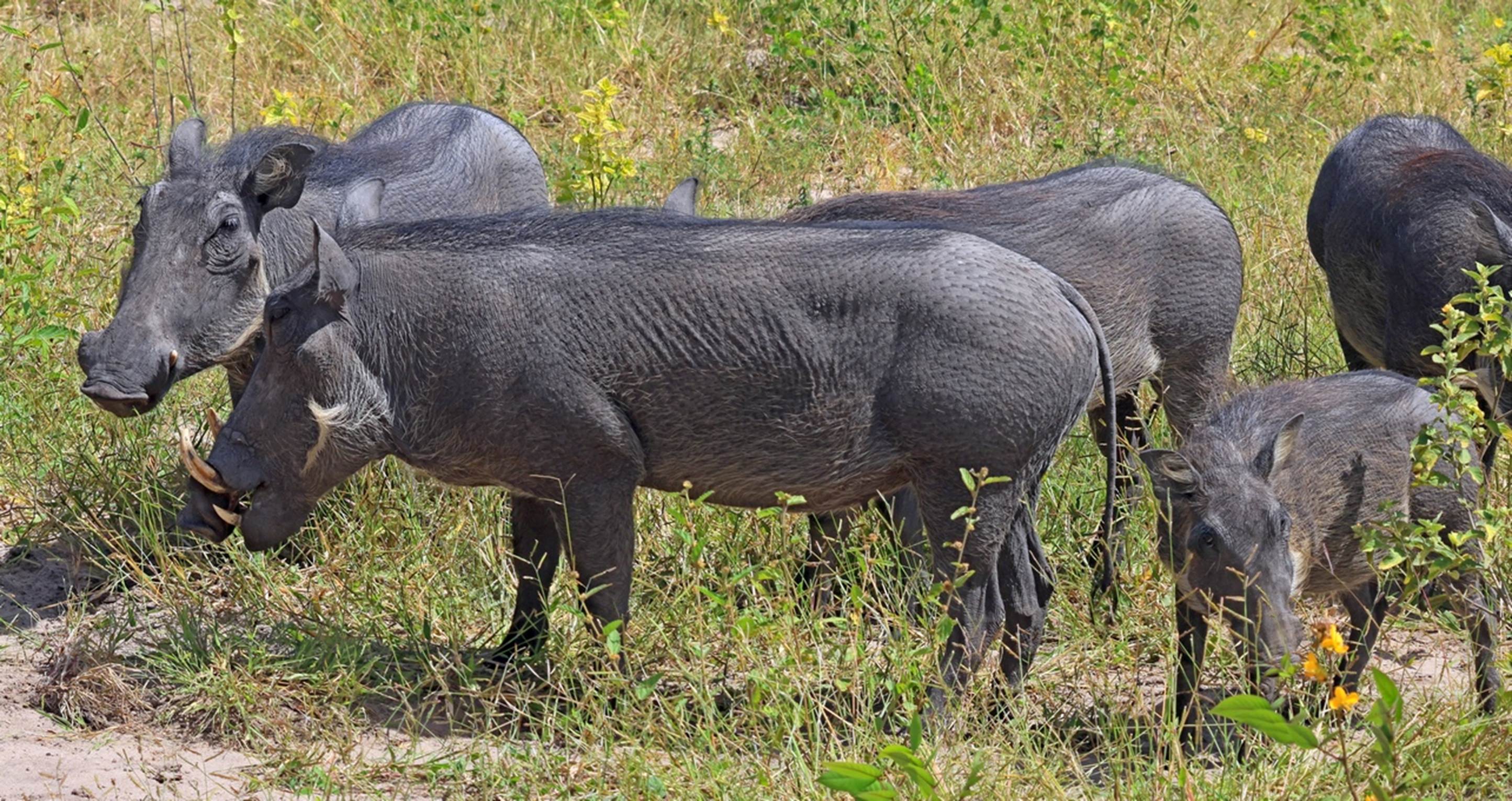
Even Warthog babies are not exactly “cute”.
We heard some noise from an area of low plants and bushes and noticed some colorful heads moving around. These are the local species of Guinea Fowl and the males have a very bright head.
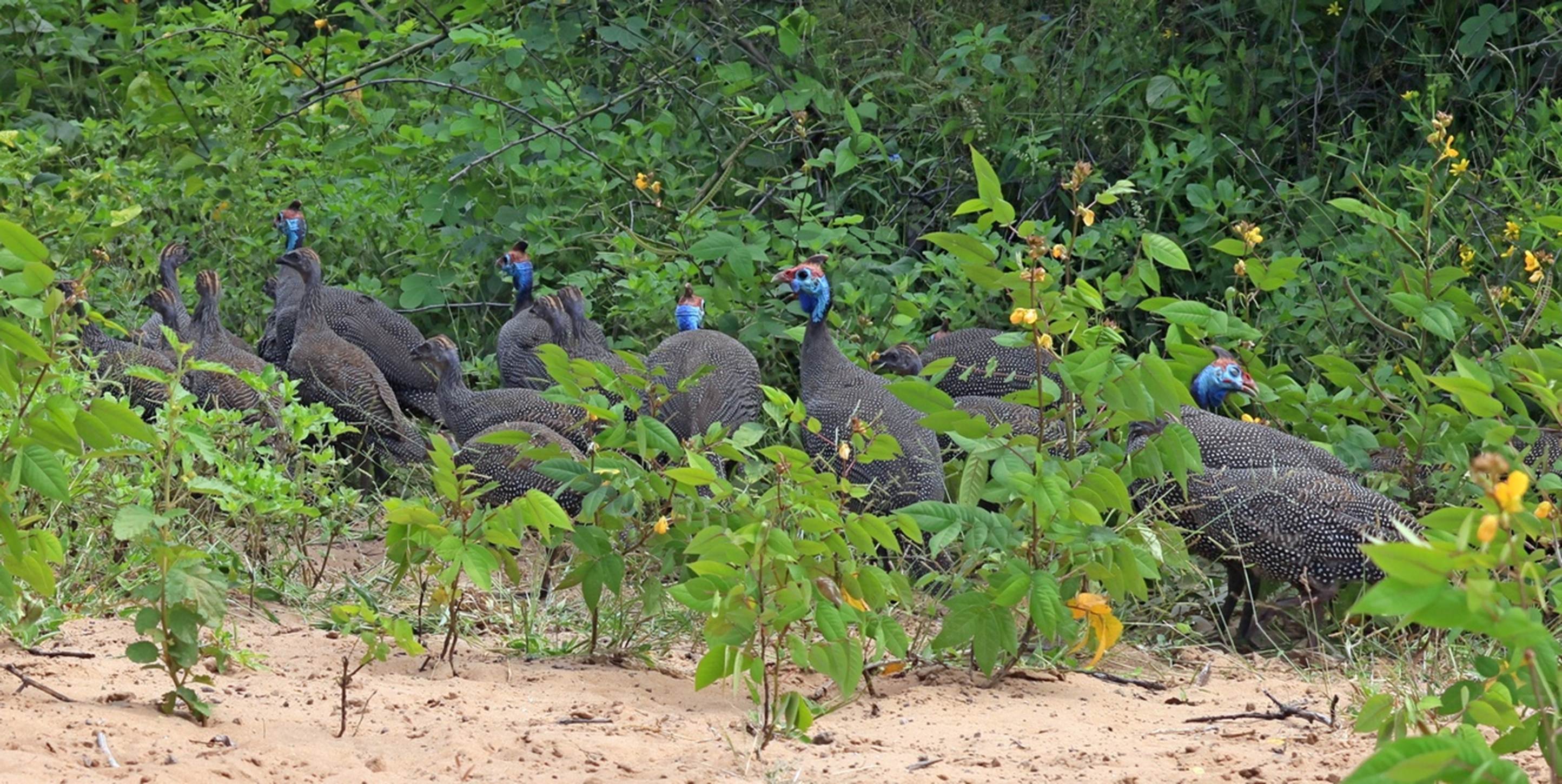
The Guinea Fowl were leaving the area when we showed up.
Our next encounter and the accompanying photo requires some explanation. We entered an area with a group of Baboons and stopped to watch them for a while. There was one family next to the trail that behaved so much like a human family that it was amazing. There were the mother and father, a “teenager” looking bored, and a young child and the young one just could not stay still: he was into everything. We watched for a while and the photo below was one of the better ones from that encounter.

The Baboon Family
The Zambezi Queen was running a photo contest and, since I was obviously taking a lot of photos, several people asked me if I was going to enter the contest. Normally I don’t enter such contests, preferring to leave them to people without much photo experience to encourage them to participate. But I knew Barbara (the “birder”) would be entering a bird photo so I felt I had to join in. I selected the photo above, knowing it would be different from most animal photos and had good “human interest”, and submitted it as my entry. When the contest results were announced, my photo did win the main prize and Barbara’s bird photo also won in a special category.
We soon came to some elephants on a beach: I think it may have been “Elephant Beach”. The interesting thing about this encounter is that most of the family were lined up at the shoreline, drinking, but just out of sight in the photo below, a large bull elephant was sort of herding the group, keeping them together . If you watch this video of the group, you will see the large male. Notice how, when the large male approaches, a young male backs away from the water and leaves the group, giving the big guy plenty of room.

A large family enjoying a water break
Driving along another trail, Six noticed six or seven elephants heading our direction, looking like they would be crossing the trail right in front of us, so he stopped the vehicle where we could watch. Only one elephant crossed in front of us, and the rest of the group gathered close together in the shade of a couple of trees. It was fun to observe some of their interactions. There was one very young elephant that stood around for a minute but, as youngsters are prone to do, he got bored and started looking for something to do. He noticed a large branch on the ground (in the foreground in photo below) and started playing with it: moving it with his trunk, pushing it with his feet: nothing drastic, just something to entertain himself. After a couple of minutes of this, a juvenile found his own branch and started playing with it. In a few minutes, the young one got tired, or hungry, and went over to his mother to nurse a while. Then the juvenile came over and started playing with the branch the youngster had been knocking around.
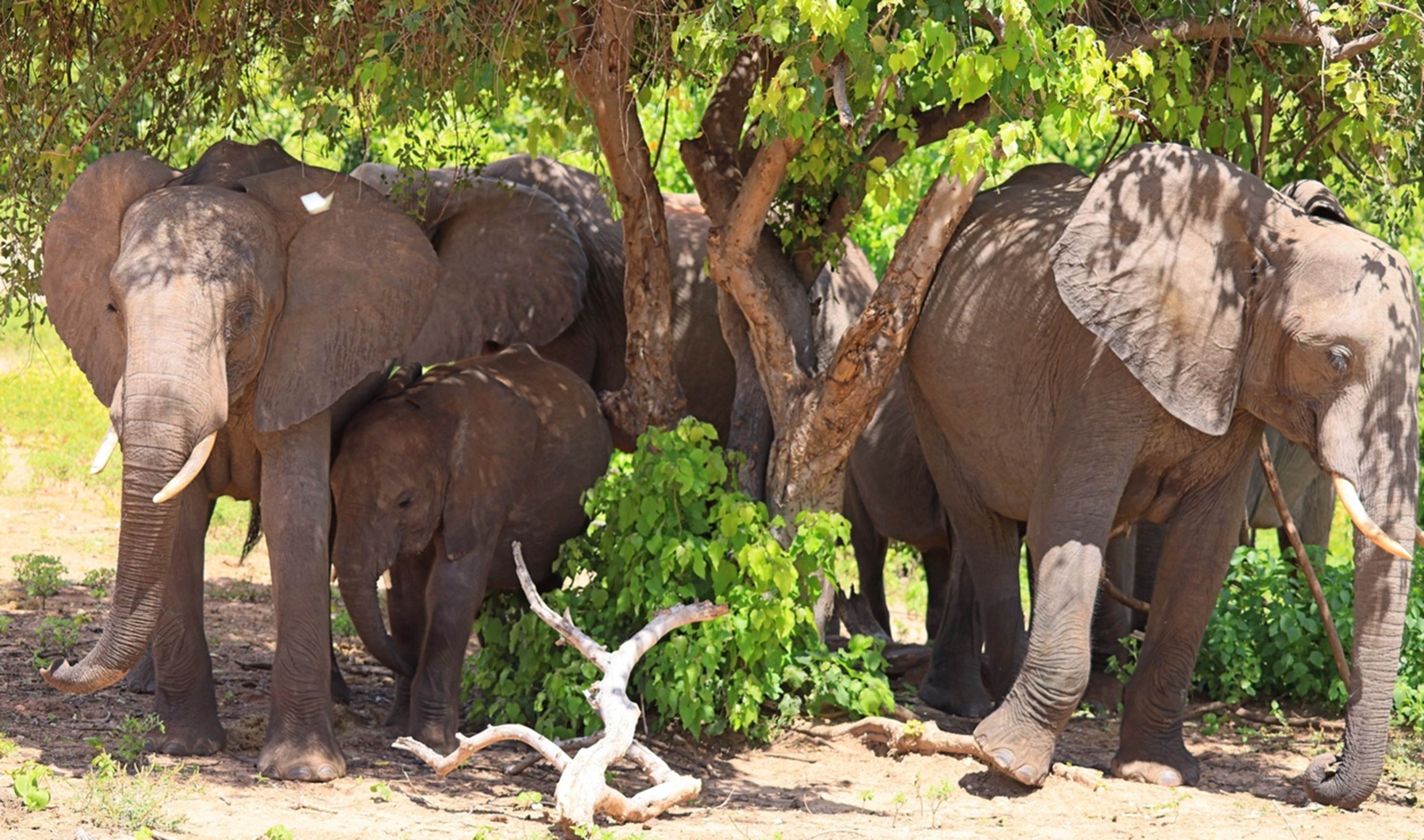
An interesting elephant family
We had been observing some colorful birds since entering the park, but none of them had stayed still long enough to get a good photo until this one, below, parked on a branch close to us.
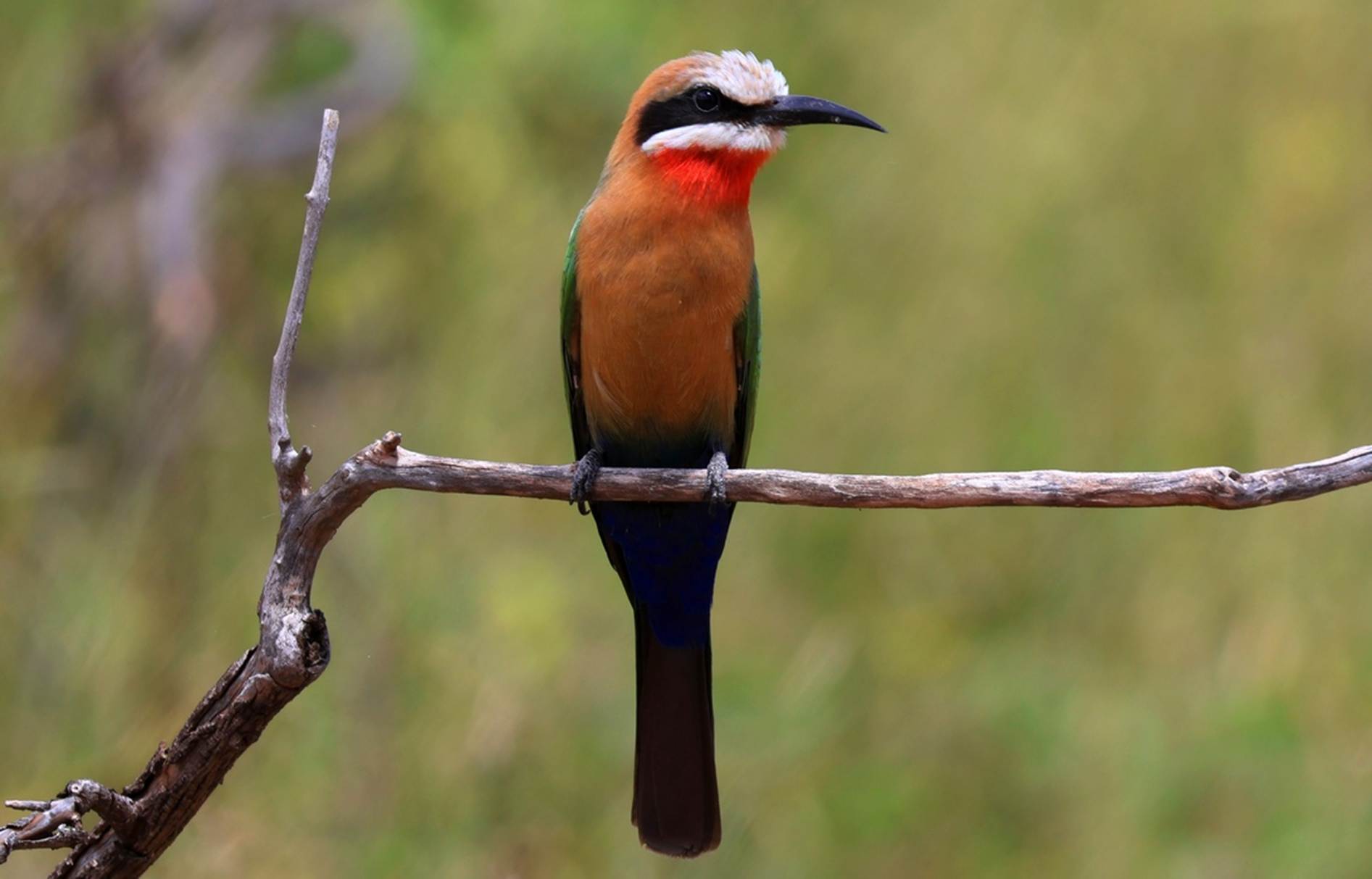
A Red Throated Bee Eater that stayed still long enough for a photo
Speaking of branches of trees, Six pointed out something moving in some trees a short distance away: a Giraffe neck and head! This tree was just about the right height for a full-grown giraffe and this one was snacking on the tree.

A large giraffe with his head in a tree
Six had told us to stay in the vehicle unless and until he said it was safe for us (and the animals) to get out and stretch our legs. We came to a small grove of trees with nothing close by and Six said this was a good place to get out, take a drink of water, and stretch a bit. About as soon as we started walking around, we heard a strange bird sound from one of the trees. It took a while to spot the Hornbill and he soon cooperated by hopping down out of the tree to stand on the ground so we could get better photos.
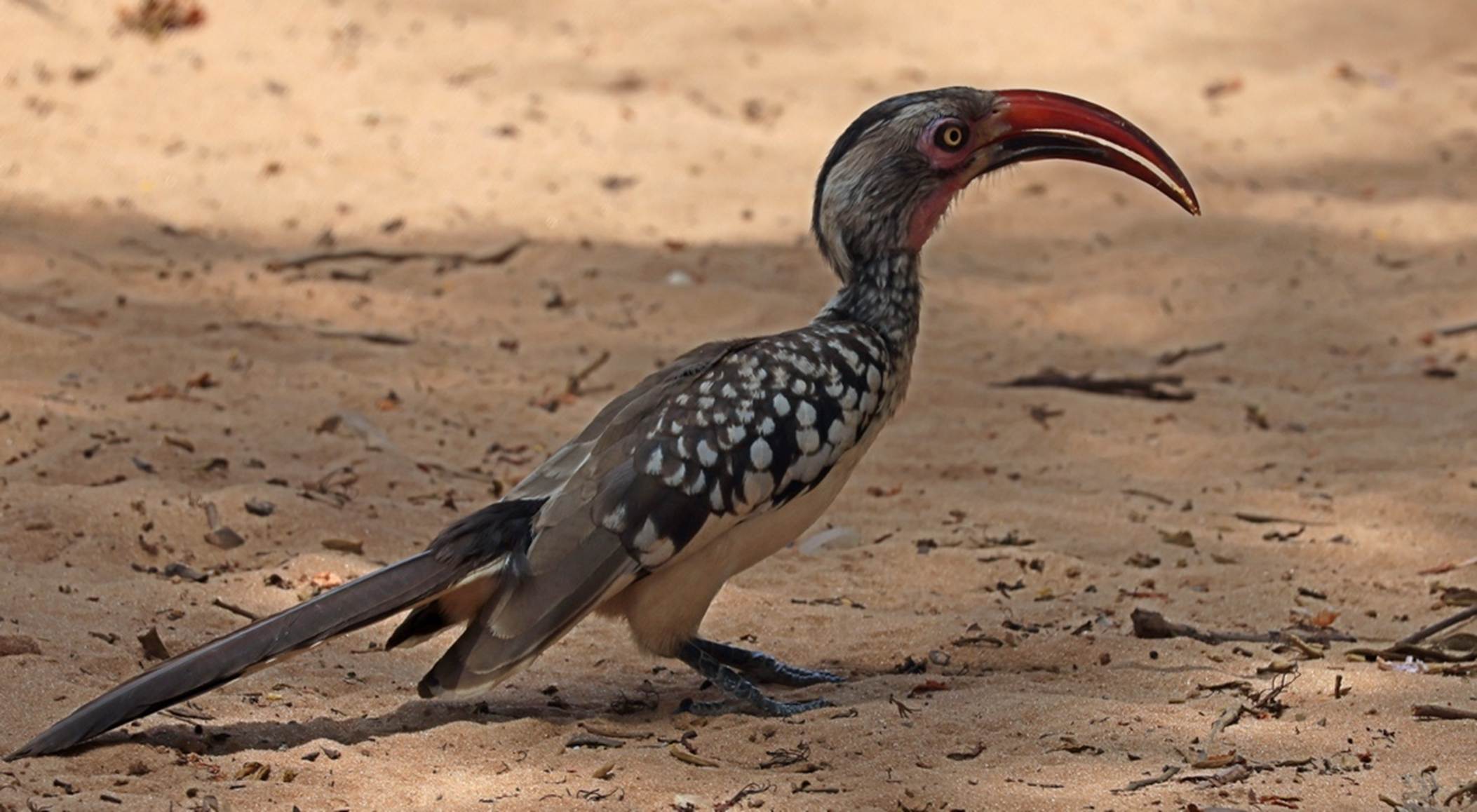
A cooperative Hornbill
There are many different species of Hornbill and we’ll see another, rather striking, one a few days later. About this time, Six got a radio call that there was a lion apparently on the prowl a short distance away and it is somewhat unusual to see lions in this area, so we loaded up and headed that direction. When we arrived in the area, the Lioness was ambling along the road and through some tall grass, seemingly not in any hurry to get anywhere.

She did not seem to be in any hurry.
At the time we thought she was hunting and looking for possible prey, but later found out that she had just finished a meal so was probably just looking for a quiet spot (away from these pesky 4x4s) to take a “cat-nap”. We noticed that most animals did not seem to be bothered by the vehicles or the people: when the vehicles were stationary, the animals just seemed to treat them as another natural obstacle, like a tree, and just walked around us.

Taking advantage of the man-made trail
Another thing we noticed is that the animals took advantage of the roads and trails made by the 4x4s. This Lioness frequently used the road rather than traipsing through the high grass. Six got another radio call, this time that our lunch was ready, so we left the lion and headed for the “picnic area”. If the lion had known what we had to eat, she might have joined us!
This meal was not just a boxed lunch or something simple like that, it was a full catered affair, complete with multiple choices of things to eat and drink. All of us sat down to enjoy a full, nourishing meal: after all, bouncing around in those 4x4s is hard work!

Enjoying a rather elaborate “picnic lunch”
After eating, we had a few minutes to wander around a bit. I had assumed that there was some kind of fence or barrier to keep the animals out of the picnic area and was a bit surprised to see a rather large potential “gate crasher” walk up to about 50 feet from where we had been eating, with no significant barrier in his way.

Did he want to join us for lunch?
Before moving out again, I had to get a photo of the group of us in the 4x4, including our great guide and driver, Six.
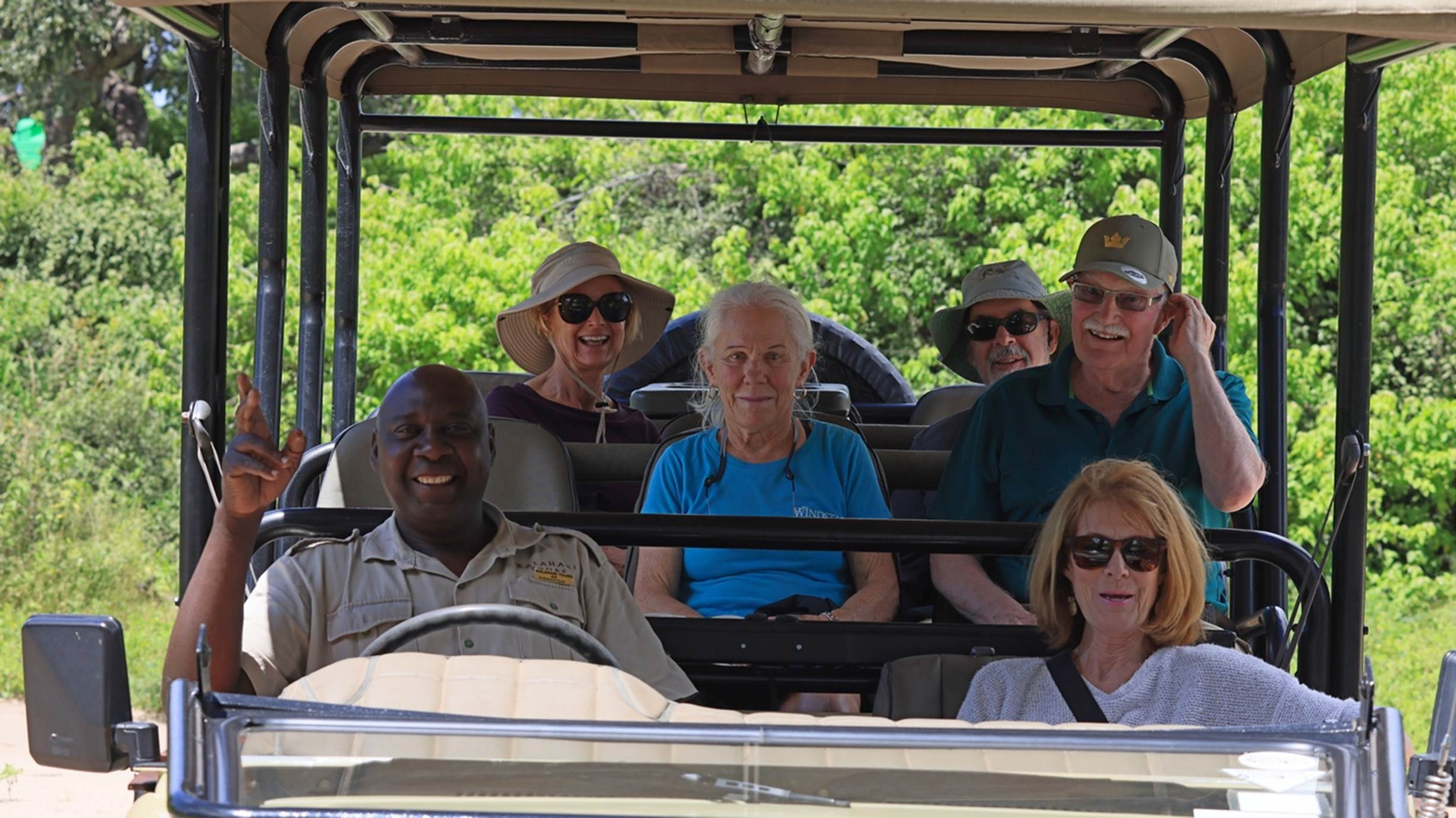
What a motley crew, but a great captain of the vehicle
On the hunt for animals again, we soon came across another giraffe munching on some trees at his height. I tried to get a video of this giraffe, but he walked around behind the tree, lowered his head, and promptly disappeared.

We interrupted his snack.
OK, time for a couple of bird photos. The little guy below had just captured a large ant and was standing in the middle of the road with it. The little bird was cute and colorful enough to warrant a photo, but with the bug in his mouth, it was even better.
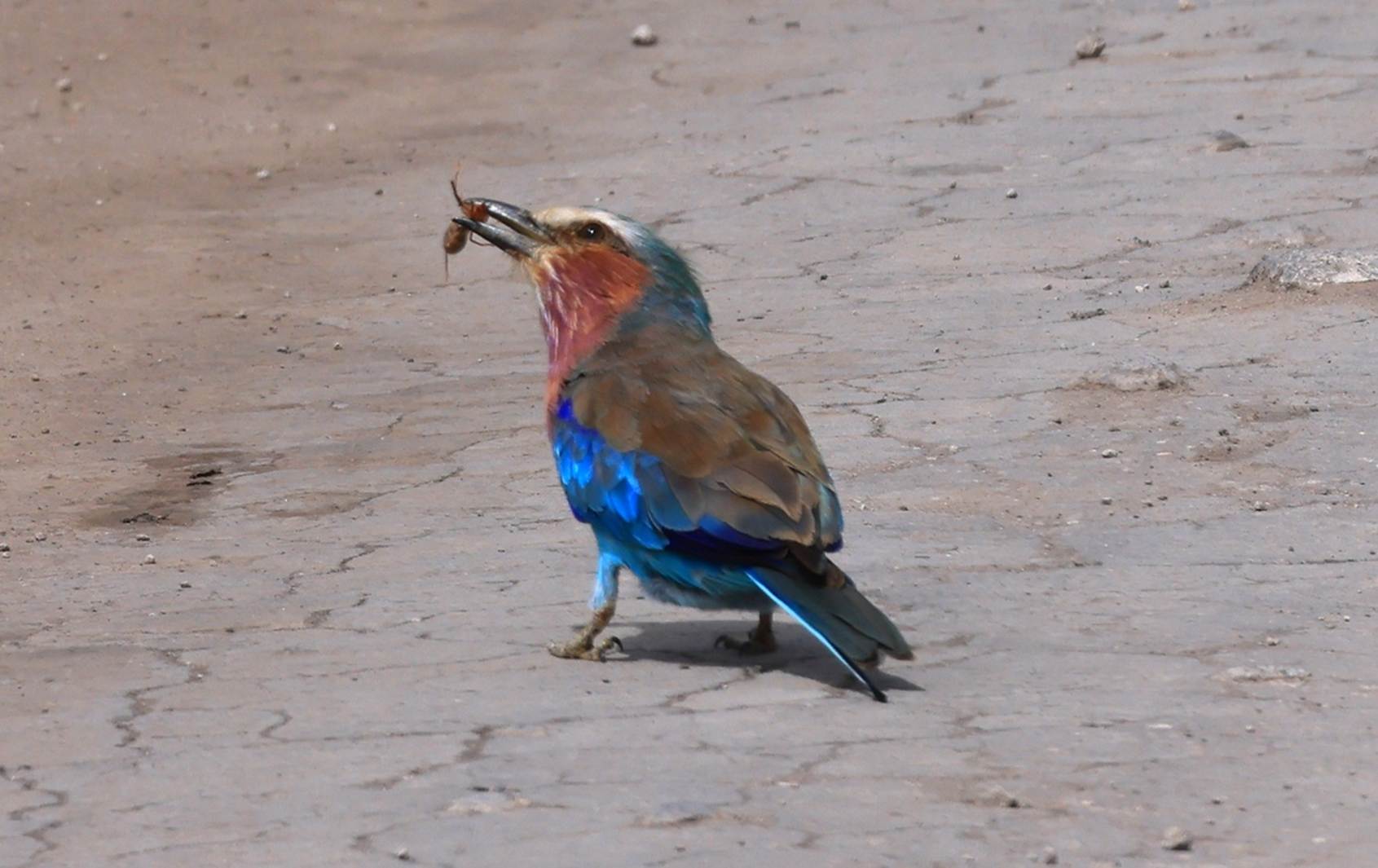
I believe this is a Lilac Breasted Roller.
The even better part came when I managed to keep the camera on him when he took off. I knew his wings were colorful, but did not realize just how colorful until I looked at the photo below later.
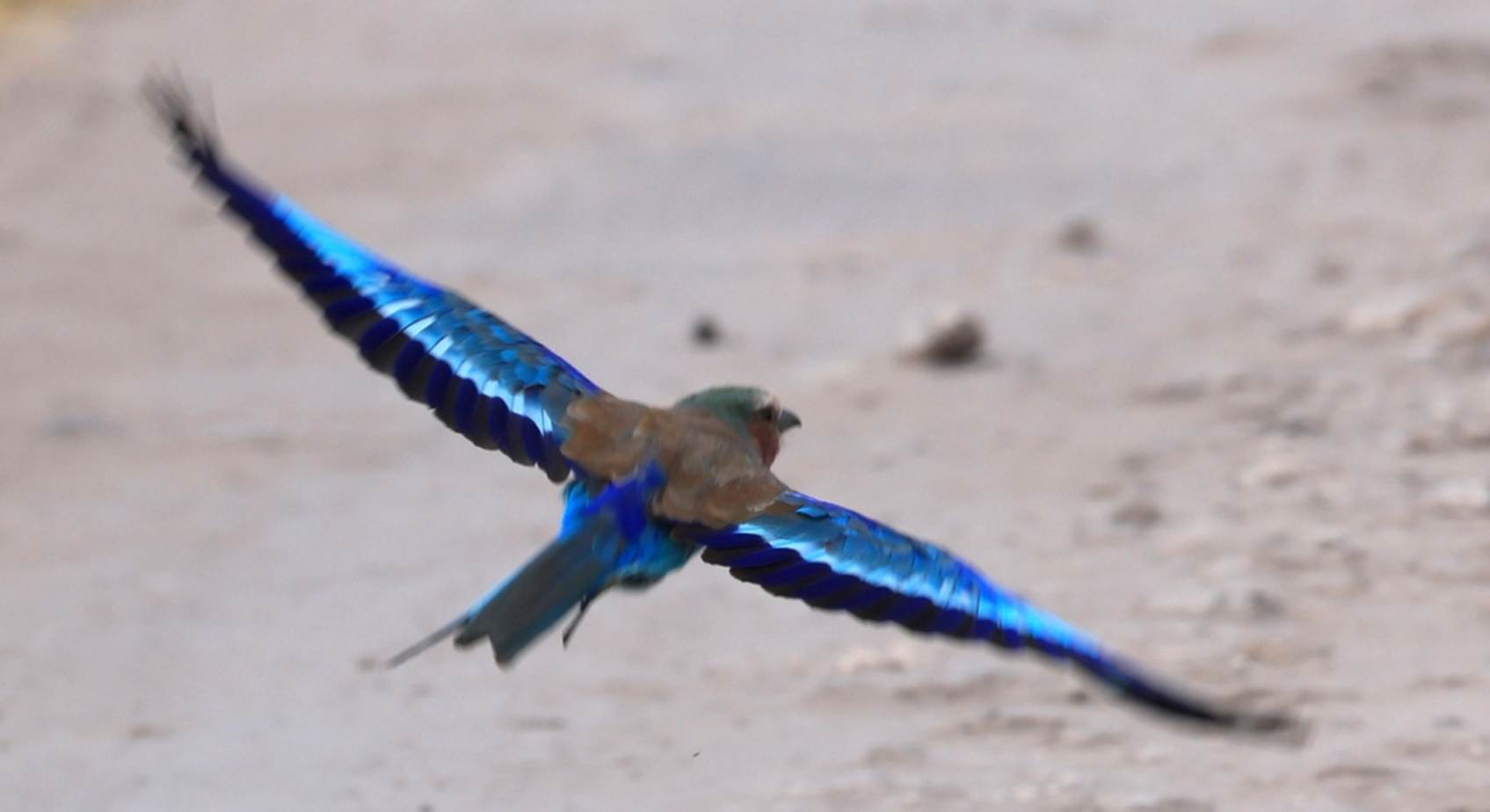
Just look at those wings!
After flying around a bit, he landed in a nearby tree, allowing us to get another photo of the very colorful little bird.
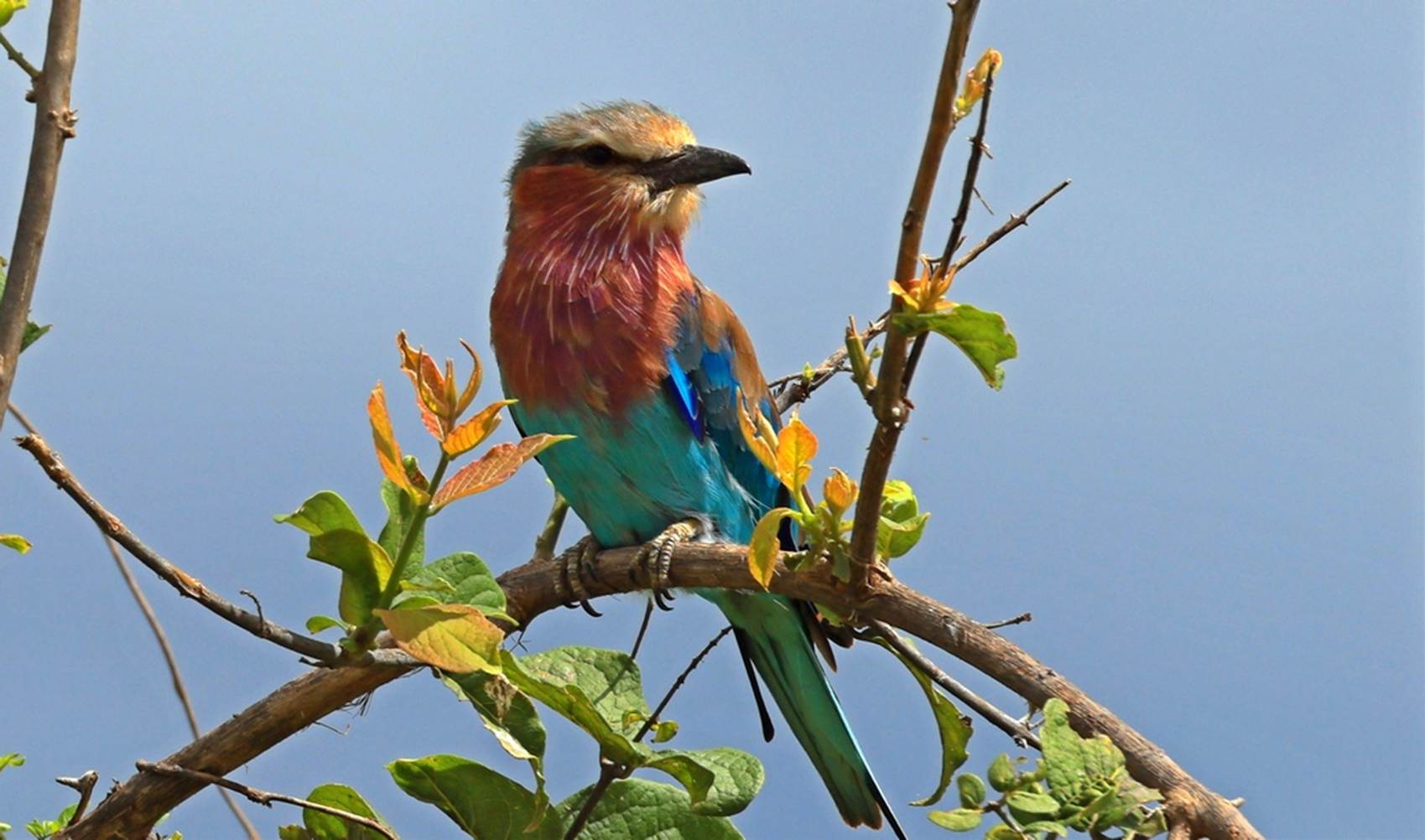
We would see more Lilac Breasted Rollers in the next few days.
We have been seeing many Impala Antelopes, including very close to us, but so far had only seen Kudu Antelopes in the distance. Thankfully, the one below was alongside the road and agreed to pose for a couple of photos. The Kudus are larger and more sturdy looking than the relatively delicate Impala and can be easily identified by the vertical stripes on their flanks.

A very cooperative Kudu Antelope
It was now about mid-afternoon and apparently that is hippo feeding time. While we had not seen any of them feeding in the grassy areas of the river in the morning, there were many of them munching on the grass now. All those dark things in the photo below are hippos that have come out of the water to feed.

Grazing hippos and the Zambezi Queen
It was getting late and time to head back. As we were driving along the road close to the park exit, we saw a large family of elephants off to one side looking like they wanted to cross the road where we were headed. So, what do you do when some pedestrian elephants want to cross the road? Well, you let them, because they always have the right-of-way! Take a look at this video of them crossing and tell me if you would try to interrupt them.
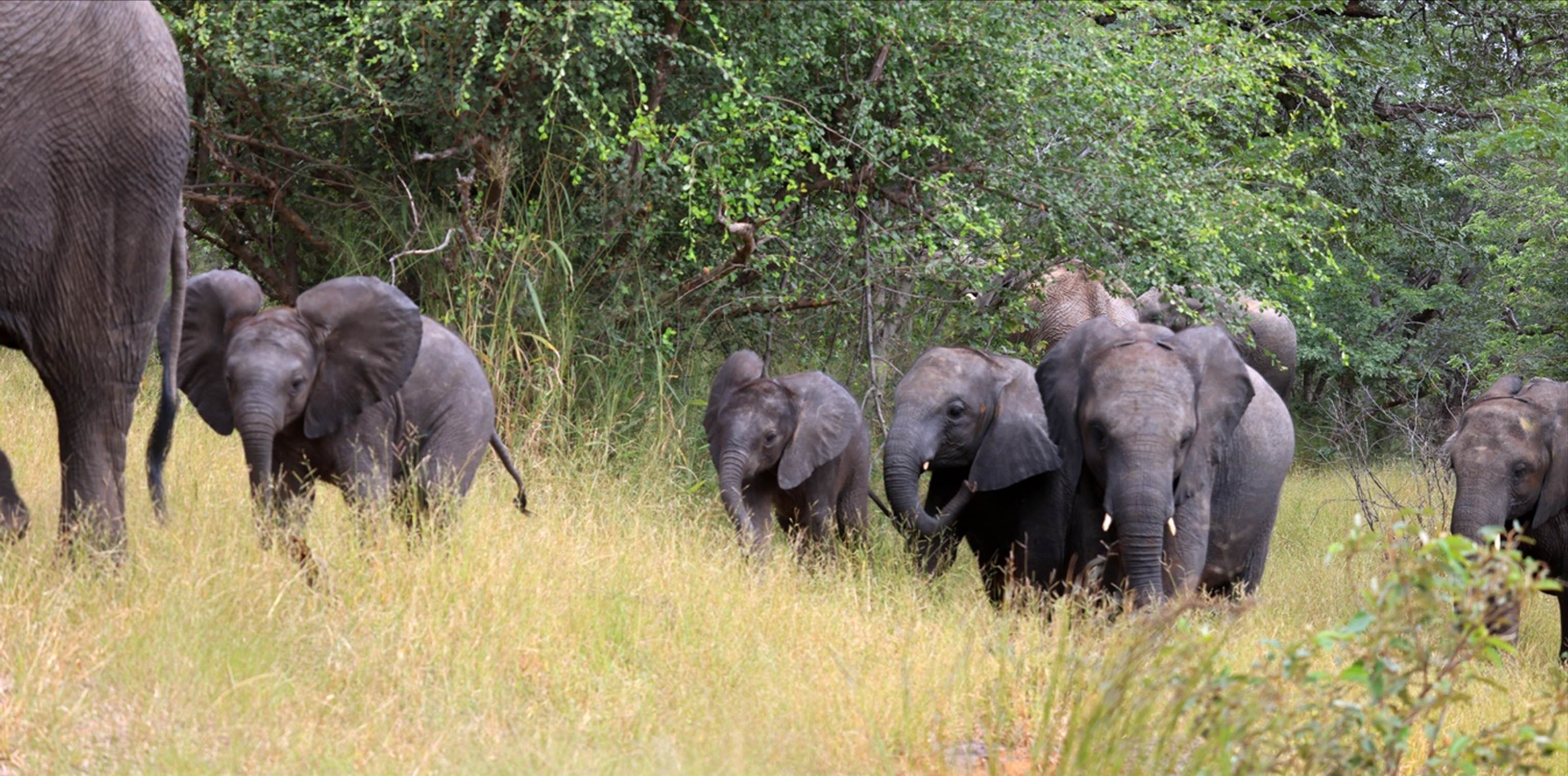
Elephant family about to cross the road
After the family passed, we continued to the park exit and then back to the beach where the boats were waiting to take us back to the Zambezi Queen, but not before we paid the required visit to the Botswana immigration office for another passport stamp. Of course, once in the boats, we had to make a stop on the other side of the river to allow the Namibia immigration officer to welcome us back to his country with another stamp.
After we were all back aboard and were relaxing, the Queen took another relaxed cruise down the river a ways and back again, passing an area with a mix of Cape Buffalo and elephants grazing off to one side. For a better idea of how many animals there were, check this short video as we cruised by. The elephants and Cape Buffalo seemed to mix together with no problems, but we never saw the hippos co-existing with any other animals.

Cape Buffalo and elephants enjoying some tasty grass together
We relaxed for the rest of the day and enjoyed a very nice dinner that evening. After it got good and dark, one of the crew went out on the stern deck with a laser pointer and pointed out some of the various constellations, such as the Southern Cross. The stars of the Milky Way really stood out like a belt across the sky, more beautiful that I can remember ever seeing it before. Of course, some of the constellations we are used to seeing were either not visible or out of their usual positions: the North Star was below the northern horizon and out of sight. All in all, it had been an interesting day!
Thursday, March 12: Life along the Chobe
Today we had a little different activity for the first half of the day: we were to visit a local village and their primary school. Since we would be on the Namibia side of the river all day, we would not have to visit any immigration office or get passports stamped. We loaded into the excursion boats and made the short trip (about a mile or two) to a beach near the village and walked from there.
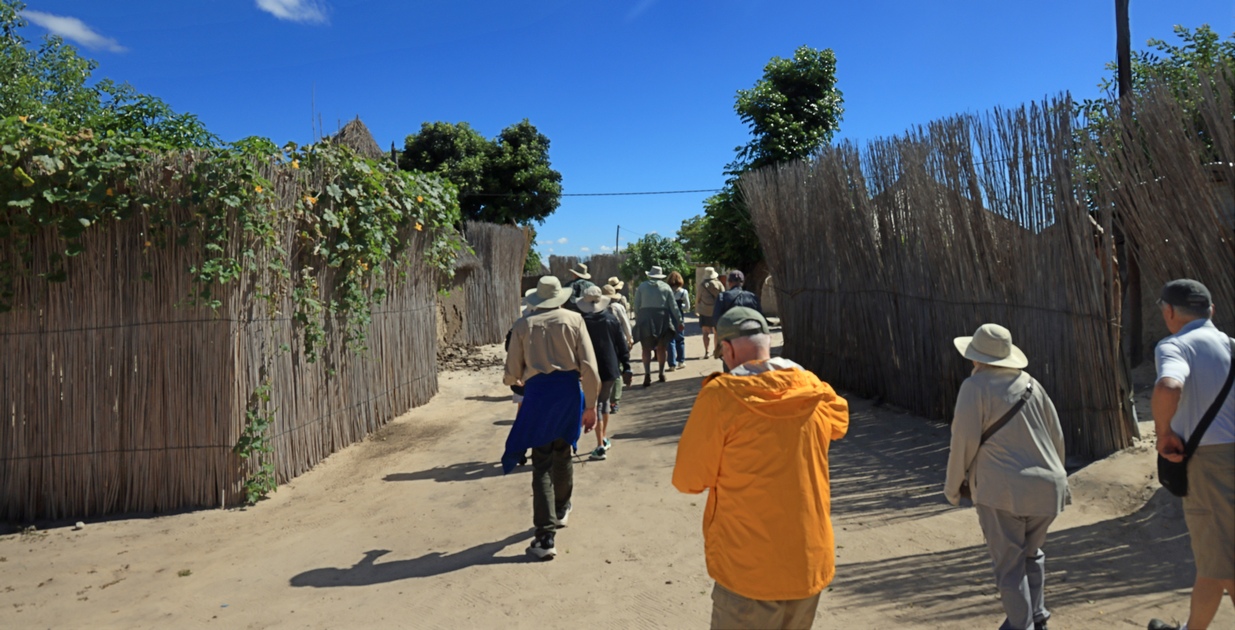
Walking into the village
Although a few people did live in this village, most of the people actually lived in a different “village” a short distance away and only a couple of families lived here now. I suspect that this village was maintained mainly to show how people lived here in the past and most houses in the real (current) village were basic concrete block structures. The houses in this old village were constructed out of hand mde adobe blocks, covered with a mud coating (for appearance and some insulation) and with a thatched roof. Most houses had an area around them enclosed by a reed fence that provided some privacy and also kept their chickens under control.
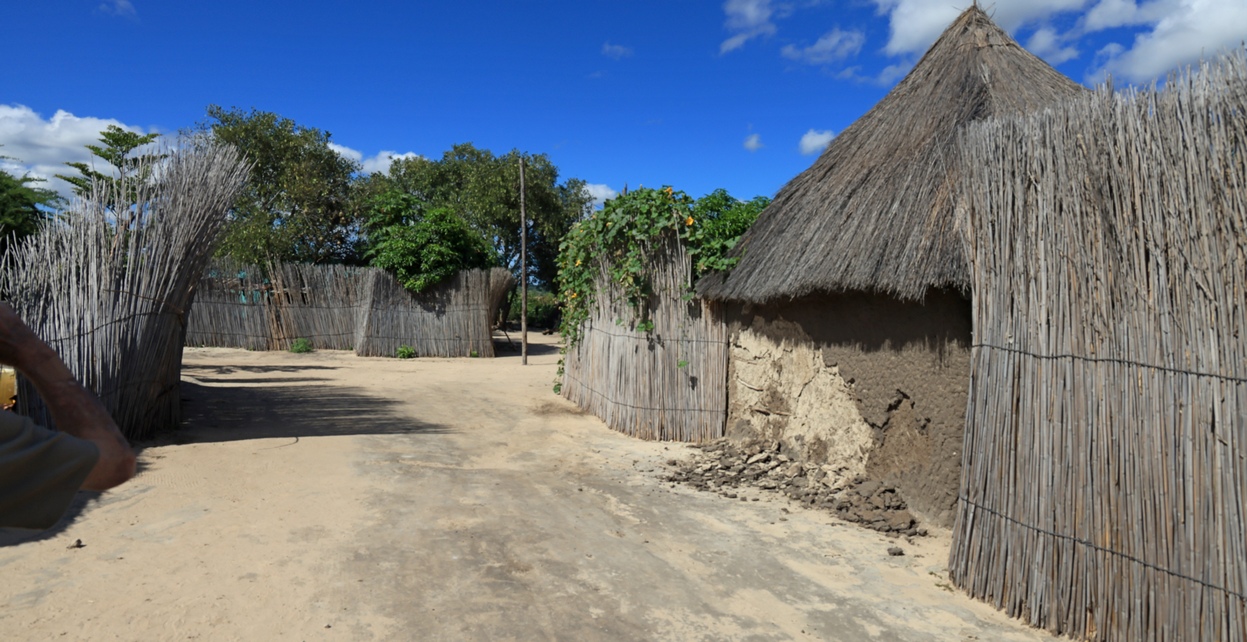
Notice the mud coating over the adobe wall in the right.
In the middle of the village was a community water faucet that drew water from a well via a solar powered pump. There was one community bathroom with a shower and tub that drew water from the community well. This was definitely a mixture of old and newer ways of doing things but, again, most people actually lived in a somewhat newer village close by.

This girl was curious about this strange crowd of people.
We learned a little about some of the food crops they grew and things they had to do because of the local animals. There was one tree that had some fruit that the elephants liked to eat when over-ripe and fermenting. The villages would rig up wires with noisemakers which the elephants would activate when they came for the fruit. If the noisemakers did not scare the elephants away, the noise would at least let the villages know there were elephants around.
After learning about the village, we went into a fenced-in area where a lot of the village women had gathered to demonstrate some of their dances. There appeared to be several groups of women, some dressed alike in very colorful outfits and some in simpler clothes with the name of their local “Cultural Center” on them.
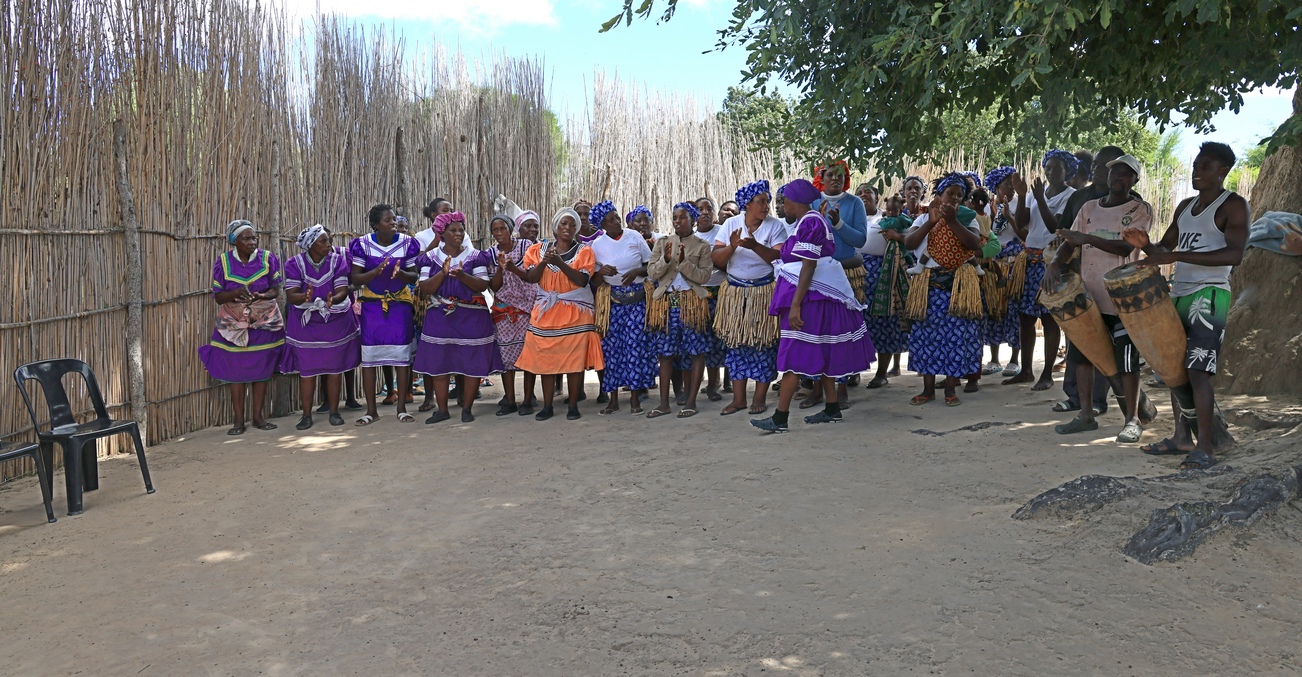
Dancers from the local “Cultural Group”
The various groups took turns demonstrating their dances, most of which were actually very similar. At first I felt rather bad for these women because they obviously had gotten all dressed up and come out to perform like this in the hopes of getting some contributions to their cultural center. (AMA Waterways does provide some support for the community so I assume the cultural center was getting paid for performing like this.) But then I noticed all the smiles on their faces: most of them were having a blast!
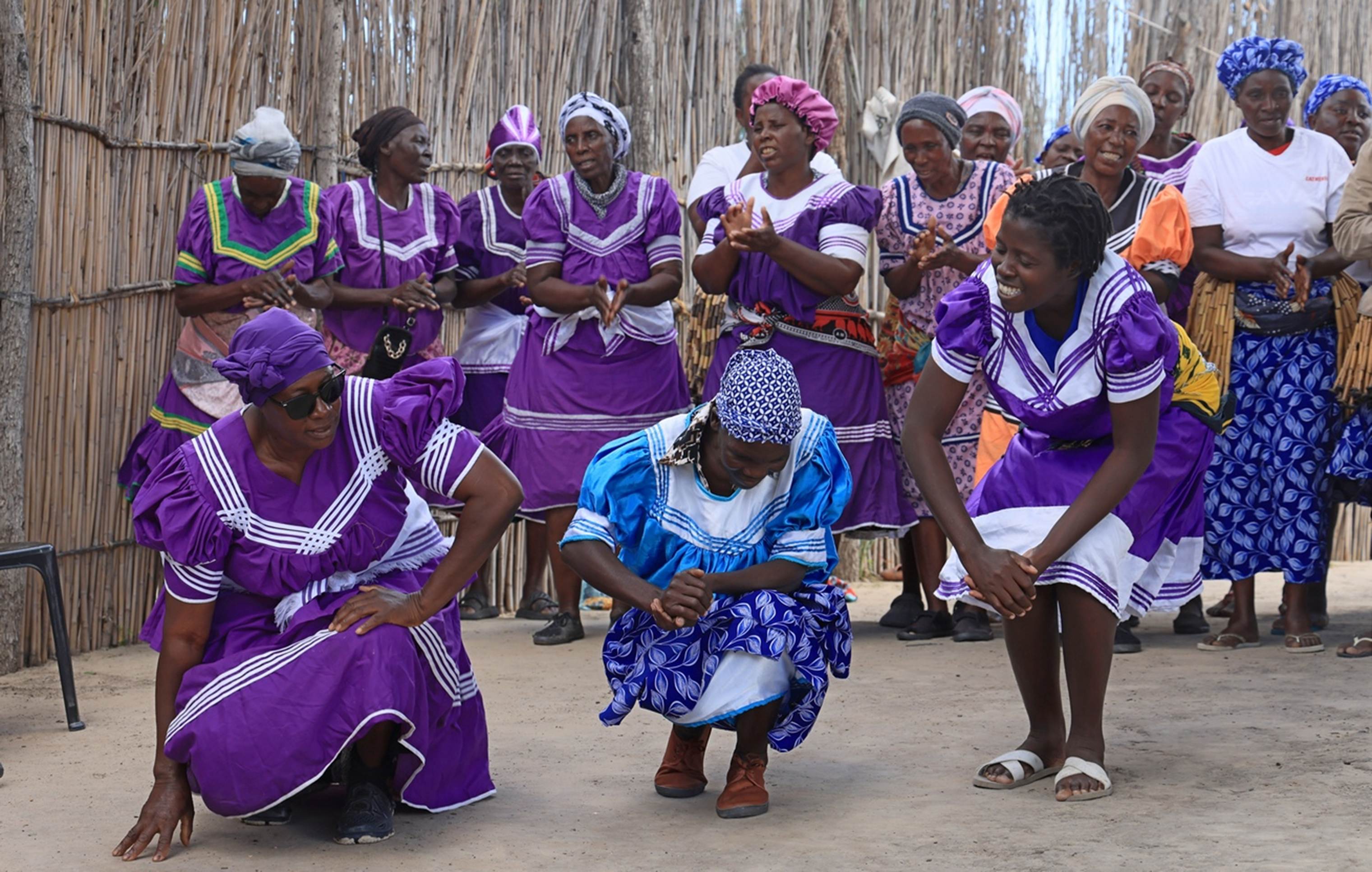
Most of the dancers had rather ornate outfits.
They absolutely enjoyed getting together and dancing like this and our visit gave them a good excuse. When I realized this, I felt better about the whole thing. For a sampling of the dancing, check this short video. Although, there were a couple of youngsters in the crowd that did not appear to be having as much fun as the adults.
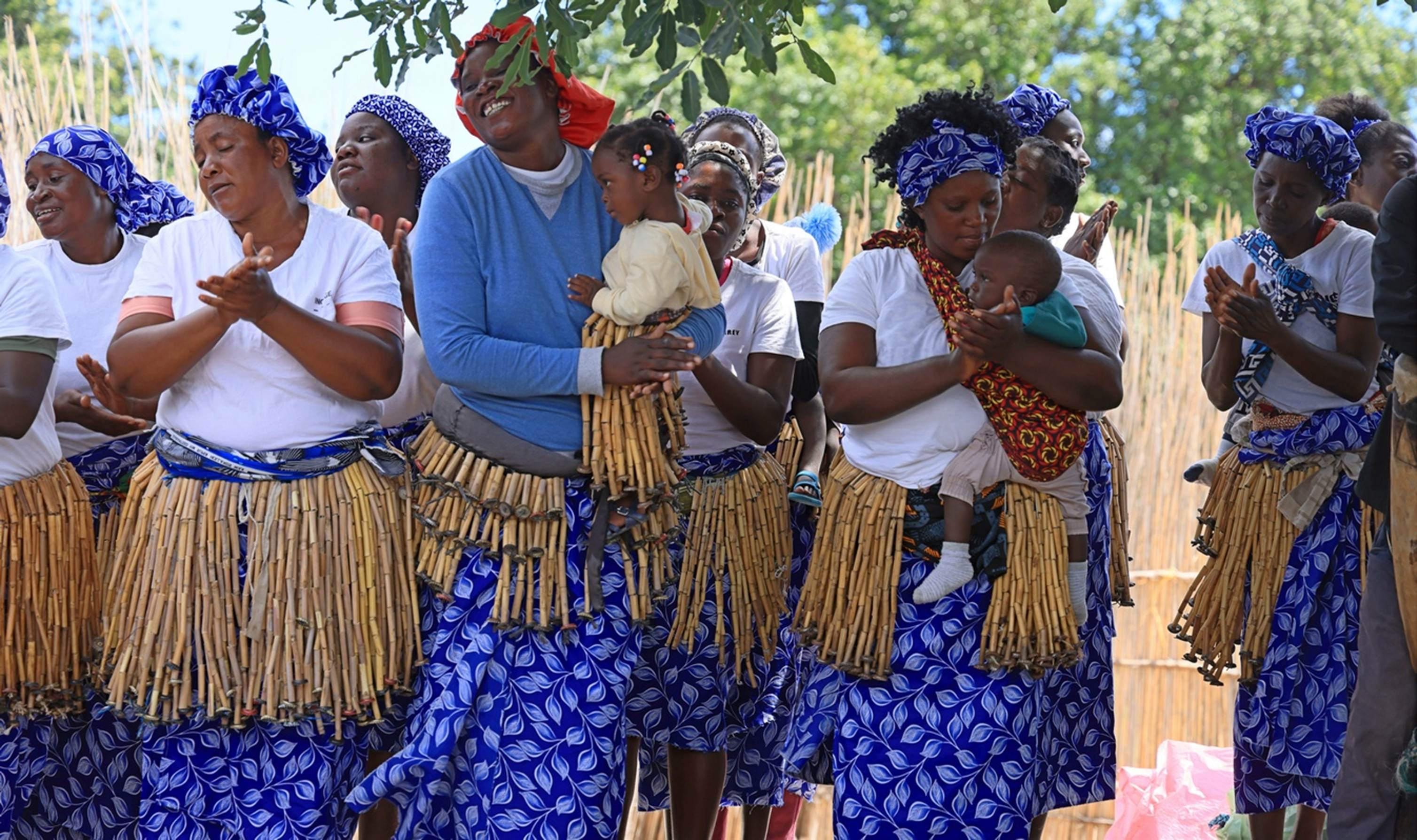
The youngsters were not having quite as much fun.
When the dancing was over, we were directed to an area of sheds with items for sale. There were various bright cloths, lots of carved items (animals, dishes, decorative wall hangings, etc.)

Some of the items for sale
We did buy a couple of inexpensive items that could be easily and safely packed into our luggage. In the photo below, you might pick out a couple of empty places in the display where the items we purchased used to be.

Most of the vendors had very similar items.
We said good-by to the ladies of the Cultural Center and to the village and took a 15 minute walk to their primary school (grades K – 9). The appearance of the school was both promising and disappointing: there were several buildings under construction for new classrooms, but some of them looked like there had been no actual construction activity in months and there was still a lot of work to be done to complete them. In the meantime, several classes were being held in surplus large military tents.

Some of the new buildings under construction
The school principal showed us around and told us of their plans and how they very much appreciated the support from AMA Waterways and also from previous guests who had visited the school. If I understood correctly, the new classrooms under construction were largely paid for by a grant from some previous visitors. While such support is certainly a very good thing for this school, I did have to wonder what kind of shape the schools that did not have this kind of outside support were in. When we overheard the local people talking to each other, it was almost always in their local/native language and occasionally Afrikaans, but the children were being taught English starting in the second grade and classes were conducted completely in English from the fifth grade onward. Several of the people we talked to quickly admitted that Southern Africa had many problems, largely centered around their high unemployment rate, but it appeared to me that there was a major focus on education as a major part of resolving some of the problems.

A classroom during their rest period
After visiting the school, we walked back to a beach landing where the excursion boats picked us up and took us back to the Zambezi Queen for lunch. We relaxed for a couple of hours until one last “river safari” along the Chobe where we saw many of the same animals, but also a few different ones, like the Kudu Antelope.

A Kudu and some Impala: you can see the difference.
There were the usual elephants at Elephant Beach, but one of my photos (just below) gives me the opportunity to provide a lesson in telling male and female elephants apart. While males will typically have larger tusks, the size difference is not always obvious and when tusks are broken, you cannot tell their original size. The best way to tell is by the shape of their heads: female elephants will have a sharper angle at the top of their forehead, where the head goes from about horizontal to angling down to the top of the trunk. The males have a more rounded head with a much less noticeable angle to their forehead. Check the elephants in the photo below: the smaller elephant in front is a female and the one in the back with a more rounded head is a male.

Two elephants demonstrating male/female differences
A little further along the river, we spotted a large crocodile resting on the river bank. We moved over closer and were busy taking multiple photos when the croc suddenly opened his mouth (photo below). He kept his mouth open like this for the next 10 minutes or so and we thanked him appropriately for such a nice pose, although crocs actually do this to help cool their body when in the hot sun.

Large crocodile showing his beautiful teeth
The next animal we saw was a new sighting for us, a Sabel Antelope. Sabels are a large antelope, a little larger than the Kudu, and their distinguishing feature is a pair of huge horns that curve to the rear. I’m not sure just how they could use these horns to fight effectively, but they sure are impressive looking.
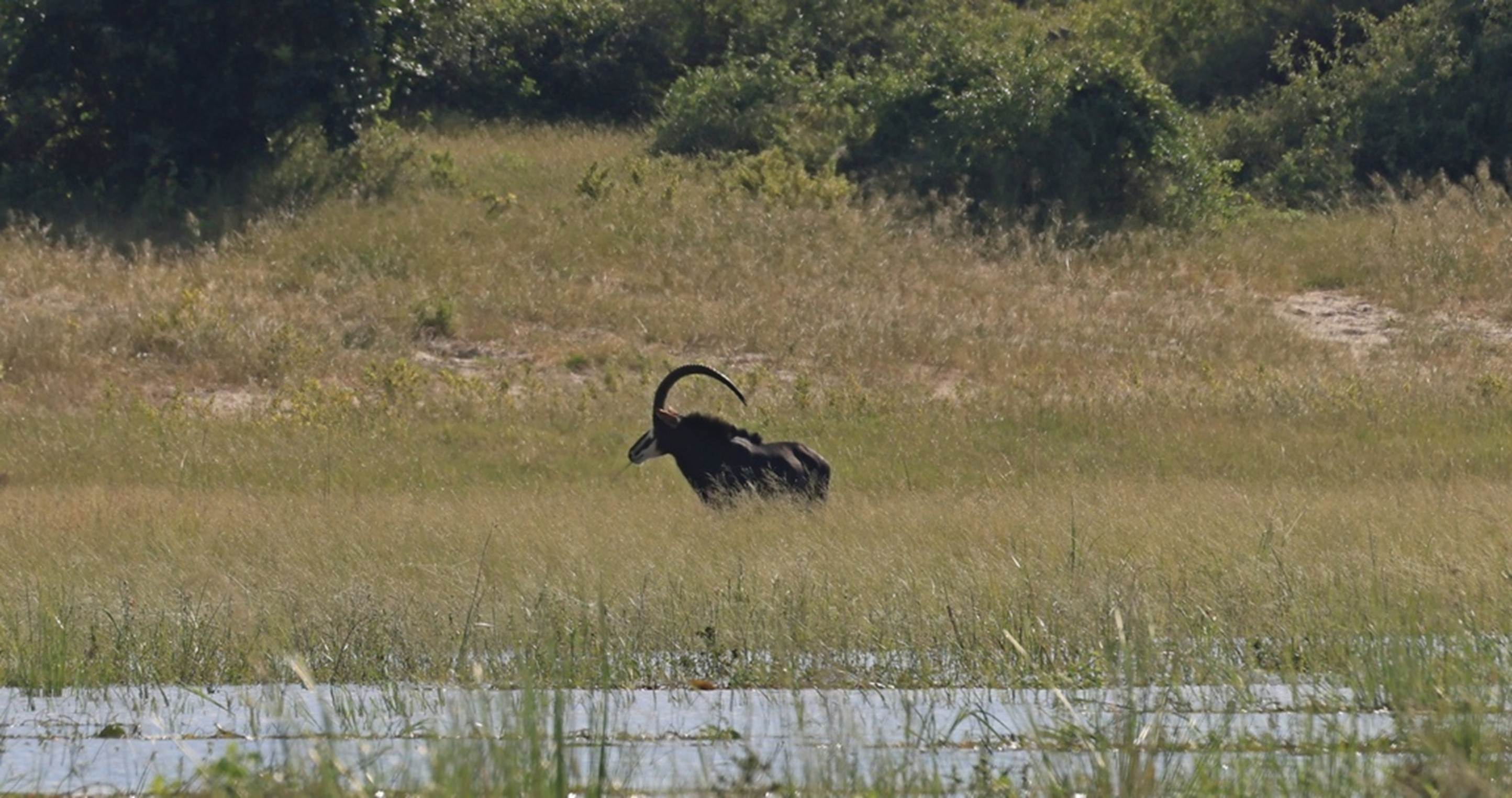
A Sabel Antelope
As usual, there were several pods of hippos in the river and some of them were showing off their large mouths by yawning. Most yawning is done by male hippos warning other males to stay out of their territory, but females may also use this impressive maneuver to scare away other animals which may be approaching their young.
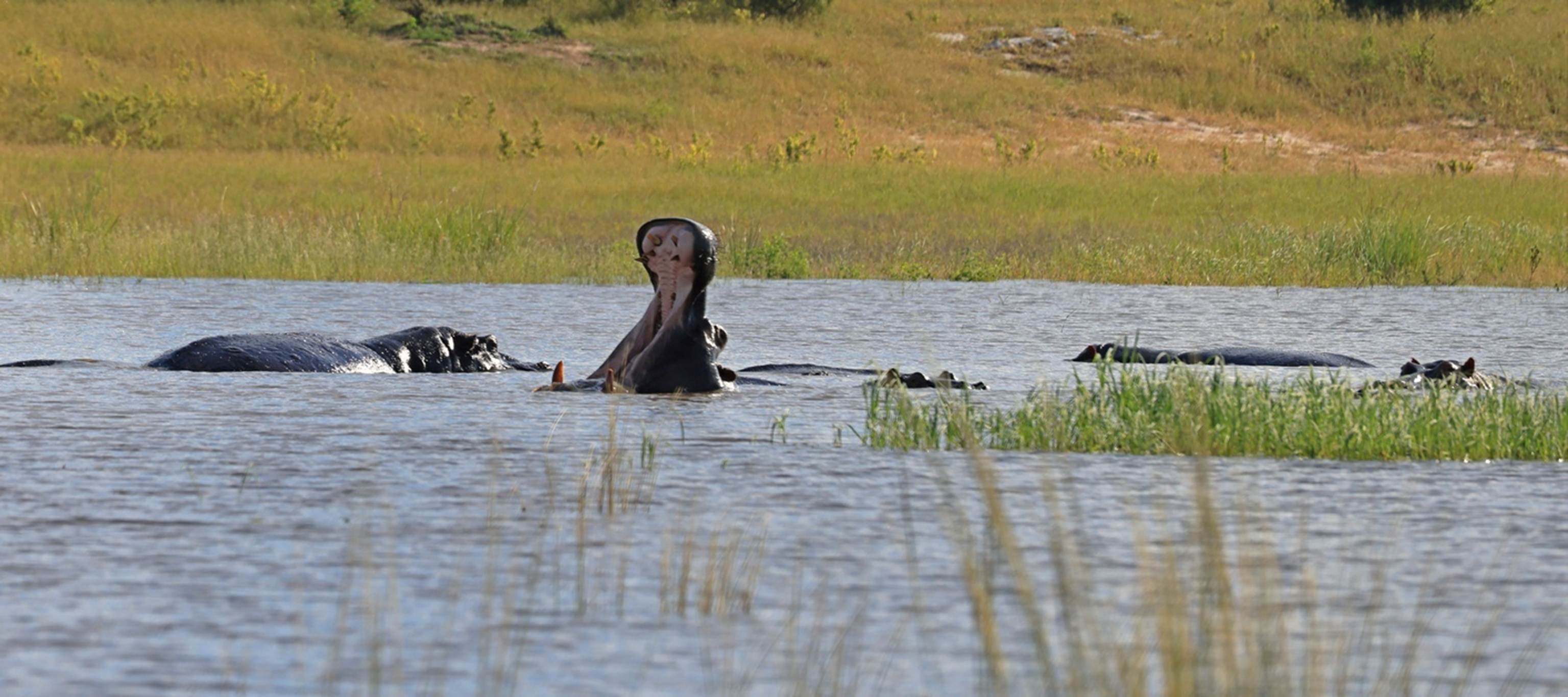
We made it a point to not get close to these hippos.
Around a bend in the river there was section where the shoreline formed a vertical cliff about 6 or 8 feet high right along the river. There were a few plants in the cliff and on top of it and some birds were busy making nests in the branches and in tunnels and burrows dug into the side of the cliff. Most of the birds were the very colorful Red Throated Bee Eater, so we took the opportunity to get some photos of the small birds.
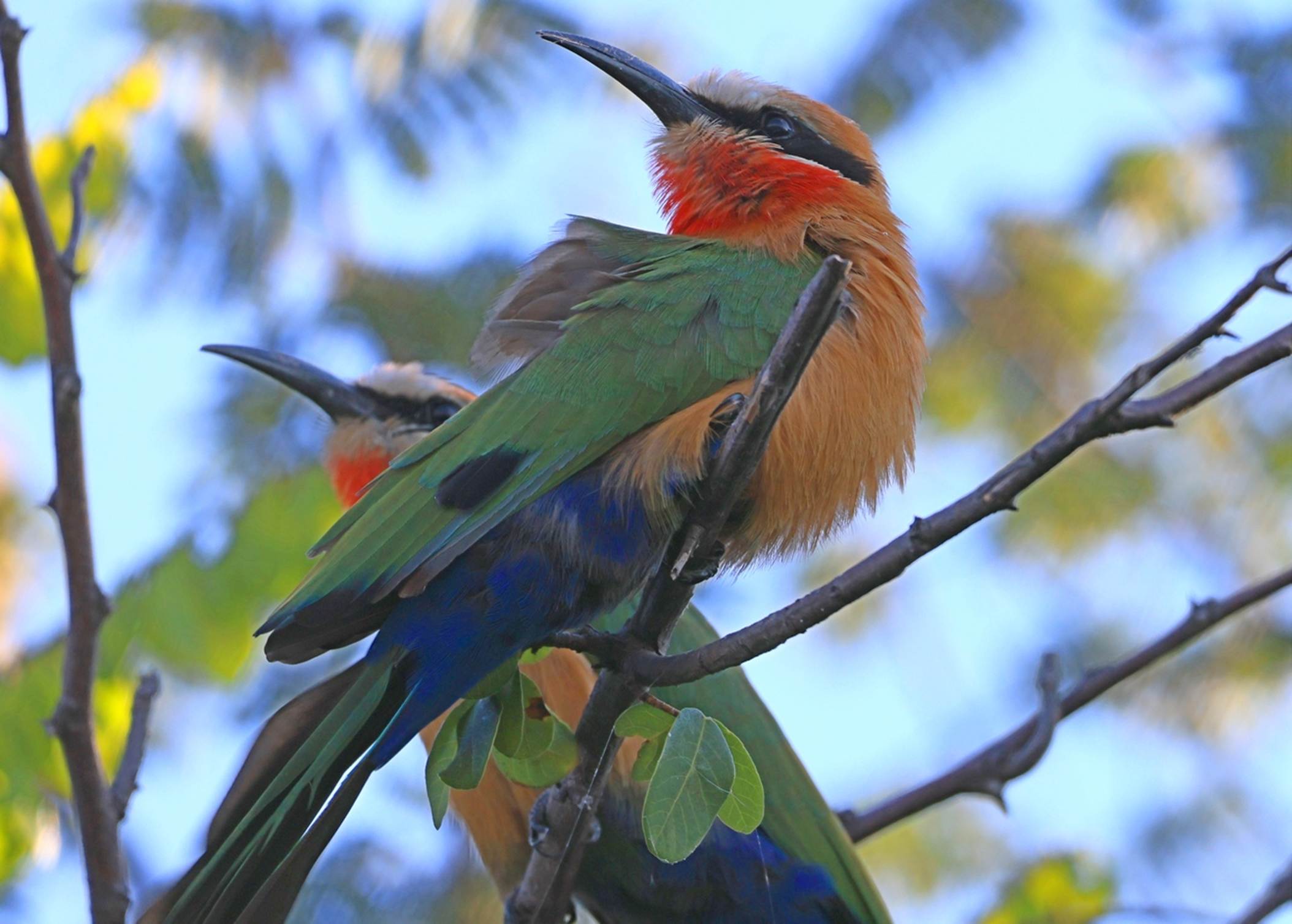
Two Bee Eaters on a branch
The birds did not seem to mind us much, allowing us to get surprisingly close to them.
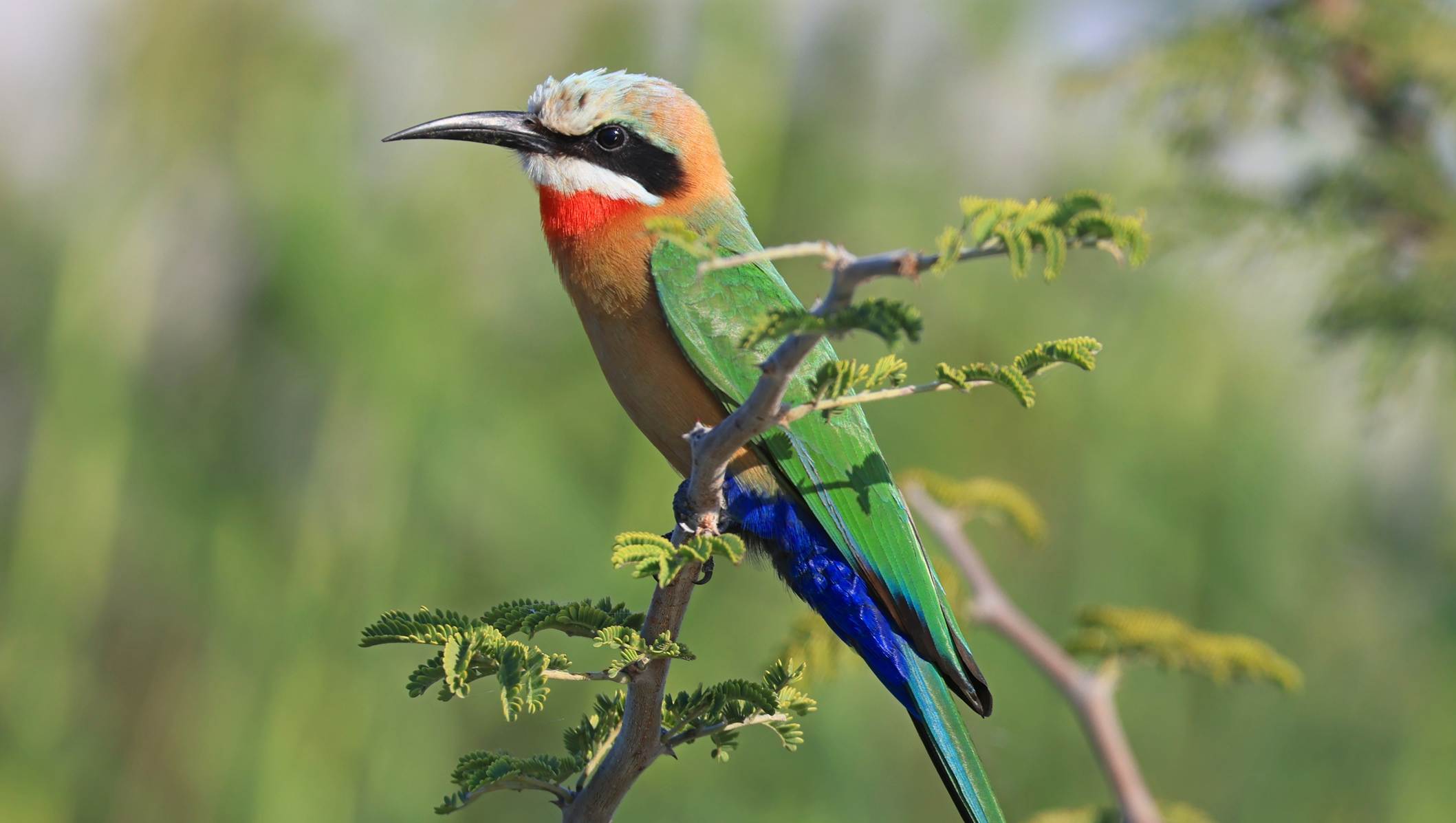
They seemed to be posing for us.
With their small size, large beak, and bright colors, they reminded me of hummingbirds.
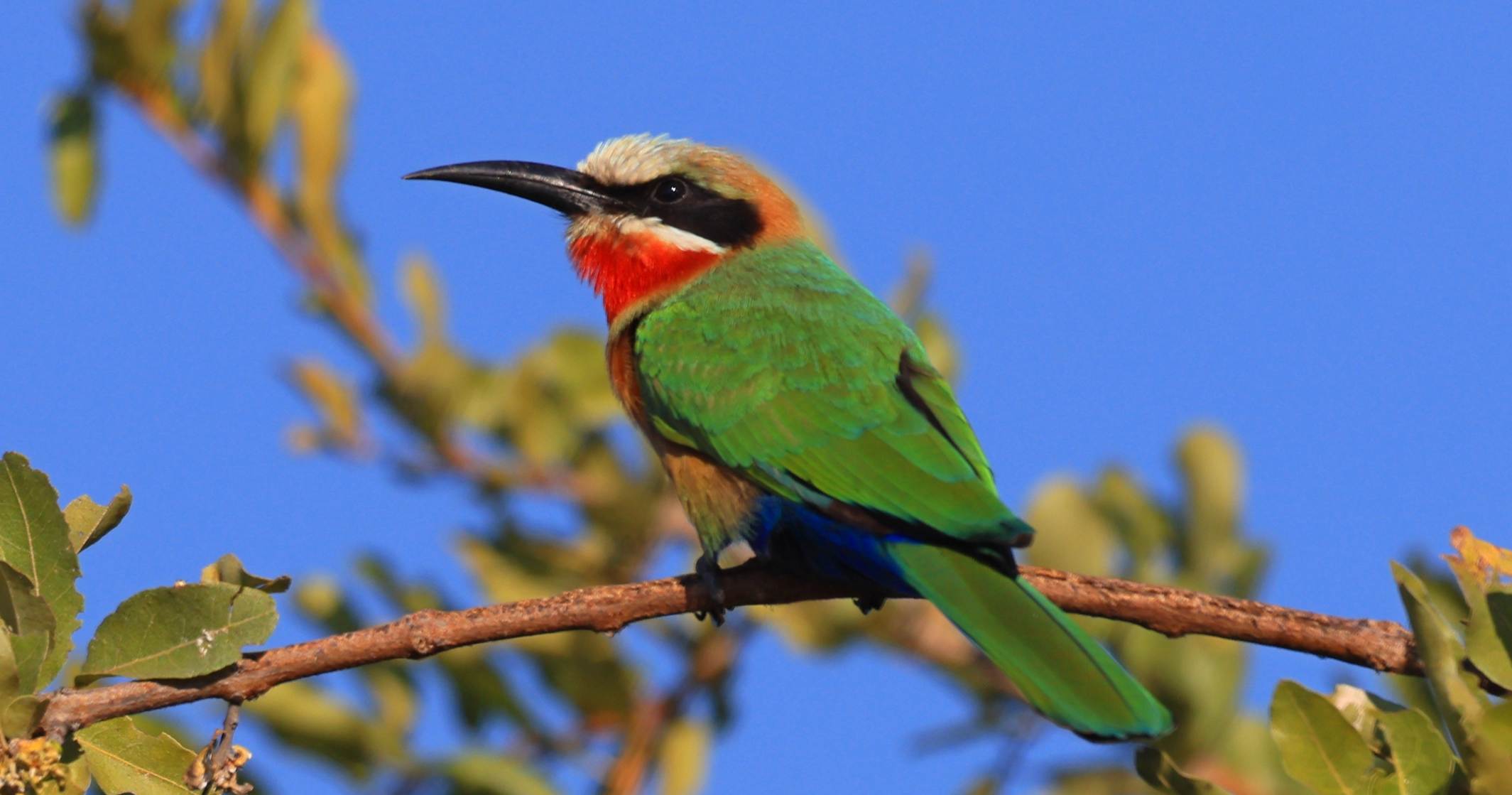
Thanks for the show, Bee Eaters
After watching the birds for a while, we turned around and headed back toward the Queen, but the unique animal experiences were not over yet. As we approached a small beach, we saw a troop of baboons approaching the water. It appeared to be a family group of about 8 or 9 animals of varying ages.
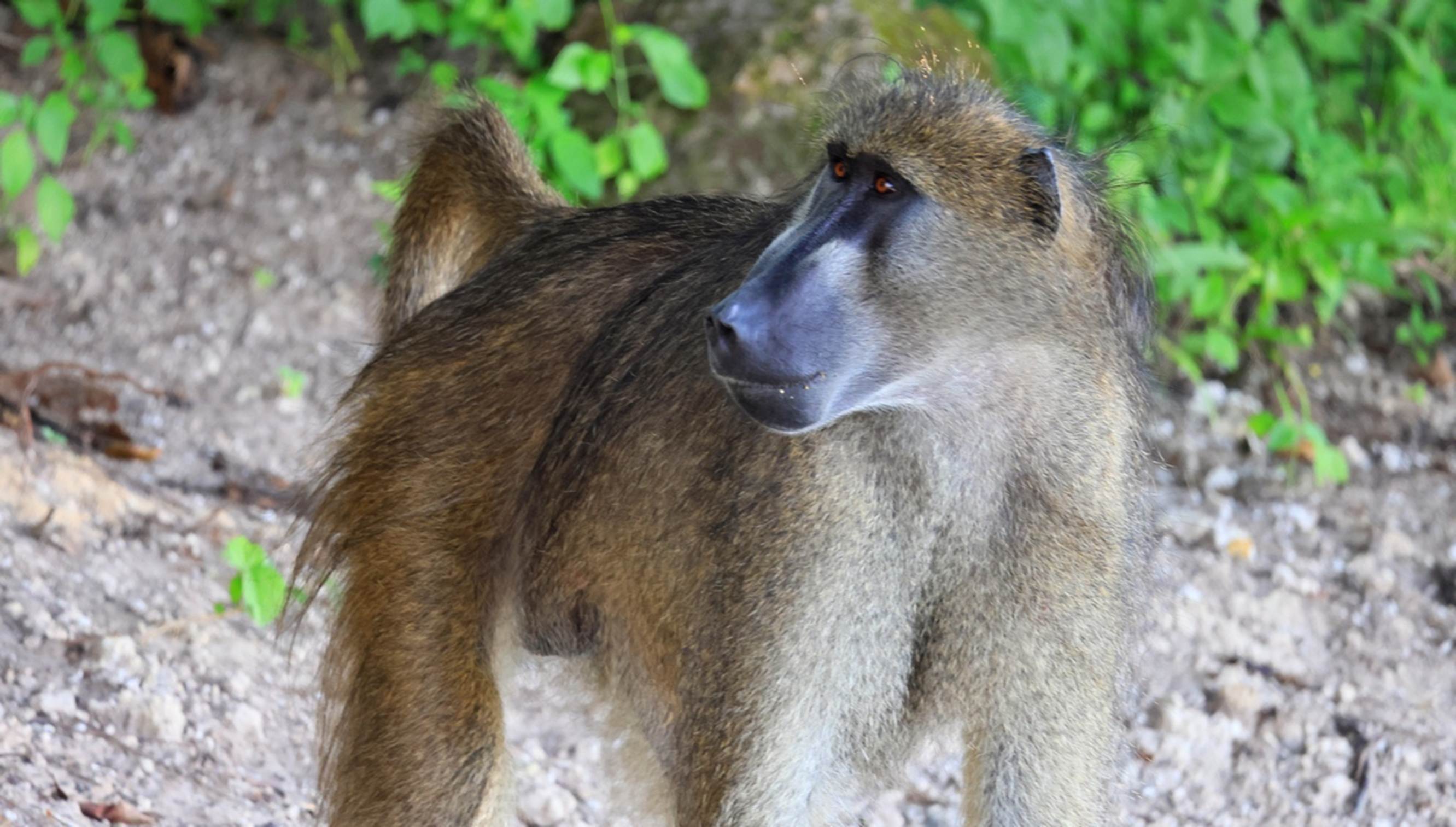
This baboon seemed to be leading/herding the younger ones.
The younger baboons tended to scamper around a lot and the older ones kept watch over them and kept them together. There was one older male that took up position on a large log at one end of the beach and just watched all the others with a rather stern expression. Other baboons would occasionally come over to him and sometimes groom him a bit, but the “elder” baboon just sat there like the king of the troop. There is some of the grooming activity in this video of “the elder”. Once all the baboons had had enough to drink and were done playing in the water, they wandered off down stream and the elder guy soon got down off his log and followed them.
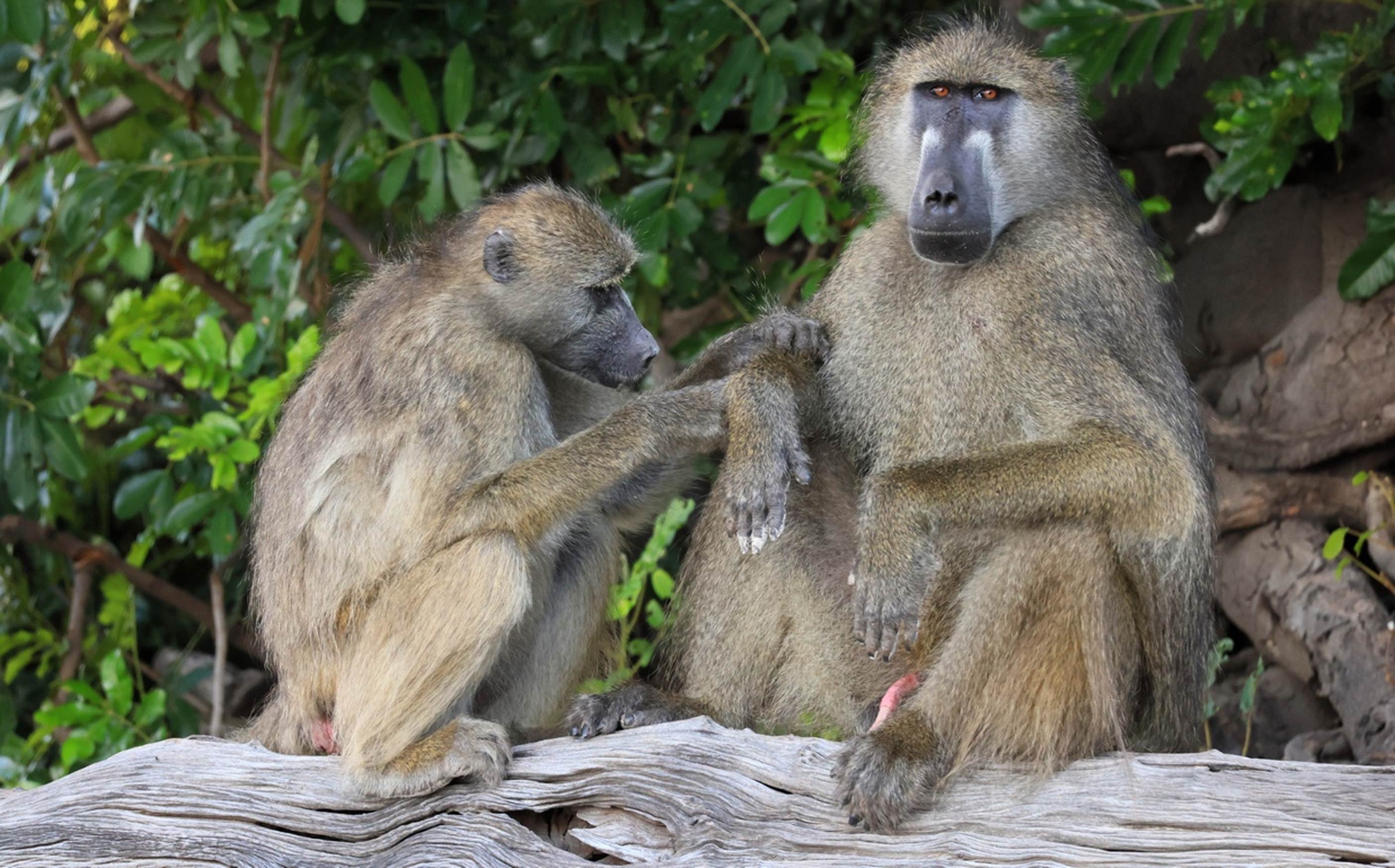
I think of the guy on the right as “The Elder”.
And, of course, as we came back by “Elephant Beach” a herd of elephants were just leaving.
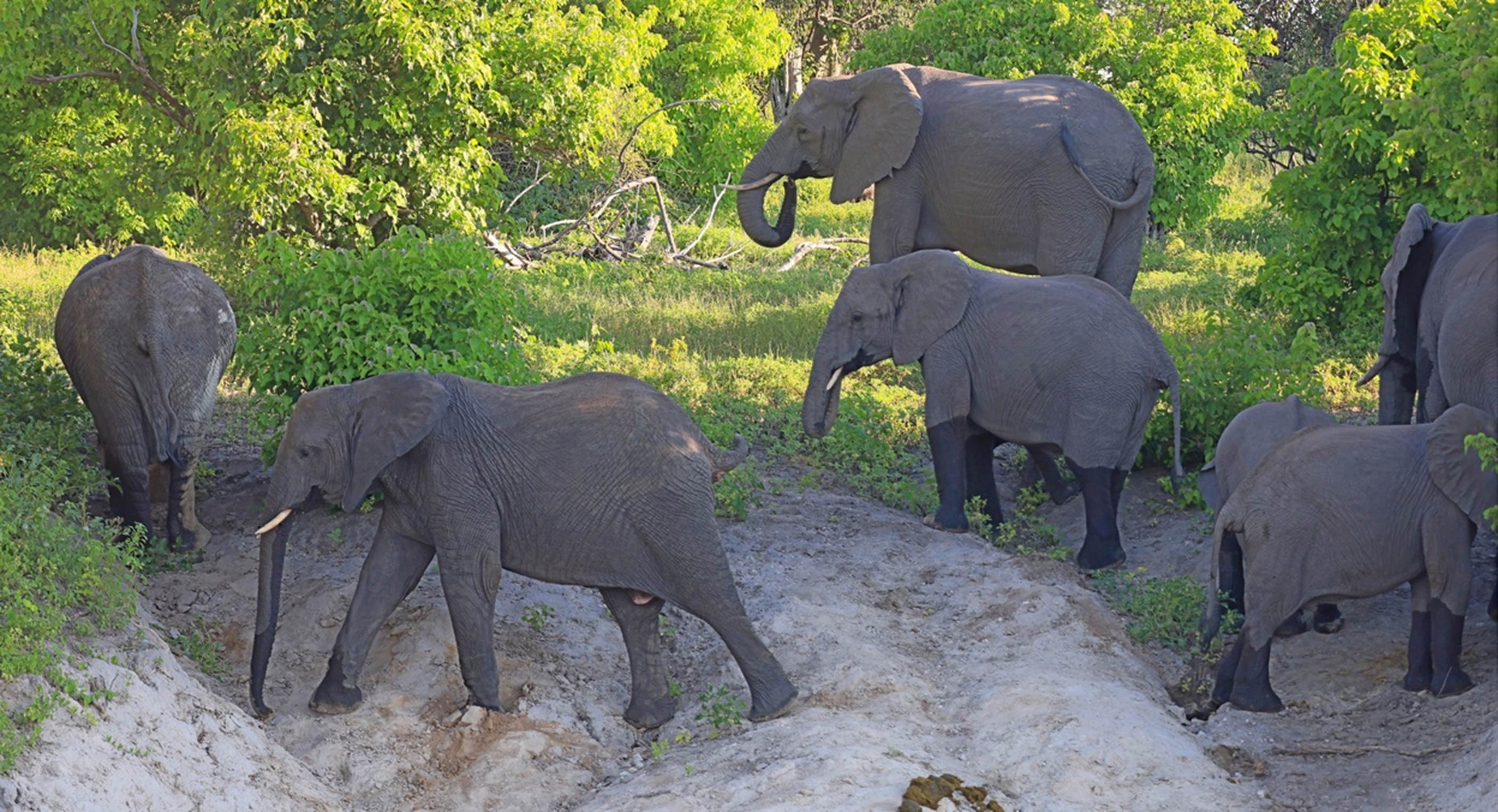
Looks like some of them were wading in the river.
We got back to the Zambezi Queen, unloaded, and got ready for dinner, although I had to take a moment to record another colorful sunset.

Sunset over the Chobe river
We had another very nice dinner and, after dinner, the crew put on a bit of a good-by dance and celebration. I think some of the women in the crew must have been part of the dancing at the village earlier, as some of the dances and accessories looked very familiar. They got some of the passengers involved in the dancing and even took a break to sing a Good-By song.

Crew and passengers taking part in the dancing
To get a better idea of the dancing and singing, check this video of the activities. We would be leaving the Zambezi Queen in the morning so most of the people stayed up a while to enjoy our last night.
If you want a short (8 minute) video summary of our animal viewing safaris while on the Zambezi Queen, check this Chobe River Video I uploaded to You Tube. (To get the full effect, crank up your sound volume a bit.)
You can click your “Back Button” to return to the main page, or continue to the next chapter by clicking on:
Chapter 3 – On to Victoria Falls