
 Chapter 3
Victoria Falls
and
Johannesburg
March 13, 14, 15, 16
Back to Victoria Falls
Friday, March 13: Victoria Falls
Today, we would be heading back to Victoria Falls, but not the airport: we were heading to the town of Victoria Falls and our hotel there. We did have a relaxed departure from the Zambezi Queen, including a good breakfast on board while the Queen was making a slow cruise up the river and then back.
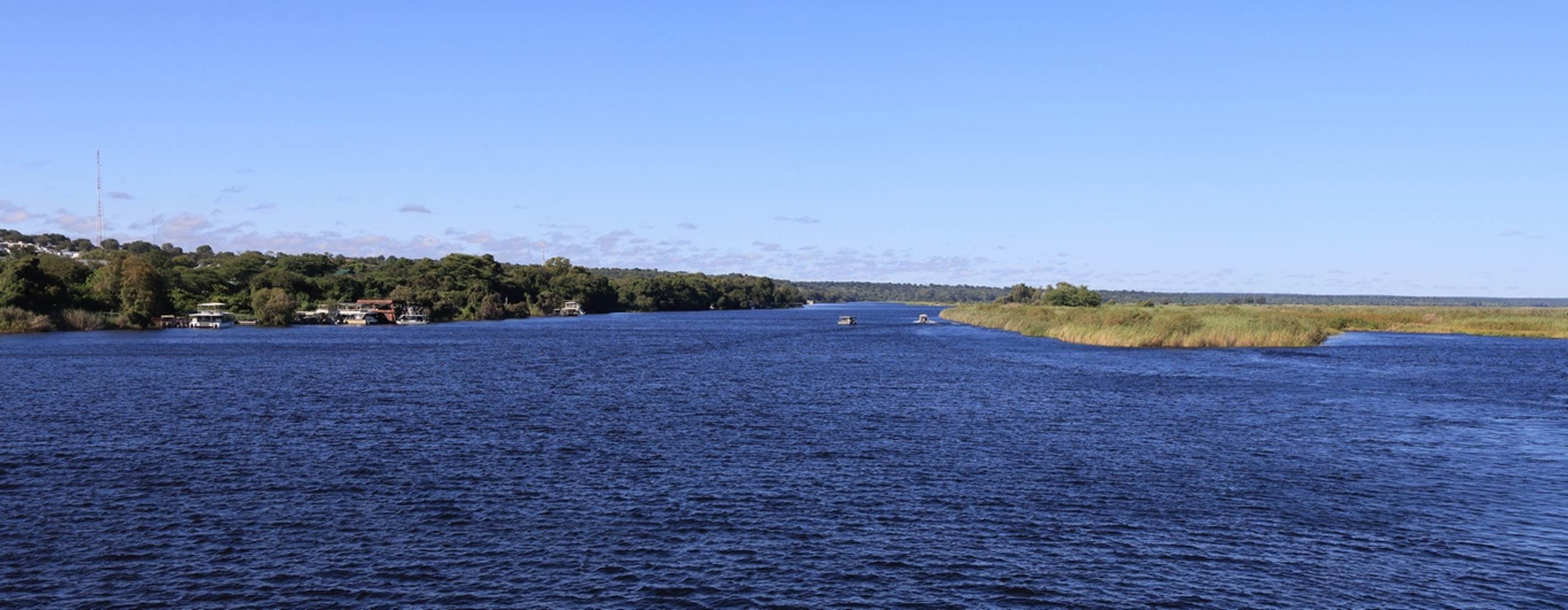
Another beautiful day on the Chobe river
About 10:00 we brought our luggage out and boarded the excursion boats for the ride to where we would meet the tour bus. Of course, we did have to stop at the Namibia immigration office (departure stamp) and the Botswana immigration office for an entry stamp. We loaded onto the tour bus next to the Botswana immigration building and started on the 2 hour ride into the city of Victoria Falls.
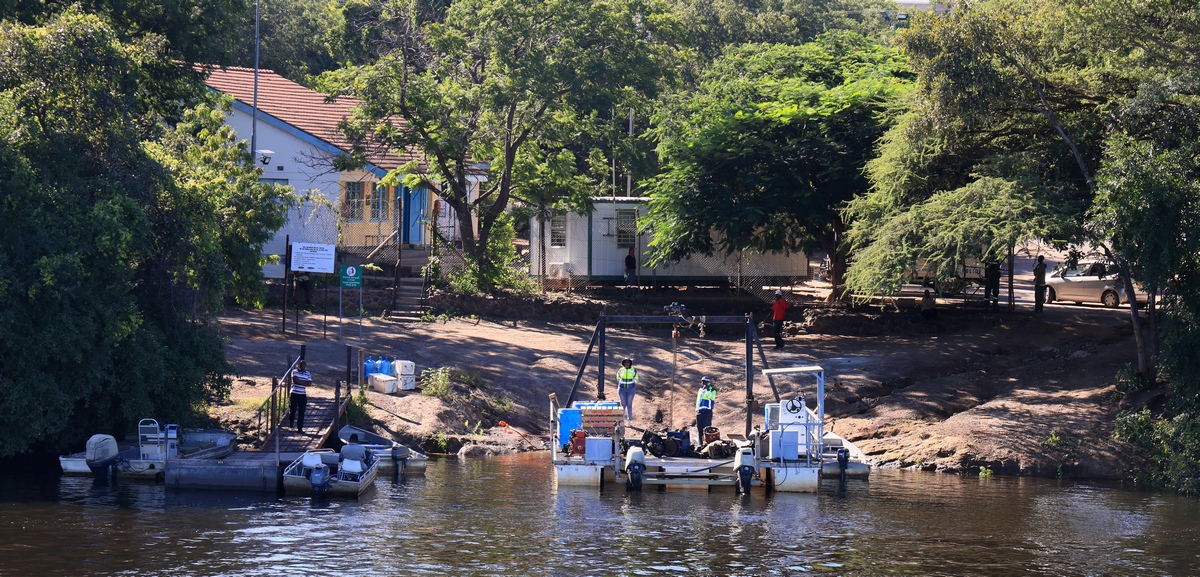
Botswana immigration is building on the left.
Of course, we couldn’t make the trip without another couple of stops for passport stamping. At the Botswana / Zimbabwe border we had to exit Botswana and enter Zimbabwe. We had to have fresh Visas to enter Zimbabwe, but our tour manager Kirsten had taken care of most of the paperwork and had the paper Visas ready for us. Including the immigration office stops, it was a little more than a 2 hour ride to the city of Victoria Falls where we arrived at the rather old but plush Victoria Falls Hotel. The hotel was originally built in 1904 and added to multiple times since then, but all of the buildings were constructed in the same architectural style so the appearance was consistent.

Main entrance to the Victoria Falls Hotel
Our group was directed to a meeting room where we were officially greeted by a manager of the hotel and we were handed the keys to our rooms. Our bags arrived at our room about 1 minute after we did so we got everything organized and realized that it was about 1:30 and time for lunch. On the way to the hotel, our bus driver had taken us on a short tour of the town and I had noticed an interesting looking restaurant, “The Three Monkeys”, so we started walking in that direction. I had heard about the rather aggressive, but somewhat polite, vendors that make this their home, and we saw them approaching other visitors, but we managed to avoid them, for now. The Three Monkeys turned out to be a good choice: we had a Thai salad and a small pizza and both were good.
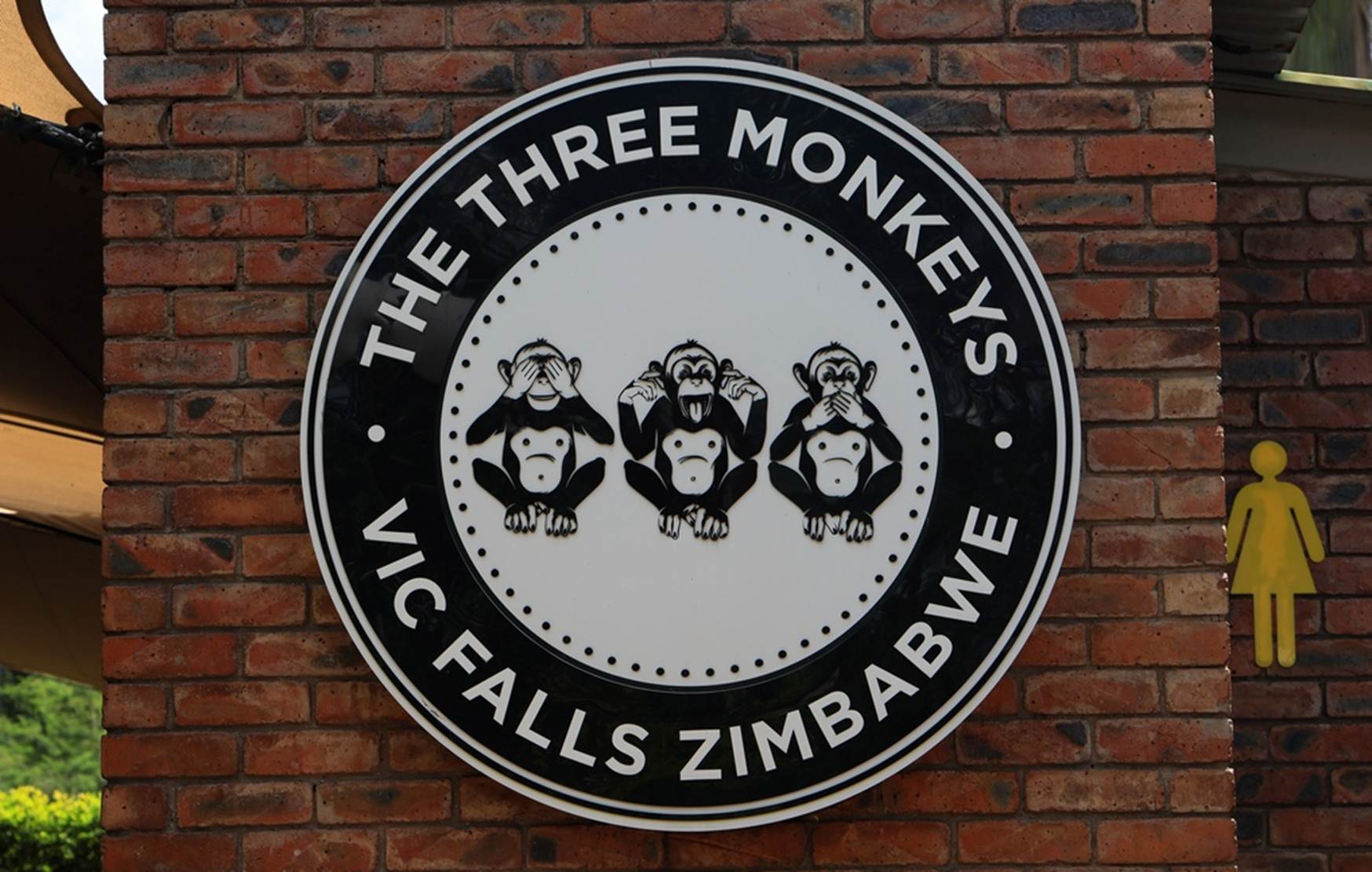
A cute name and good food!
We walked back to the hotel, successfully avoiding the vendors again, relaxed for a little while, and then decided to take a walk around the hotel to check it out. Out the back of the hotel was a large patio area and the view certainly reflected the name of the hotel. We were looking directly at the Victoria Falls: we could not see the actual falls, but we could certainly see the mist coming up from the falls and the bridge just downstream from the falls. Remember the view from here: a little later you will be looking in the opposite direction.

No view of the actual falls, but lots of mist
We continued our tour of the hotel grounds around to the pool area: it looked to me like some kind of striking Greek design. Very impressive.
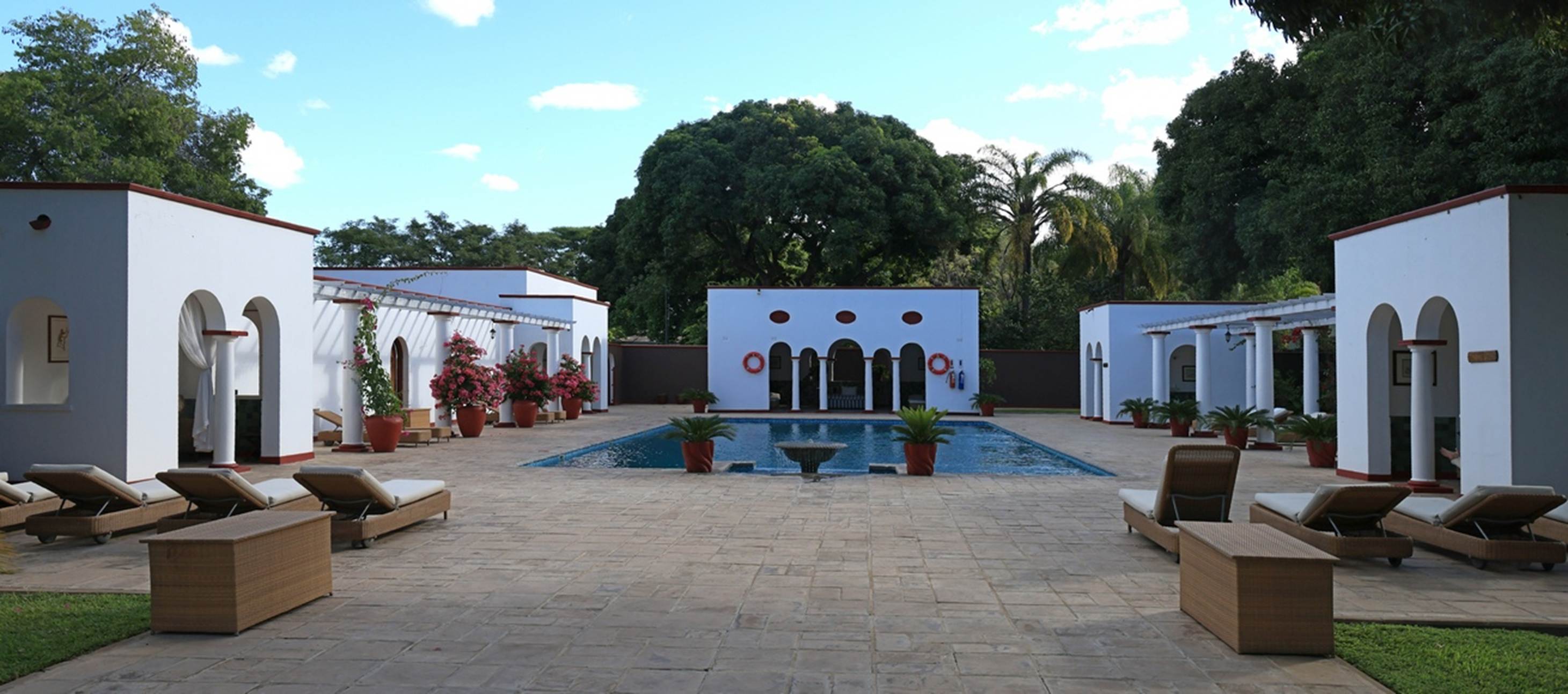
The pool and spa area
Tonight, we were to go on a train ride: a rather short train ride, but still a train ride. At 5:00 we met at the hotel entrance and made the 5 minute walk to the train station where we boarded one of the old style coaches.

We were in the last car on the train.
We all found seats in the coach and were given glasses of wine (which were refilled whenever needed). There was an “entertainer”, a guy playing a guitar and singing: the guitar playing was pretty good, the singing not so much. We sat in the station until about 6:00 and a few other people boarded the train in other cars. The train slowly made its way down the track in what turned out to be toward the bridge that crossed the Zambezi river: the same bridge that we had seen from the hotel.
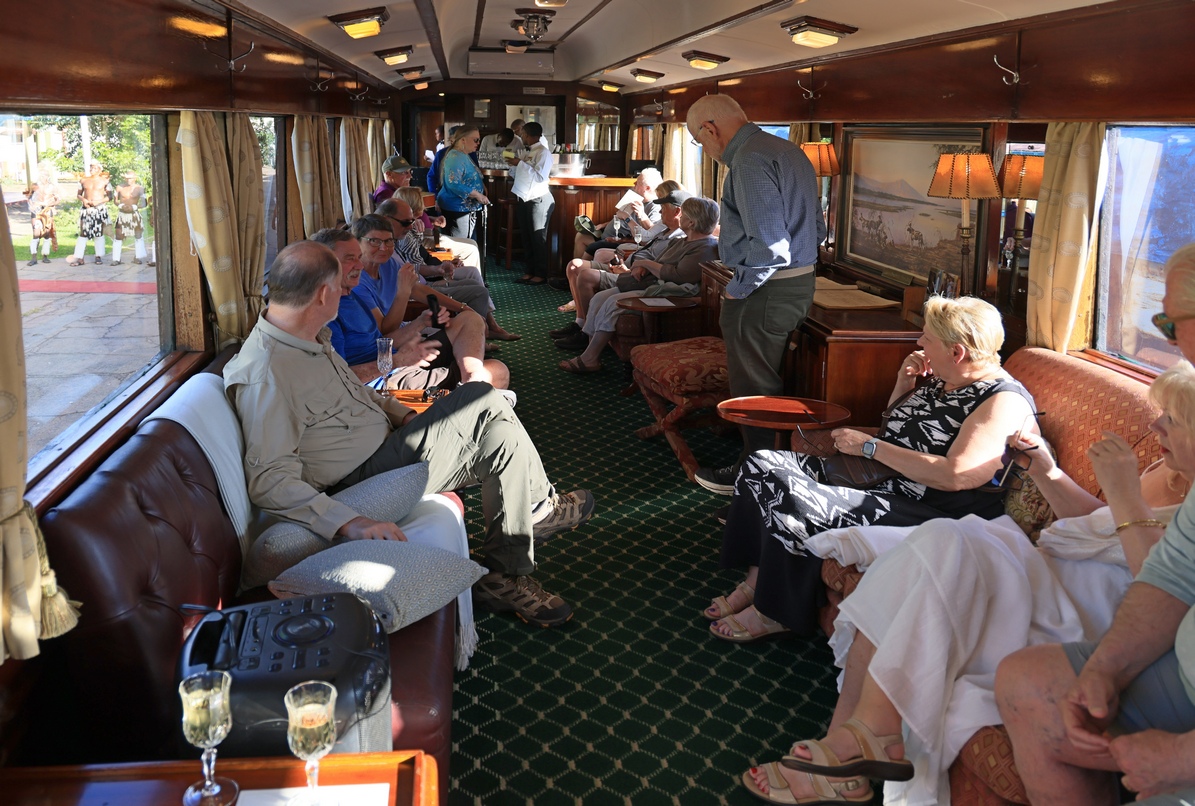
Relaxing with a glass of wine while still at the train station
When the train got to the bridge, it pulled most of the way across the bridge and stopped. The “conductor” announced that we could either stay on board and enjoy the view from the coach, or get out and wander around the bridge to get a better look. Of course, Susan and I had to get out and, once again, we tried to dodge the vendors who descended on the train. We did have some interesting views looking in both directions. Looking up stream we had an unusual view of the shadow of the bridge we were on and several rainbows. At one point, the rainbow formed a complete circle but I couldn’t get the whole circle into a photo.

Shadow of the bridge and a “upside down” rainbow.
This video looking toward the falls will give you some idea of the mist as well as a better look at the full rainbow. At the very beginning of that video you can see a small building/shed at the top of the cliff on the left, overlooking the river: remember where that building is.
The main problem was that we could not see the actual falls because of the mist. We could certainly hear the falls, but could only get occasional glimpses of the falls when the mist thinned for a short time. The photo below was taken during one of those brief periods when we could actually (barely) see the falls.

One of our better views of the falls
Our train ride had been timed so that we were on the bridge as the sun sent down: that is why we had sat in the train station so long before moving. When the sun started to set, a number of people came over to the side of the bridge that looked downstream to get a better view. Here is a video of the river looking downstream: there is a LOT of water going down that river. I waited until the sun was just disappearing and got the sunset photo below. Notice the white building just to the left of the sun: that is the rear of the Victoria Falls Hotel where I took the earlier photo looking toward the falls.
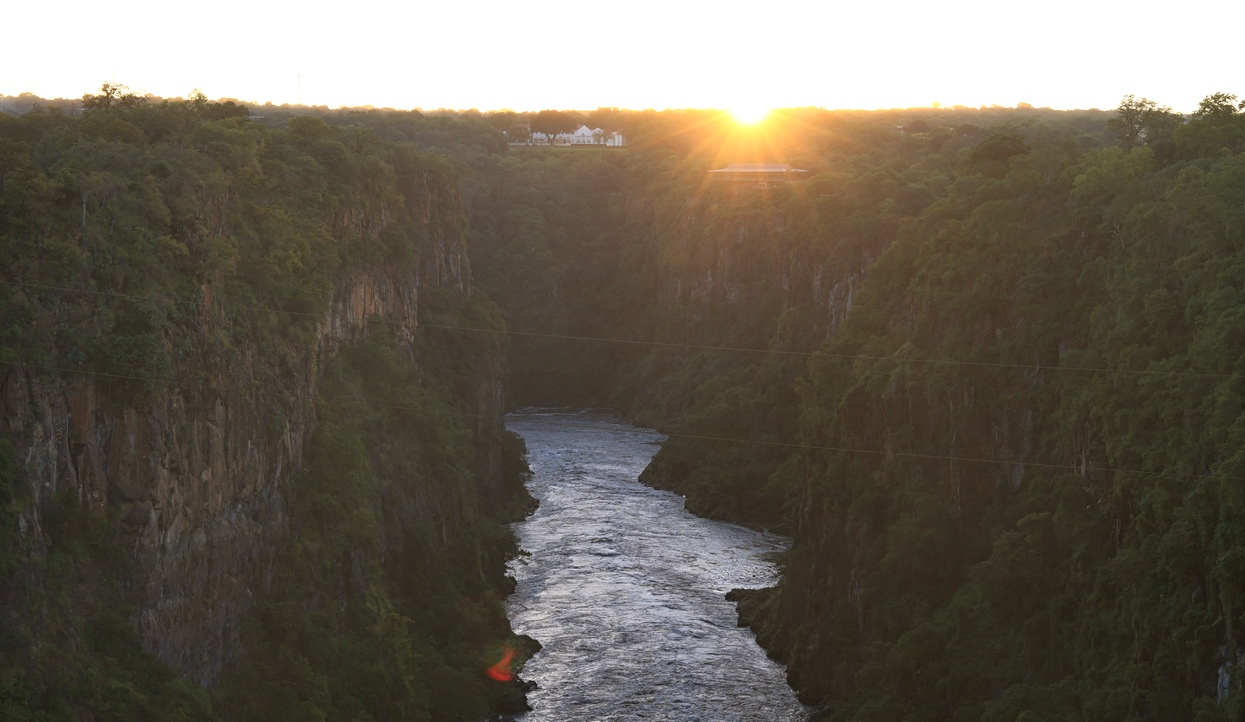
Looking at the sunset and our hotel
We reboarded the train and everyone was already headed toward the dining car, so we followed them and claimed a table. The train pulled back to the station, then went about another 2 or 3 miles, stopped, and sat there while we enjoyed a very nice dinner on board.

The dinner menu for the evening
After dinner the train rolled back to the station, we all got off, and headed back to the hotel. Unfortunately, the gate for the sidewalk from the railroad track area to the hotel had been closed and locked, preventing us from getting to the hotel. Kirsten was on the train with us and had a loud enough voice to get the attention of the hotel security people, who came and unlocked the gate.
Saturday, March 14: Victoria Falls
Today we were going to take a close-up look at the Victoria Falls. In order to beat the crowds and get the best view/light, we are getting an early start with a departure from the hotel at 6:00 AM. It was a short ride on the tour bus to the falls parking area and we got our rain ponchos as we stepped off the bus. It turned out that we would definitely make good use of the ponchos.

Entering the Victoria Falls park
Kirsten got our entry tickets and our bus driver turned out to also be our guide for the falls. He led us on a 10 – 15 minute walk to what is usually the last viewing location for the falls. (All of the viewing locations were on one side/rim of the gorge and the falls were on the other side/rim.) Our guide explained that going in this “reverse” direction would actually give us a better sequence of views and, based on our experience, I would agree. As we approached the falls the roaring noise got louder and the mist got thicker/wetter. Our first observation point was at the end of the falls closest to the bridge we had been on the night before, at the little shed I mentioned.

Looking back at the bridge where we had been
This is also where we realized that we would have a very limited view of the falls today: the mist was just so thick that we could not see very much. Check this video of the falls and mist to understand what I mean. We walked the path along the rim of the gorge, stopping at various observation points. Occasionally we would get a decent view of the falls, but it never lasted very long, like the photo below.

A good view of the falls, but it didn’t last long
I have read that Victoria Falls is twice as wide as Niagara falls, and twice as high: based on what we could see, I can believe that. I should note that you will see two types of photos of the falls here: one version “stops” the motion of the water over the falls with a fast shutter speed (above) and the other version uses a show shutter speed to create a more “flowing” water effect (below). You can decide which version you like better.

“Flowing water” version, but the mist is coming back.
We got occasional good views of the falls, but they were usually very short, before the mist took over again. This short video will give you an idea of what kinds of views we usually had. When the mist was heavy, it actually felt like it was raining, the drops were so large: it was a good thing we had the rain ponchos.
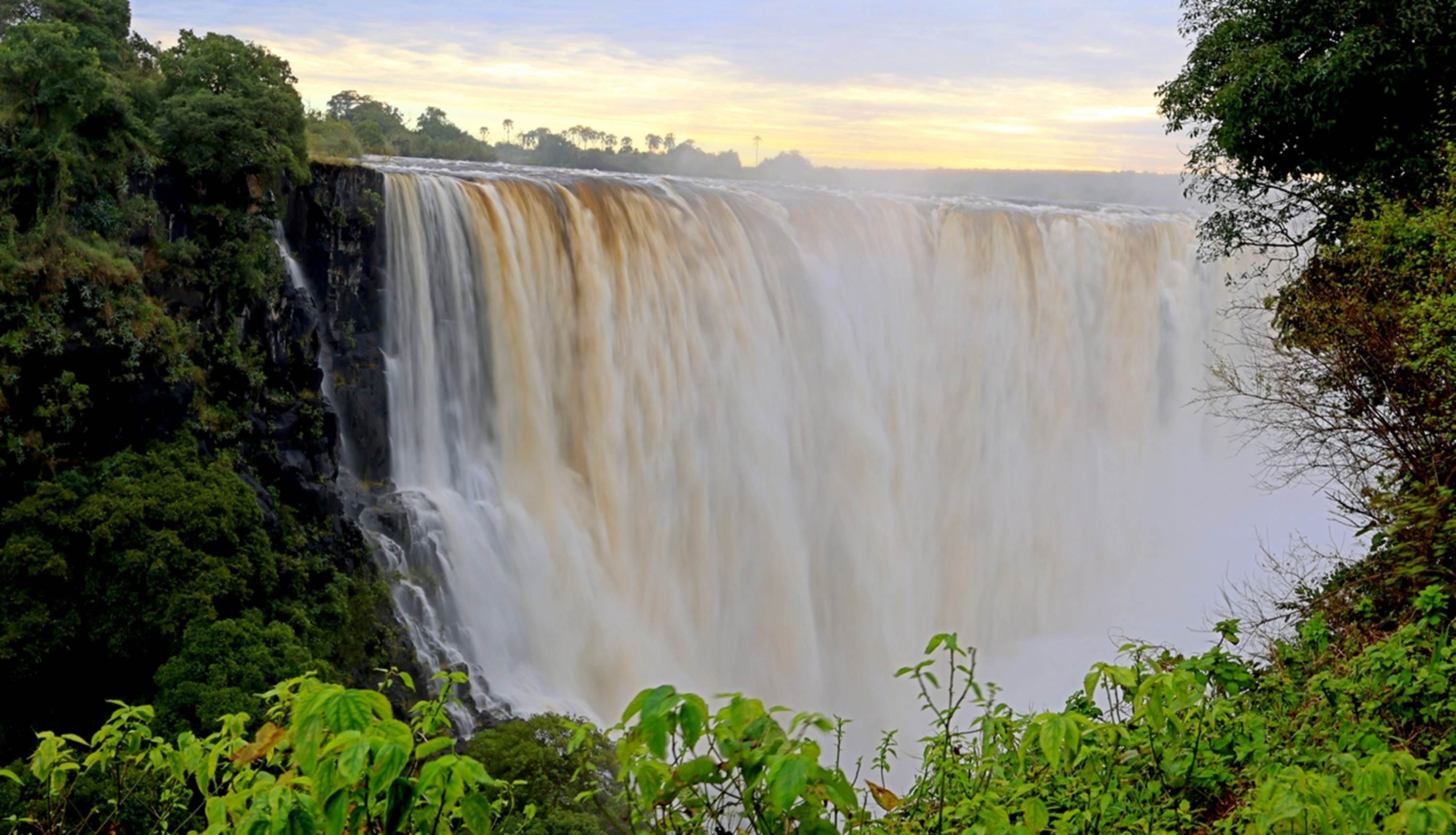
One of the better views we had
In the photo just above and in this video from the same area, the mist was mostly blowing the other way, leaving this end of the falls somewhat clear. We took a lot of photos and videos from this position. As we moved on along the path there was a statue on a pedestal. Our falls guide was standing next to the statue when I walked by and I said to him “Dr. Livingston, I presume”. He smiled at me and replied “you know, everyone says that”. But, what else would you say there?
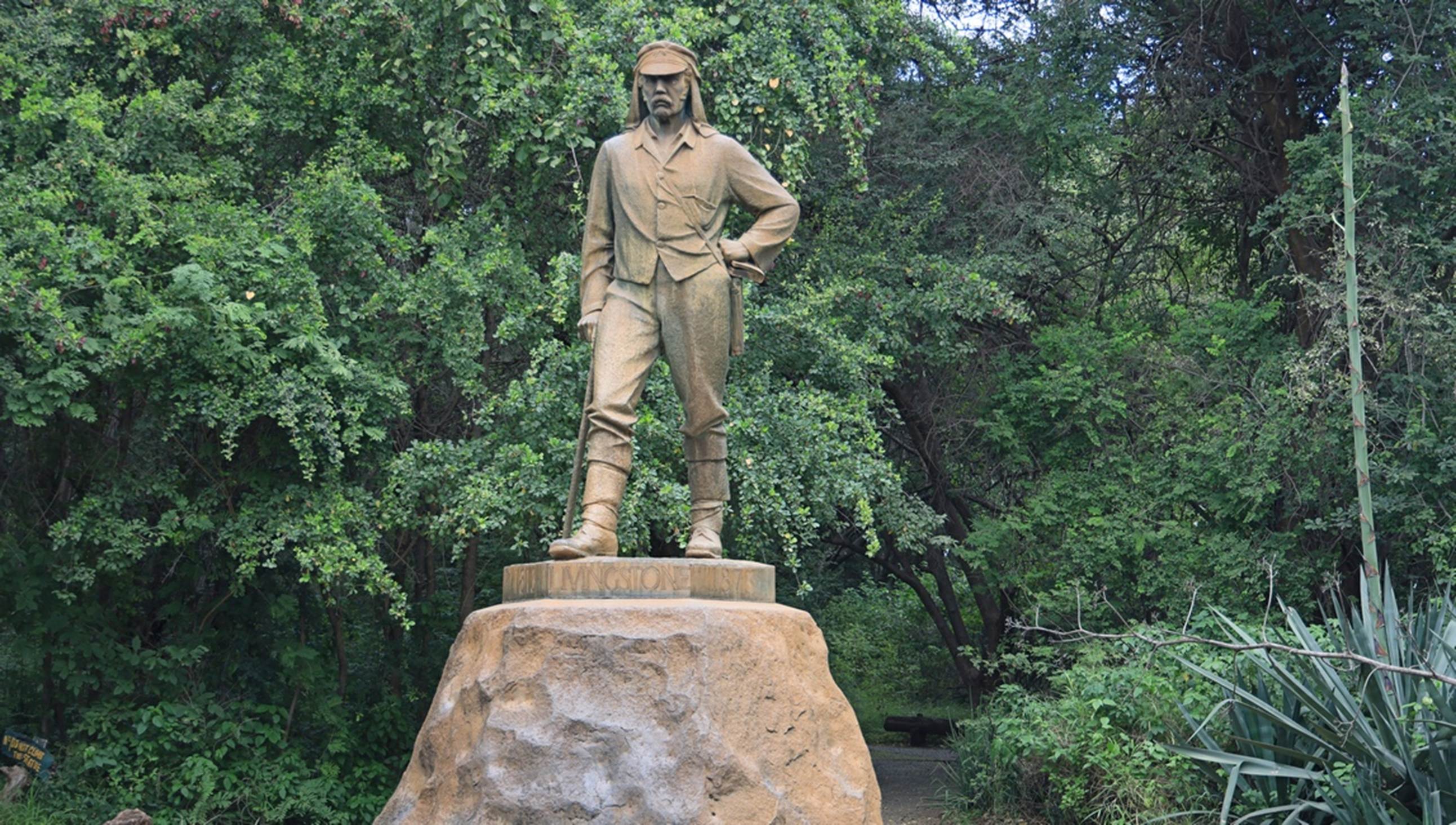
Dr. Livingston
The last part of the falls that we would view was somewhat different: it was not the sharp vertical drop, but a sloping area where the water was flowing very fast. The photo below looks crooked, but it is actually level and it is the flowing water that is going downhill that much. That would be quite a ride in a kayak!
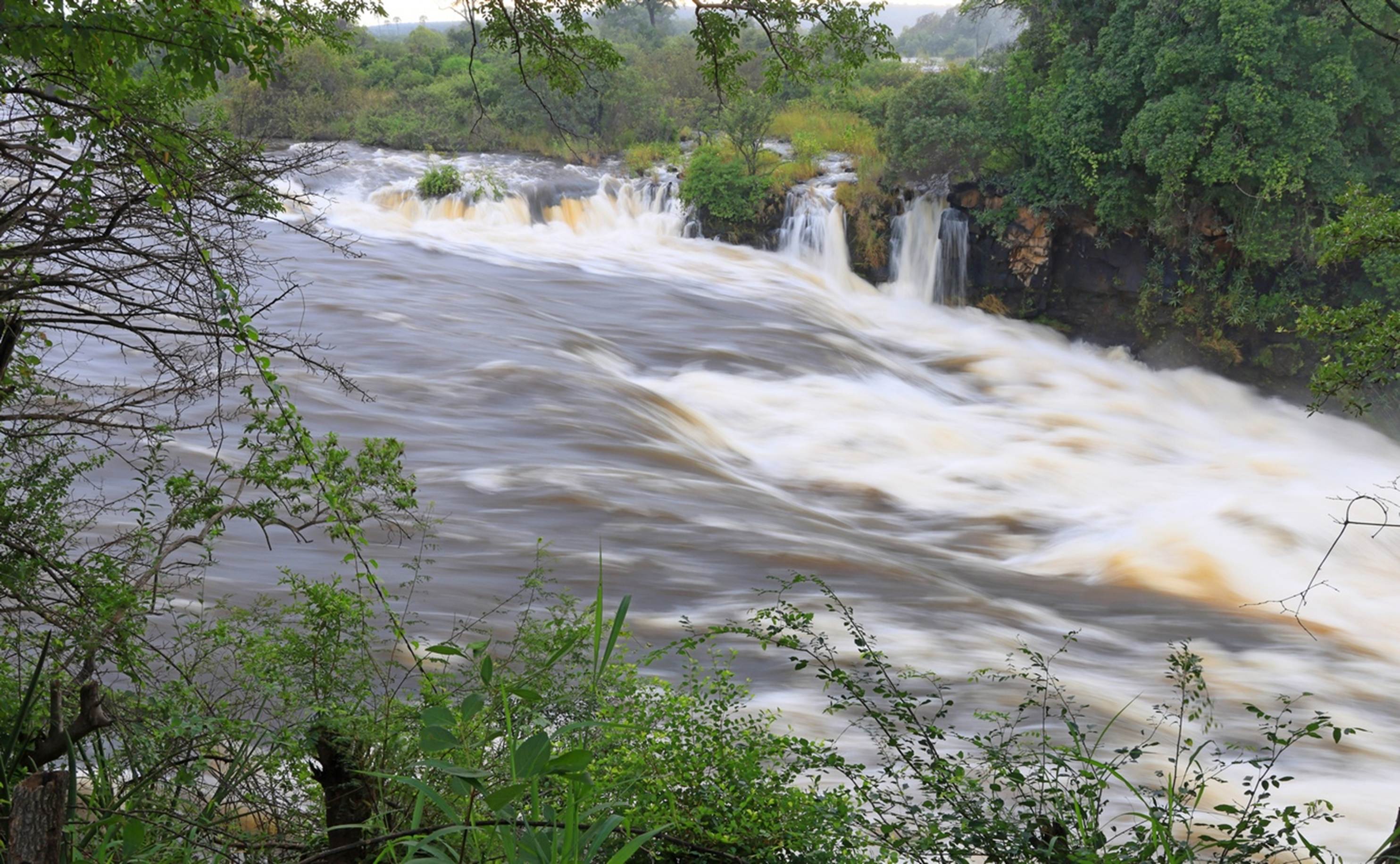
Very rapidly flowing water
Helicopter rides over the falls are offered and I had considered taking one to see and photograph the falls better, but decided there would be little to see through all the mist. So, to give the reader a better feel for the size and layout of the falls, I found an aerial photo of what the falls would have looked like with less water flowing over them. Rather impressive, isn’t it?

Aerial view at an ideal water flow
Everyone had a chance to meander around a bit to see whatever sights they wanted to (re)view, get a cup of coffee, or visit the gift shop, then we all turned in our rain ponchos and headed back to the hotel. At the hotel we had a late and large breakfast in their patio restaurant and then relaxed for the rest of the afternoon. We did take another tour of the hotel grounds, exploring some areas that we had not investigated previously
About 4:30 we climbed back in the bus and we drove to a dock about a mile or two upstream from the falls. We boarded a large, flat, and open catamaran for another sunset cruise. (Remember that the previous night we did a sunset train ride.) As we relaxed and enjoyed some wine, we were also served some light snacks/appetizers.
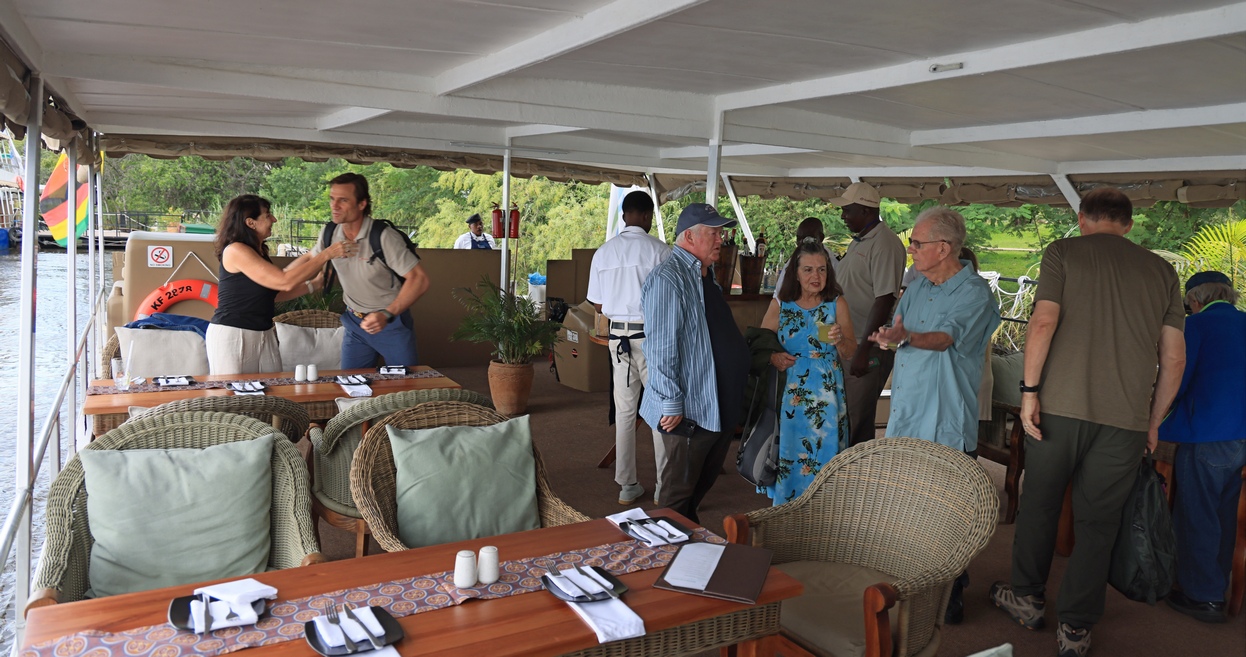
On the boat with the tables set for appetizers
The boat cruised up-river for a while, in the company of probably 10 other such boats doing about the same thing. We would have something different than the others would: a presentation on Dr. Livingston. A woman set up a simple display and then talked for about 30 or 40 minutes about Dr. Livingston and his travels in Africa: it was very interesting. She did an excellent job of providing a lot of information in an interesting and entertaining way.

Learning about Dr. Livingston
By the time she finished her presentation, the sun was getting close to the horizon, so that became the primary focus of our attention. The clouds managed to provide some interesting shapes and everyone was taking many sunset photos.

Sunset on the Zambezi River
After the sun had set the boat headed back to the dock. I think some people were especially glad to get back on solid ground because some of them had discussed what would happen if our motor(s) failed and we drifted down-river to the falls.
Back safe on dry land, we loaded onto the bus and headed back to the hotel where we were invited to have dinner in the hotel’s Terrace restaurant (buffet style). Susan and I were still so full from a large breakfast and the on-board appetizers that we only had a small salad and a few pieces of sushi before calling it a night.
Sunday, March 15: Victoria Falls to Johannesburg
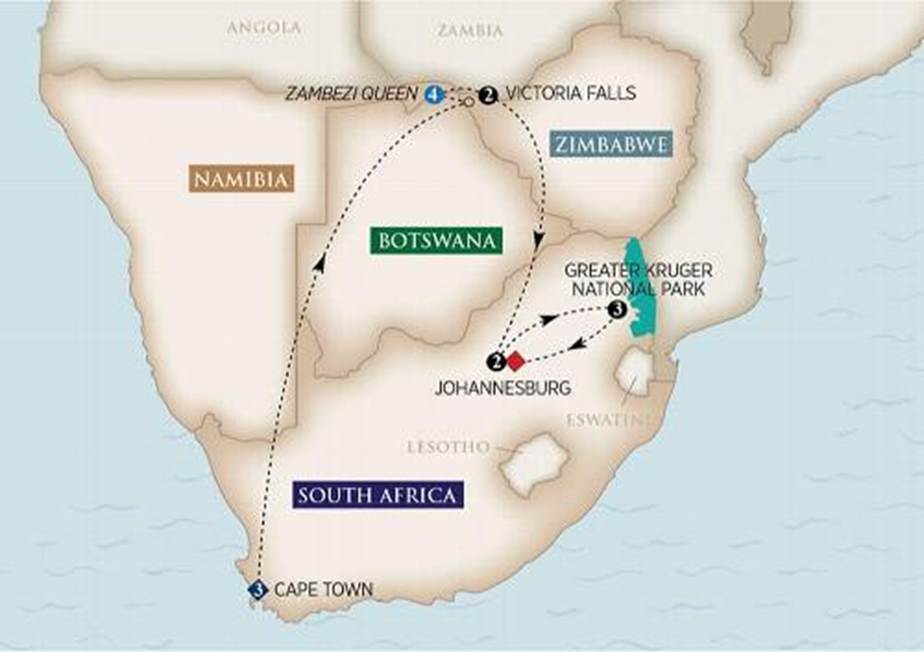
This will be a relatively short day, at least from this report’s standpoint. Our objective today is to travel from Victoria Falls to the city of Johannesburg, South Africa. I’ll include the tour map below as a reminder just where we are.

Victoria Falls to Johannesburg
We had a relaxed departure for a change and didn’t have to actually leave the hotel until 10:30. Like most of our group, we wandered into the Terrace restaurant for a nice breakfast during the morning then packed our suitcases. Our bus took us to the airport and, although there was some check-in confusion concerning our group, we still got checked in and through immigration (another passport stamp) at least 2 hours before the 2:00 flight time. The flight was only about 90 minutes long and everything went smoothly except for a long line at the immigration desk in Johannesburg (another passport stamp). On the bus ride from the airport to our hotel, the driver took us on a somewhat circuitous route to show us parts of the large city.
When we arrived at our hotel, it looked like a mistake because we seemed to be in the middle of a very nice residential area: the tour bus was too big to drive up the driveway, so it parked in the street and we walked the last short distance. The entire hotel (and I use the term “hotel” very loosely) was more like a large, rambling mansion or estate. There were multiple buildings with the rooms, administration, restaurant, and spa, but nothing looked like a commercial hotel. Most of us were in one building where the “lobby” was not exactly typical. When we first entered the lobby, there was a cat curled up on one of the chairs. When several people invaded his space, it was too noisy and he left, but we found him again the next day. He was well known as the “Hotel Cat”.

The lobby is more like someone’s living room.
Our room was on the second floor of this building and was room number 40: as best I could tell, that was the highest numbered room in the hotel, so there were only 40 rooms. But, it was a very nice room, and the bathroom belonged in some architectural magazine. It was very large for a hotel bathroom and had double sinks in an “island” in the middle of the room. But the sinks were facing each other on opposite sides of a large mirror. Did I think to get photos of any of this?? Of course not!
We had gotten a simple “box lunch” on the flight and were not really hungry at dinner time so we decided to just go to the bar connected to the restaurant and get a bottle of wine and appetizer or two. The solo lady on our tour, Dana, was in there and had thought the same about dinner so the three of us enjoyed some wine and a very light dinner: it was delightful!
Monday, March 16: Touring Johannesburg
Today would be a day of education, some “eye opening”, and possibly some reflection. We started off by climbing onto our bus and heading to the southwest area of Johannesburg, to the township of Soweto. Soweto became well known in the 1970s and 80s for the terrible living conditions there and as a hotbed of protests against apartheid, with Nelson Mandela taking a leading role until he was imprisoned. The bus dropped us off along the road that was one border of Soweto and we took a short walk through part of the neighborhood to get a better feel for the conditions there. One of my thoughts was “If Soweto is like this now, what was it like in the 1980s??” I’ve been in slums numerous times, but this was about the worst. Most “homes” were covered with corrugated metal sheets on the walls and roofs. There were no paved walkways, just dirt paths.

One path through Soweto
We stopped at what served as the community laundromat: a simple faucet with water running into a concrete catch-basin. The people came here to wash and rinse their clothes with little or no soap.

The community laundromat
At the extreme left of the photo above you might recognize a “Porta-Potty”. Throughout the community you would see a line of from 1 to 5 of these portable toilets and they served as the primary bathrooms for the people. They are supposed to be emptied and cleaned every 2 weeks by city government workers, but apparently that seldom happened on schedule.
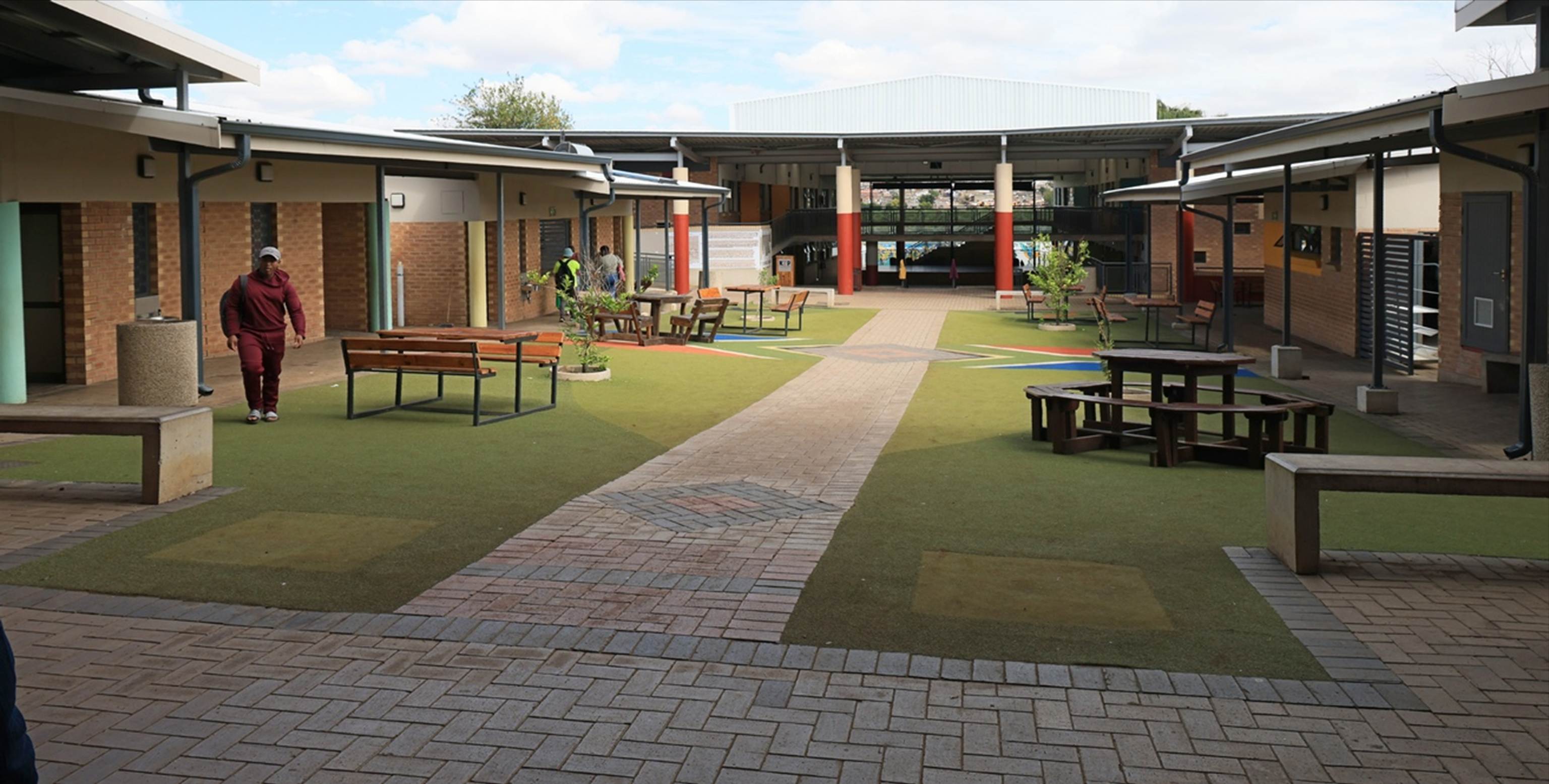
The average unemployment rate in South Africa is a little over 30% but in Soweto it is over 40%. There are people trying to change things, especially by ensuring a good education for the children as they grow up. We visited a prime piece of evidence of these efforts, the Kliptown Youth Program. Kliptown is a community within Soweto and the Youth Program is a privately funded center to help the youth of the area. While KYP does not replace the public school program, it supplements the normal education with additional activities, like computer classes, a textbook lending library, online learning, and pre-K class to get youngsters better prepared for school.

Entrance to the modern KYP facility
We got a full tour of their modern facility and, of course, got a soft-sell pitch to help provide funding for the program. I was impressed by the emphasis on improved education to help lift the people, especially the young people, out of living in places like Soweto. We had seen this same emphasis at the school visit in Namibia.
 `
`
The Center courtyard of KYP
When our tour went through some of the administration offices on the 2nd floor, I noticed that you could look out the window and quickly be reminded of just why the program is there: the conditions of Soweto.
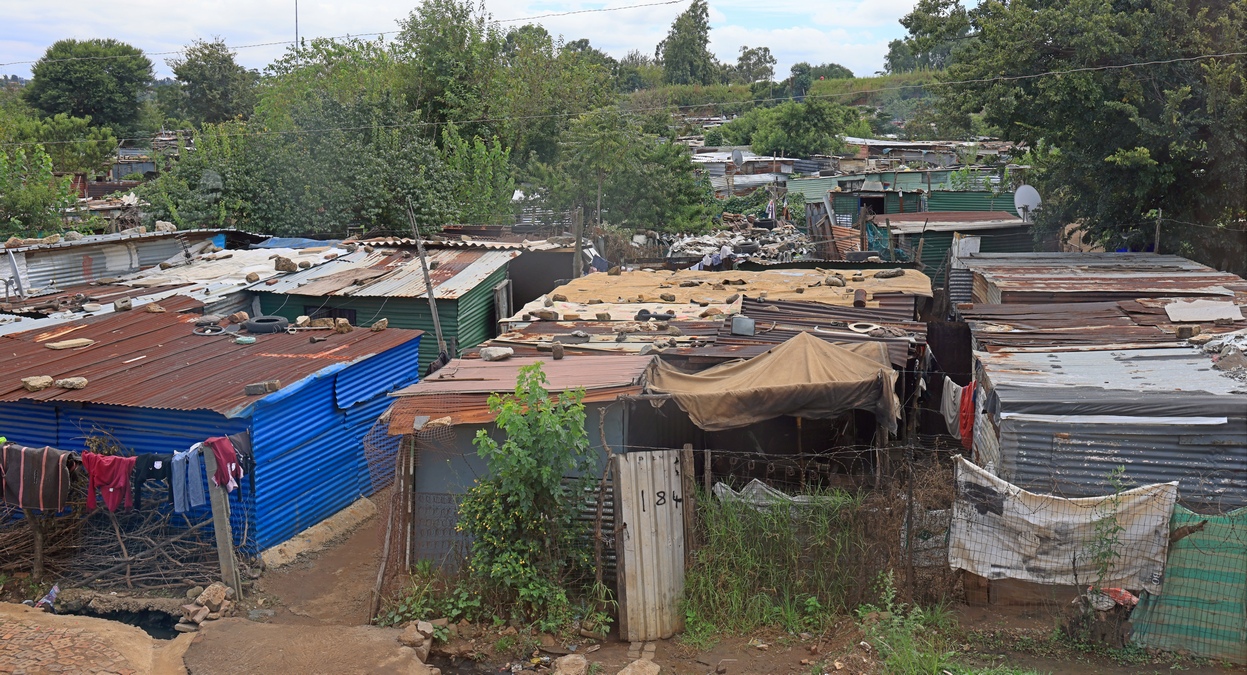
Looking out from KYP over Soweto
It was encouraging to see the young students in the Pre-K classroom: they seem just like young kids anywhere.
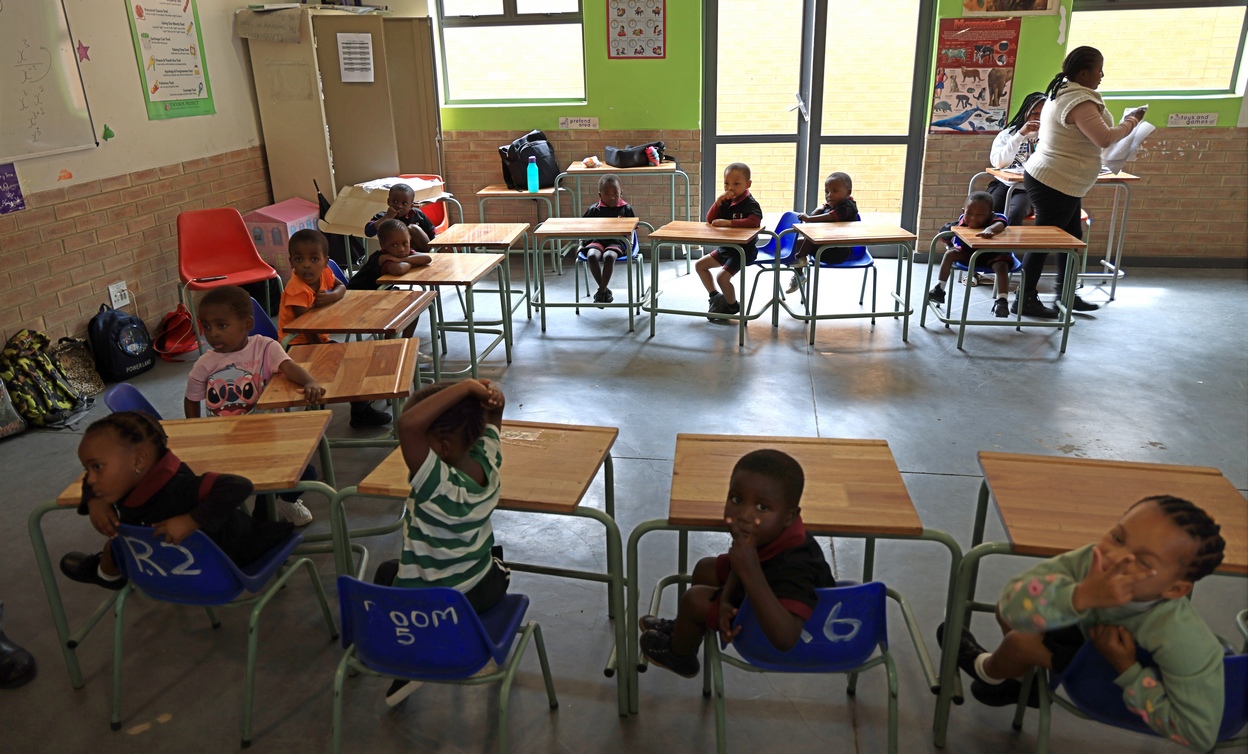
In the Pre-K classroom
As we left Soweto on the bus, I filmed a video that may give a better idea of the extent and conditions of Soweto. As you look at the photo of Soweto below, I suspect one feature will catch your attention and make you wonder…….

A section of Soweto with a common feature.
It seemed that almost every “house” had a TV Dish sitting above the roof: If these people could not afford better conditions, how could they afford the antenna, satellite service, and a TV? Our guide, Kirsten, explained that the local Satellite TV service operates on the “Gillett razor” model: charge almost nothing for the basic razor (satellite dish), but then charge an inflated price for the blades (actual satellite signal service). Most likely, very few of the satellite dishes in the photo above are actually connected to a TV or are really receiving a signal.
Our next stop on the tour would be a home of Nelson Mandela. (Actually, the next two stops would be Mandela homes, but they would be very different.) This house was one that Mandela bought before he was imprisoned in 1964 and, amazingly, it was the house that he and Winnie Mandela returned to when he was released in 1990. Much of the information in, around, and about the house focused more on Winnie Mandela than on Nelson Mandela, probably because she lived in the house much of the time he was in prison and continued to have a very active role in the South Africa political arena and human rights activities.

In front of the Nelson and Winnie Mandela house
On our way to our next point of interest, Kirsten made a major point of the Johannesburg Soccer Stadium as their “Pride and Joy”. It was built largely in support of the World Cup games of 2010 which were held in South Africa. Although we didn’t go inside to get the full effect, the exterior decorations were definitely unique.
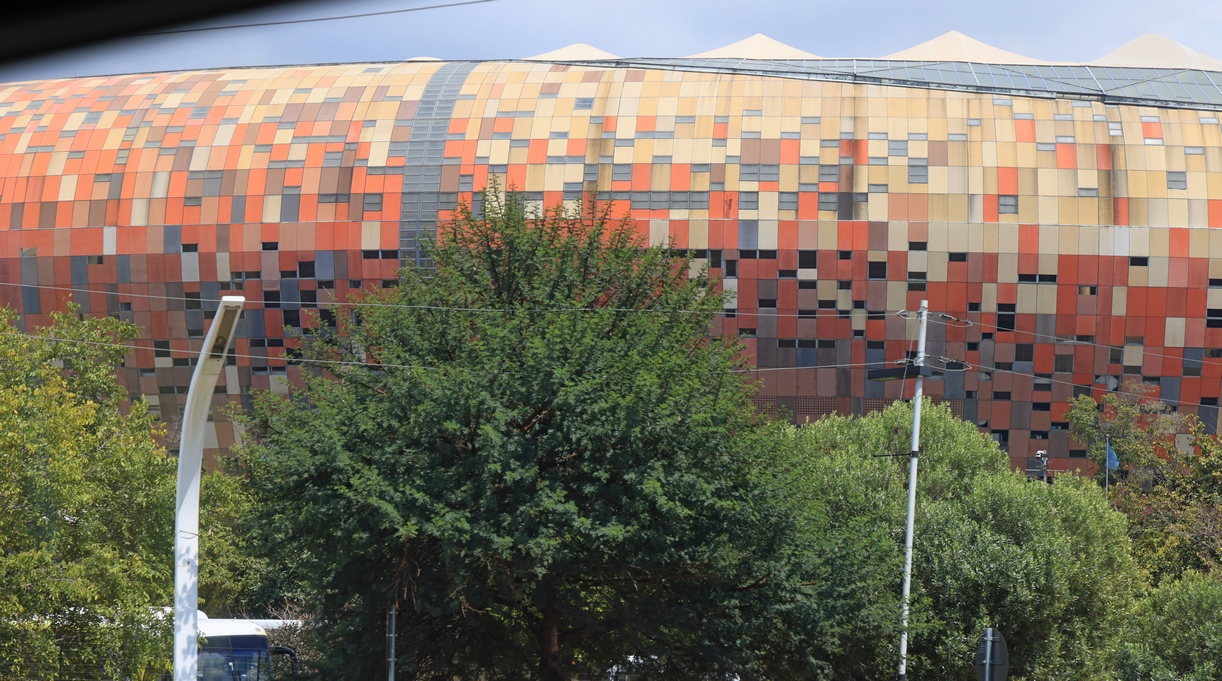
Exterior of the Johannesburg Soccer stadium
We soon arrived at our next destination, another former home of Nelson Mandela, but much different from the other one we had just visited. This “Mandela House” was located in a very exclusive area of the city, much like where our hotel was located. And, like our hotel, it had been converted into a boutique hotel and restaurant, where we would be having lunch.

The sanctuary Mandela / House
Nelson Mandela purchased this house while he was president of South Africa and moved into it when he left office in 1999, living there for several years. Sometime after his death in 2013 it was converted to its current role. We did have a very nice lunch there and then headed back to our hotel for the afternoon.
After relaxing for a hour or two, Susan and I were restless so we took a walk around the hotel grounds. I had earlier noticed a large bird flying around the grounds, so when I saw it land in the grass, I got a photo of it. I have no idea what the name of this bird is.

The “No Name” bird
There was extensive landscaping on the grounds and especially around the pool area, so of course I had to take a bunch of flower photos. Don’t worry, I’ll summarize them with this collage below.
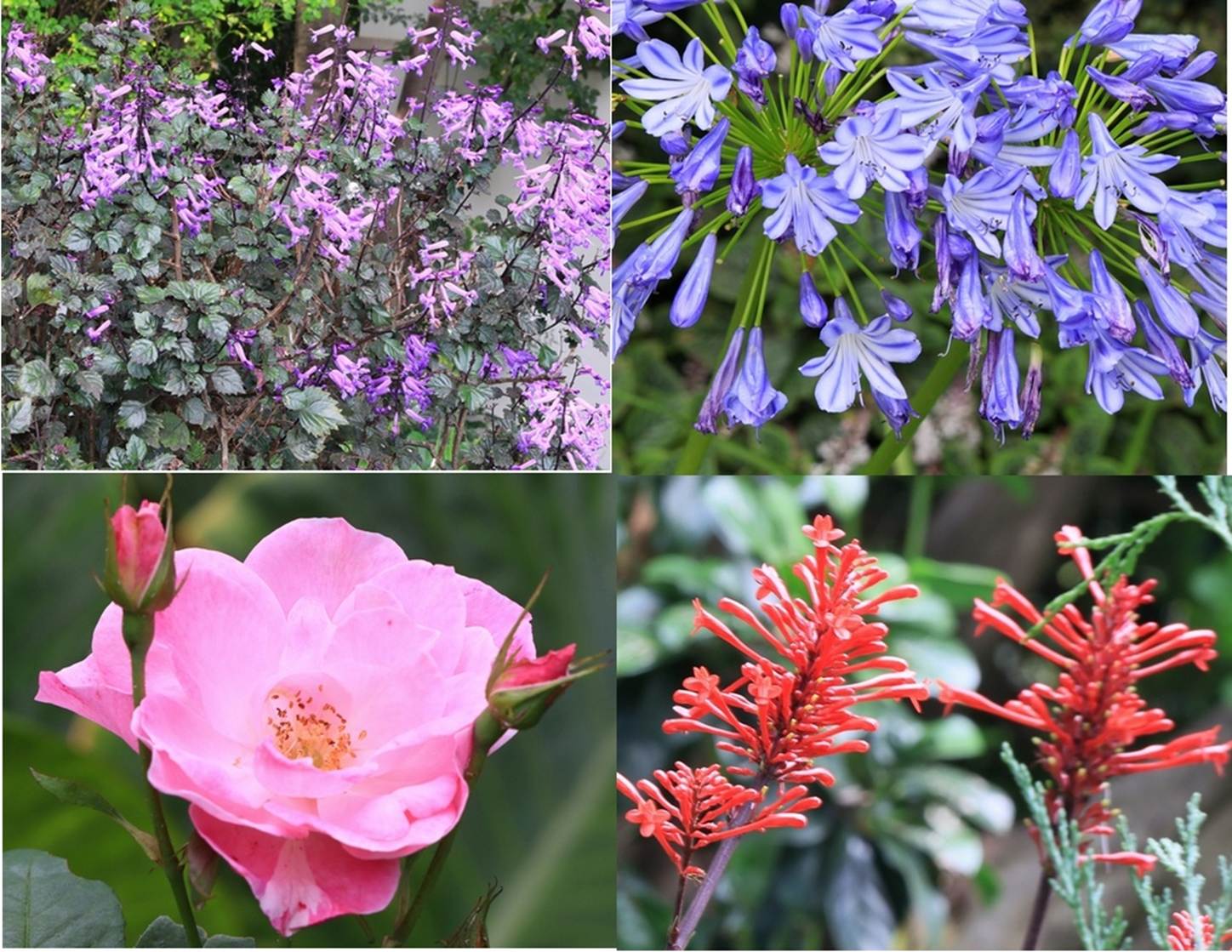
A few of the flowers we saw
Considering that all of this landscaping and the pool area was apparently for the 40 rooms in the hotel, it was rather ornate.

Around the pool and behind the restaurant area
During our exploration of the hotel, we did find the “Hotel Cat”. Of course we made over it and Susan even had some lunch leftovers that we offered to it, but either it was not at all hungry, or our offerings were not to its liking, as it was not very interested.

The Hotel Cat
This evening, we were scheduled for dinner in the hotel restaurant, but first we had a special meeting. I have not yet mentioned two of our guide Kirsten’s forms of “entertainment”: reading from a humorous book about African animals and playing tunes on his harmonica/mouth harp. These activities usually occurred during the longer bus rides and were a good diversion. Tonight, he played a tune that was significant in the history of South Africa, but honestly, I don’t remember what it was. (Perhaps I already had too much wine.)

Kirsten and his harmonica
After the musical entertainment, we had a “guest lecturer”, somewhat like the Dr. Livingston presentation in Victoria Falls. The young lady presented what was basically the history of South Africa since before the discovery by Europeans up to almost the current day. It was interesting and filled in quite a few gaps in my understanding of how South Africa got to where it is today, but I think it would have been nice to have this presentation and information much earlier, while we were in Cape Town, so we could understand what had happened a little better.
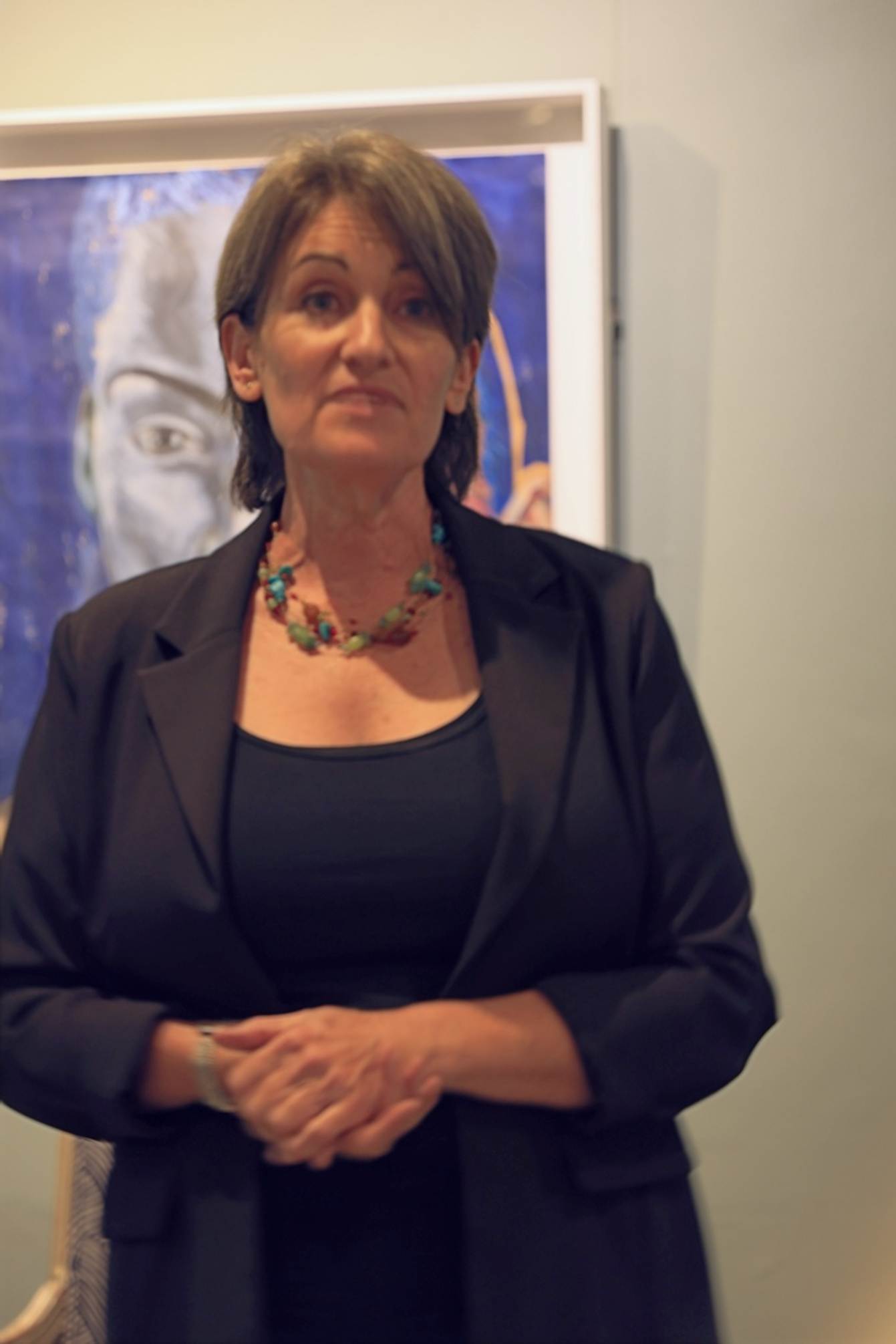
An interesting presentation of a difficult (potentially boring) subject
After our history lesson was over, we sat down to a very nice dinner in the hotel restaurant.

Not all the seats are filled yet.
It had been an interesting and “educational” day. Tomorrow, we head off to a completely different kind of adventure.
You can either click on the “Back Button” to go back to the main page, or click on:
Chapter 4 - the tour continues